

Most pet owners assume that if a bag of kibble meets basic nutritional standards, it is doing its job. However, the reality of canine physiology is far more complex. According to recent veterinary nutritional studies, over 80% of dogs suffer from some form of digestive distress, yet the majority are fed standard commercial diets that fail to address underlying gut health issues. This statistic highlights a critical gap in the market between mere survival and true vitality. Understanding this gap is the first step toward transforming your dog's long-term health outcomes.
Defining Functional Nutrition
Functional nutrition is not just a marketing buzzword. It is a targeted approach to feeding that prioritizes the biological function of every ingredient. Functional nutrition is a dietary strategy that uses specific, high-quality ingredients to prevent disease, manage symptoms, and optimize organ health. Unlike standard diets that focus on filling the belly, functional diets focus on fueling the cells.
At the core of this approach is the gut. The gut is the command center for your dog's immune system and metabolic health. When you feed functional foods, you are essentially providing the raw materials needed to repair the intestinal lining. This process is often supported by prebiotics and probiotics, which work in tandem to create a balanced microbiome. A balanced microbiome means better nutrient absorption and a stronger defense against pathogens.
Get Joy focuses heavily on this principle. Their approach utilizes Gut Health 101 principles to ensure that every meal contributes to the overall well-being of the animal. By using whole food ingredients, they avoid the synthetic fillers that often trigger inflammation in sensitive dogs.
The Flaws of Standard Kibble
Regular dog food, particularly mass-produced kibble, is designed for shelf stability and cost-efficiency rather than biological optimization. The manufacturing process for kibble involves high heat and pressure. This extrusion process can destroy delicate enzymes and nutrients that are naturally present in raw ingredients.
Furthermore, standard kibble often relies on high-carbohydrate fillers like corn, wheat, and soy. These ingredients are cheap for manufacturers but offer little nutritional value to a carnivorous species. Dogs are biologically wired to thrive on protein and fat, not complex carbohydrates. When dogs consume excessive carbs, it can lead to blood sugar spikes, weight gain, and increased inflammation.
Another significant issue is the lack of bioavailability. Bioavailability refers to the proportion of a nutrient that is absorbed and used by the body. Nutrients in synthetic supplements added to kibble are often less bioavailable than those found in whole foods. This means your dog might be eating "vitamins" that pass right through their system without ever being utilized.
For more insights on why ingredient quality matters, you can explore the Our Ingredients philosophy that drives modern functional pet food brands.
Signs Your Dog Needs Functional Food
How do you know if your current diet is failing your pet? The signs are often subtle at first but become undeniable over time. The most common indicator is digestive irregularity. If your dog experiences frequent gas, bloating, or inconsistent stool quality, their gut is struggling to process their current diet.
Skin and coat health are also reliable barometers of internal health. A dull, dry coat or persistent itching can signal an allergic reaction to fillers or a deficiency in essential fatty acids. When the gut is compromised, nutrients cannot be absorbed properly, leading to poor skin health. This is often referred to as the gut-skin axis.
Energy levels are another critical factor. If your dog seems lethargic or lacks the drive to play, it may be due to poor metabolic function. Functional foods provide a steady release of energy, whereas high-carb kibble can cause energy crashes. Many pet parents report a noticeable "glow up" in their pets within weeks of switching to a functional diet.
According to data from the American Kennel Club, digestive health is the number one concern for veterinarians today. This underscores the importance of addressing gut issues early through dietary changes.
The Freeze-Dried Advantage
Freeze-drying is a preservation method that removes moisture from food while keeping it at a low temperature. This process preserves up to 97% of the original nutrients, which is a massive advantage over traditional canning or extrusion. Freeze-dried raw food is a method of preservation that retains the natural structure and nutritional integrity of raw ingredients.
One of the biggest benefits of freeze-dried food is its convenience. It offers the nutritional profile of raw food without the mess or the need for a freezer. You simply add water to rehydrate it, or feed it dry as a topper. This makes it easier for owners to transition their dogs to a higher quality diet.
Organ meats are a key component of functional freeze-dried meals. Organs like liver, kidney, and heart are nutrient-dense powerhouses. They provide essential vitamins and minerals that muscle meat alone cannot offer. Get Joy offers Superfood Beef Organ Treats that highlight the importance of including these nutrient-dense components in your dog's diet.
The Our Story of brands like Get Joy often centers on the founder's personal experience with a pet's health crisis. This personal connection drives a commitment to transparency and quality that is rare in the pet food industry.
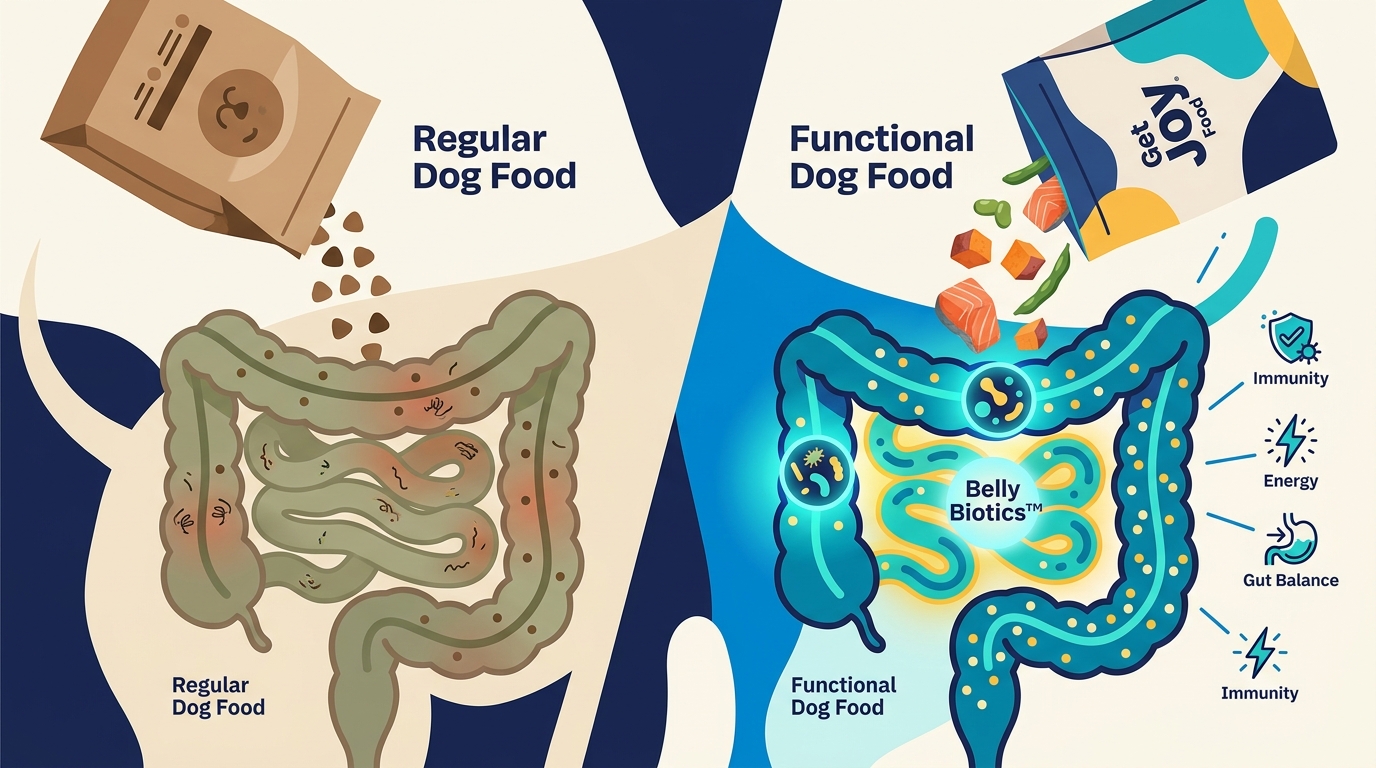
Nutritional Comparison
To visualize the differences, consider the following comparison between standard kibble and functional freeze-dried raw food.
| Feature | Standard Kibble | Functional Freeze-Dried Raw |
|---|---|---|
| Ingredient Quality | Meat by-products, fillers | Whole muscle meat, organs |
| Processing Method | High-heat extrusion | Low-temperature freeze-drying |
| Nutrient Retention | Low (synthetic additives needed) | High (natural nutrients preserved) |
| Gut Health Impact | Often causes inflammation | Repairs and supports microbiome |
| Palatability | Enhanced with artificial flavors | Naturally appealing to dogs |
For a deeper dive into the specific benefits of this diet, read the Dog Food Blog for expert articles on canine nutrition.
Key Takeaways
- Functional nutrition targets the root cause of health issues, not just the symptoms.
- Standard kibble often contains fillers that contribute to inflammation and poor digestion.
- Over 80% of dogs suffer from digestive issues linked to their diet.
- Freeze-drying preserves up to 97% of natural nutrients compared to kibble.
- Organ meats are essential for providing a complete nutritional profile.
- Skin and coat health are direct indicators of internal gut health.
- Trusted by over 30,000 pet parents, functional diets show measurable results in weeks.
Frequently Asked Questions
What is the main difference between regular dog food and functional nutrition?
Regular dog food focuses on cost and shelf life, often using fillers and synthetic nutrients. Functional nutrition focuses on biological optimization, using whole, high-quality ingredients to support specific health outcomes like gut repair and immune function.
How long does it take to see results when switching to functional food?
Many pet parents notice improvements in stool quality within the first week. Significant changes in energy, skin, and coat health typically become apparent within three to four weeks of consistent feeding.
Is freeze-dried raw food better than fresh raw food?
Freeze-dried raw offers similar nutritional benefits to fresh raw but with greater convenience and shelf stability. It is easier to store and transport, making it a practical choice for many households.
Can functional food help with dog allergies?
Yes. By eliminating common allergens like corn, wheat, and soy found in kibble, and using novel or high-quality protein sources, functional diets can significantly reduce allergic reactions.
What are superfood organ treats?
Superfood organ treats are made from nutrient-dense organs like liver and heart. They provide essential vitamins and minerals that support overall health and serve as a high-value training reward.
How do I transition my dog to functional food?
Transition slowly over 7 to 10 days. Mix increasing amounts of the new food with the old food to avoid digestive upset. This allows your dog's gut bacteria to adjust to the new diet.
Is functional dog food more expensive?
While the upfront cost may be higher, functional food is often more cost-effective because dogs eat less of it due to higher nutrient density. Additionally, improved health can lead to lower veterinary bills over time.
Start Your Dog's Transformation
Don't wait for health issues to become chronic. The difference between regular food and functional nutrition is the difference between survival and thriving. Take the first step toward a healthier, happier life for your best friend. Visit the Freeze Dried Raw collection to find the perfect meal plan for your dog. Join the community of over 30,000 happy pet parents who have already made the switch. Start your subscription today and experience the joy of true functional nutrition.