

Canine gut health is the cornerstone of overall vitality, influencing everything from immune response to nutrient absorption. Recent veterinary research indicates that the microbiome plays a critical role in managing chronic inflammation and metabolic health in dogs. According to the American Kennel Club, maintaining a balanced gut flora is essential for preventing digestive upset and supporting long-term wellness. This guide clarifies the distinct roles of probiotics, prebiotics, and postbiotics to help you make informed dietary decisions for your pet.
What Are the Differences Between the Three?
Understanding the symbiotic relationship between these three components is vital for effective pet nutrition. Each plays a unique role in the digestive ecosystem, and they are often confused due to their similar naming conventions. Here is the formal breakdown of each term.
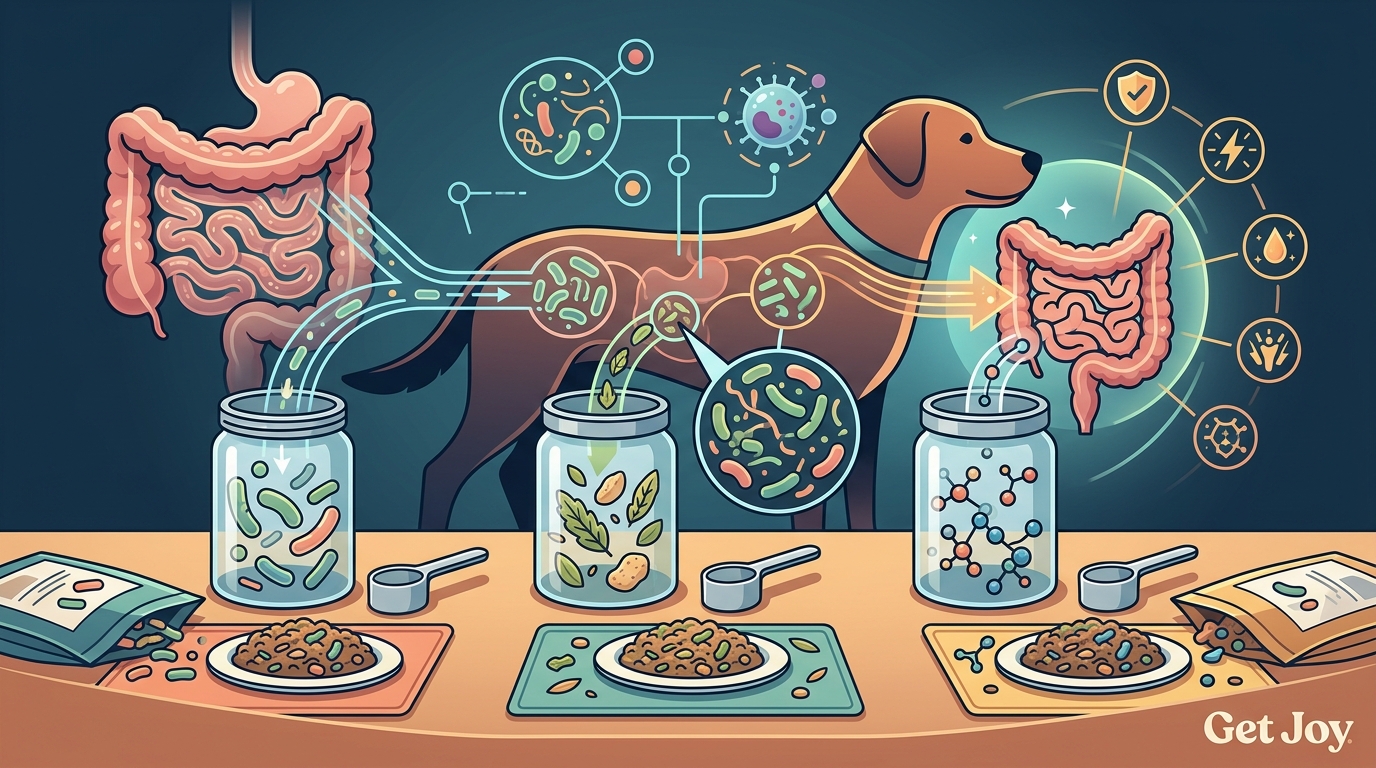
Probiotics are live beneficial bacteria that colonize the intestinal tract to improve digestive balance and immune function. These microorganisms are found in fermented foods and specific supplements designed to introduce healthy strains directly into the gut.
Prebiotics are non-digestible fibers that serve as the primary food source for probiotics. Without prebiotics, probiotic bacteria cannot survive or multiply effectively. They stimulate the growth of beneficial microorganisms in the large intestine.
Postbiotics are the metabolic byproducts produced by probiotic bacteria during fermentation. These include short-chain fatty acids and enzymes that directly nourish the gut lining, reduce inflammation, and support barrier integrity.
Think of the gut as a garden. Probiotics are the seeds you plant. Prebiotics are the fertilizer that helps them grow. Postbiotics are the healthy fruits and vegetables that result from that growth, which your dog then absorbs for systemic health.
Should You Give Probiotics Daily?
The question of daily supplementation depends heavily on your dog's current health status and diet. For dogs with chronic digestive issues, allergies, or those recovering from antibiotics, daily probiotic intake is often recommended by veterinarians to restore microbial balance. However, for healthy dogs eating a balanced, high-quality diet, the necessity of daily synthetic supplements is debated.
Consistency is key when introducing live cultures. The gut microbiome requires regular exposure to maintain stability. If you choose to supplement, look for products that specify the strain and colony-forming units (CFUs) to ensure efficacy. According to data from the Journal of Veterinary Internal Medicine, consistent probiotic administration can significantly reduce the duration of acute diarrhea in dogs.
Alternatively, you can obtain probiotics through whole food sources. Freeze-dried raw diets often retain live cultures if processed correctly, offering a more natural delivery method than isolated powders. This approach aligns with the philosophy of gut health 101 by prioritizing whole-food nutrition over isolated compounds.
The Role of Prebiotics in Canine Nutrition
Prebiotics are often overlooked in favor of probiotics, yet they are equally critical. Without adequate prebiotic fiber, probiotic supplements may pass through the digestive system without providing significant benefit. Common sources of prebiotics for dogs include chicory root, dandelion greens, and certain types of sweet potatoes.
These fibers resist digestion in the upper gastrointestinal tract, reaching the colon intact where they are fermented by beneficial bacteria. This process produces short-chain fatty acids like butyrate, which are essential for colon health. According to the National Institutes of Health, dietary fiber intake is directly linked to improved gut barrier function and reduced systemic inflammation in canines.
Get Joy formulations often include superfood ingredients that naturally provide these prebiotic fibers. By combining organ meats with nutrient-dense botanicals, the diet supports the microbiome holistically. You can explore these superfood treats to see how specific ingredients are selected for their prebiotic potential.
Understanding Postbiotics and Gut Repair
Postbiotics represent the newest frontier in veterinary nutrition. While probiotics and prebiotics are the inputs, postbiotics are the functional outputs that directly impact health. These include enzymes, organic acids, and cell wall fragments that have anti-inflammatory and antimicrobial properties.
Research suggests that postbiotics may be more stable than live probiotics, as they do not require the bacteria to survive the journey through the stomach acid. This makes them particularly useful for dogs with sensitive digestive systems. The gut health 101 resource on our site details how our meals are designed to maximize postbiotic production through careful ingredient sourcing.
When the gut lining is repaired by postbiotics, nutrient absorption improves dramatically. This leads to shinier coats, better energy levels, and stronger immune responses. It is not just about feeding bacteria; it is about feeding the gut cells themselves.
Why Freeze-Dried Raw Supports Microbiome Health
Freeze-dried raw food offers a unique advantage in microbiome support. The freeze-drying process preserves the natural enzymes and beneficial bacteria found in raw ingredients without the need for artificial preservatives. This results in a food product that is both nutrient-dense and gut-friendly.
Unlike kibble, which is extruded at high temperatures that can destroy natural enzymes, freeze-dried meals retain their biological integrity. This allows for easier digestion and less stress on the pancreas and liver. Many pet parents report noticeable improvements in stool quality and energy levels within weeks of switching to freeze-dried raw meals.
Additionally, the high moisture content rehydrated from freeze-dried food supports hydration, which is crucial for mucosal lining health in the gut. Proper hydration ensures that digestive enzymes can function optimally, breaking down food more efficiently. This holistic approach to nutrition addresses the root causes of digestive imbalance rather than just masking symptoms.
Nutritional Comparison Overview
| Component | Primary Function | Common Sources for Dogs | Impact on Gut Health |
|---|---|---|---|
| Probiotics | Introduce live beneficial bacteria | Supplements, fermented foods, raw diets | Restores microbial balance and diversity |
| Prebiotics | Feed existing beneficial bacteria | Chicory root, sweet potatoes, dandelion greens | Stimulates growth of good flora |
| Postbiotics | Repair gut lining and reduce inflammation | Metabolic byproducts of fermentation | Strengthens barrier function and immunity |
| Freeze-Dried Raw | Delivers all three naturally | Organ meats, superfoods, raw muscle meat | Comprehensive microbiome support |
Key Takeaways
- Probiotics are live bacteria that must be replenished regularly to maintain gut flora balance.
- Prebiotics are essential fibers that act as fuel for probiotics, making supplementation more effective.
- Postbiotics are the healing agents that repair the gut lining and reduce systemic inflammation.
- Daily supplementation is often necessary for dogs with chronic issues but may be redundant for those on high-quality whole food diets.
- Freeze-dried raw diets provide a natural source of all three components, offering a holistic approach to gut health.
- Consistency is critical for microbiome stability, as disruptions can lead to digestive upset and immune compromise.
- Whole food nutrition is superior to isolated supplements because it provides the complete matrix of nutrients required for absorption.
Frequently Asked Questions
Can I give my dog human probiotics?
It is generally not recommended to give human probiotics to dogs. The strains of bacteria in human supplements are tailored to the human digestive tract and may not survive or thrive in a canine gut. Canine-specific probiotics contain strains like Lactobacillus acidophilus and Bifidobacterium animalis, which are proven to benefit dogs.
How long does it take for probiotics to work in dogs?
Most dogs begin to show improvements in stool quality and energy levels within 7 to 14 days of consistent probiotic use. However, for chronic conditions, it may take several weeks to fully restore microbial balance. Patience and consistency are key to seeing results.
Are prebiotics safe for all dogs?
Prebiotics are safe for most dogs when introduced gradually. However, dogs with sensitive stomachs may experience gas or bloating if prebiotic fiber is increased too quickly. Start with small amounts and monitor your dog's reaction before increasing the dosage.
What is the best way to administer probiotics?
Probiotics can be mixed into wet food, sprinkled on dry kibble, or given as a capsule directly. For best results, administer them with a meal to help buffer stomach acid and improve bacterial survival. Bundles often include convenient dosing tools for easy administration.
Do freeze-dried raw foods contain probiotics?
Yes, high-quality freeze-dried raw foods contain natural probiotics from the raw ingredients. The freeze-drying process preserves these live cultures, making them available for digestion upon rehydration. This is one of the primary benefits of choosing freeze-dried raw meals over cooked alternatives.
Can probiotics help with dog allergies?
Yes, there is a strong link between gut health and immune response. A balanced microbiome helps regulate the immune system, potentially reducing allergic reactions. Many veterinarians recommend probiotics as part of a comprehensive allergy management plan for dogs.
What happens if I stop giving probiotics?
If you stop giving probiotics, the levels of beneficial bacteria may decrease over time, especially if the diet lacks prebiotics. This can lead to a return of digestive issues or an imbalance in the gut flora. Maintaining a diet rich in natural prebiotics and probiotics can help sustain gut health long-term.
Start Your Dog's Gut Health Journey
Transform your dog's health by prioritizing gut integrity through whole-food nutrition. Get Joy offers freeze-dried raw meals formulated to support the microbiome naturally. Visit our Our Story page to learn more about our mission to fuel joy through science-backed nutrition. Shop now to upgrade your dog's bowl today.