

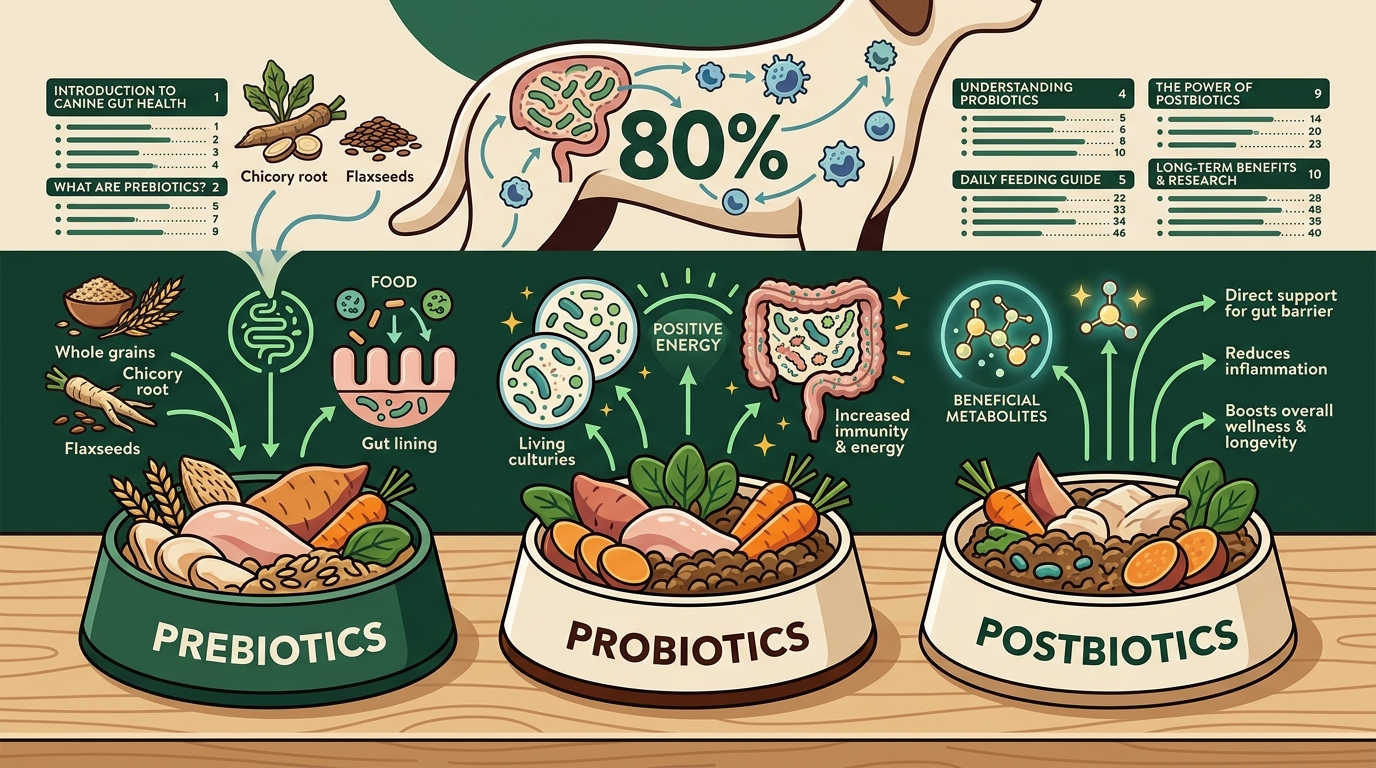
Canine gut health is a complex ecosystem that directly influences your dog's immune system, energy levels, and overall longevity. Recent veterinary studies indicate that approximately 80 percent of a dog's immune response is regulated by the gut microbiome, making daily nutritional support critical for long-term wellness. Understanding the distinct roles of prebiotics, probiotics, and postbiotics allows pet parents to make informed decisions about their dog's dietary needs.
What Are the Differences Between Prebiotics, Probiotics, and Postbiotics?
Many pet owners use these terms interchangeably, but they serve entirely different functions within the canine digestive tract. Clarifying these definitions is the first step toward optimizing your dog's nutrition.
Prebiotics are the non-digestible fibers that feed beneficial gut bacteria. Think of prebiotics as the fertilizer for your dog's gut garden. They are found in foods like sweet potatoes, carrots, and certain grains. Without prebiotics, the good bacteria in the gut would starve and fail to multiply. These fibers pass through the upper digestive system undigested, reaching the colon where they are fermented by microbes.
Probiotics are live microorganisms that provide health benefits when consumed. These are the actual beneficial bacteria, such as Lactobacillus and Bifidobacterium strains. When your dog eats probiotics, they temporarily colonize the gut, helping to crowd out harmful pathogens and produce essential vitamins. Probiotics are often found in fermented foods or specific supplements designed to survive stomach acid.
Postbiotics are the metabolic byproducts produced by probiotic bacteria. These include short-chain fatty acids like butyrate, which nourish the cells lining the colon. Postbiotics offer many of the same benefits as probiotics but without the need for live bacteria. They are more stable and can be easily incorporated into various food formats, including the freeze-dried raw meals offered by Get Joy.
Should You Give Your Dog Probiotics Every Day?
The question of daily supplementation depends largely on your dog's current health status and diet. For dogs with chronic digestive issues, daily probiotics are often recommended to maintain a balanced microbiome. However, for healthy dogs eating a high-quality, balanced diet, the necessity is less clear.
Daily supplementation is particularly beneficial during times of stress or dietary transition. According to veterinary nutritionists, stress from travel, boarding, or changes in routine can disrupt gut flora. In these cases, a daily probiotic can help stabilize the digestive system. Furthermore, dogs on antibiotic therapy require probiotic support to replenish lost beneficial bacteria. You can explore gut health resources to understand how specific ingredients support this balance.
Consistency is key. Probiotics do not permanently colonize the gut. They must be replenished regularly to maintain their population. If you stop giving probiotics, the levels of beneficial bacteria will gradually return to baseline. This is why many pet parents choose to integrate probiotic-rich foods into their dog's daily diet rather than relying on intermittent supplementation.
Identifying Gut Health Issues in Dogs
Recognizing the signs of poor gut health is essential for timely intervention. The gut is connected to almost every system in the body, so issues often manifest in unexpected ways.
Common signs of digestive distress include:
- Irregular bowel movements, such as diarrhea or constipation.
- Excessive gas or bloating after meals.
- Dull, dry, or flaky skin and coat.
- Unexplained weight loss despite a healthy appetite.
- Increased anxiety or behavioral changes.
Skin issues are a particularly strong indicator of gut health problems. The skin-gut axis is a well-documented biological pathway. When the gut lining is compromised, toxins can leak into the bloodstream, triggering inflammatory responses that appear on the skin. Addressing the root cause in the gut often resolves skin allergies more effectively than topical treatments alone. Many owners find that switching to high-quality dog food significantly improves their pet's coat quality and reduces itching.
The Advantages of Freeze-Dried Raw Nutrition
Freeze-dried raw food has emerged as a superior method for delivering probiotics and prebiotics to dogs. The freeze-drying process preserves the nutritional integrity of the ingredients, including heat-sensitive vitamins and beneficial enzymes.
Unlike kibble, which is cooked at high temperatures that destroy natural probiotics, freeze-dried raw meals retain their biological activity. This means your dog receives the full spectrum of nutrients, including natural postbiotics produced during the fermentation of organ meats. The story behind our nutrition philosophy emphasizes the importance of using whole, recognizable ingredients.
Additionally, freeze-dried raw food is highly digestible. Because the proteins are denatured but not broken down by excessive heat, dogs can absorb more nutrients. This reduces the workload on the digestive system, allowing the gut lining to heal and strengthen. For dogs with sensitive stomachs, this gentle nutrition can be transformative. You can learn more about our gut health approach to understand how we formulate our products.
Choosing the Right Supplement for Your Dog
Selecting the right probiotic or prebiotic supplement requires careful consideration of your dog's specific needs. Not all supplements are created equal, and the quality of the ingredients matters significantly.
Key factors to consider include:
- Strain Diversity: Look for supplements that contain multiple strains of bacteria to ensure comprehensive gut coverage.
- CFU Count: Colony Forming Units indicate the number of live bacteria. Higher counts are not always better, but they ensure potency.
- Prebiotic Inclusion: The best probiotics are paired with prebiotics to ensure the bacteria survive and thrive.
- Ingredient Quality: Avoid fillers, artificial preservatives, and low-quality binders.
At Get Joy, we prioritize superfood organ treats that naturally contain these beneficial compounds. Our beef organ treats are rich in natural probiotics and prebiotics, offering a delicious and healthy way to support your dog's gut health. We believe in transparency and quality, which is why we share our customer reviews openly.
Key Takeaways
- Prebiotics feed good bacteria, probiotics are the live bacteria, and postbiotics are their beneficial byproducts.
- Daily probiotic supplementation is beneficial for dogs with digestive issues, stress, or antibiotic use.
- Gut health directly impacts skin condition, immune function, and overall energy levels in dogs.
- Freeze-dried raw food preserves natural probiotics and enzymes that are lost in high-heat processing.
- Consistency is crucial for maintaining a healthy gut microbiome in dogs.
- Organ-based treats provide a natural source of prebiotics and probiotics.
- Trusted by over 30,000 happy pet parents, Get Joy offers premium gut health solutions.
Frequently Asked Questions
Can I give my dog human probiotics?
It is generally not recommended to give human probiotics to dogs. The strains of bacteria in human supplements are tailored to the human gut, which differs significantly from the canine digestive system. Canine-specific probiotics contain strains that are proven to survive and thrive in the dog's stomach acid.
How long does it take for probiotics to work in dogs?
The timeline varies depending on the dog's current health status. Some dogs may show improvements in stool quality within 24 to 48 hours. However, for chronic issues, it may take several weeks of consistent supplementation to see significant changes in gut health and overall wellness.
Are prebiotics safe for all dogs?
Prebiotics are generally safe for most dogs. However, introducing them too quickly can cause gas or bloating. It is best to start with small amounts and gradually increase the dosage to allow the gut to adjust. Always consult your veterinarian before making significant dietary changes.
What is the best source of probiotics for dogs?
The best source is a high-quality, canine-specific supplement or a diet rich in natural probiotics, such as freeze-dried raw food. Our freeze-dried raw meals are formulated to provide a balanced mix of probiotics, prebiotics, and postbiotics.
Can probiotics help with dog allergies?
Yes, there is a strong link between gut health and allergies. A healthy gut lining prevents toxins from entering the bloodstream, which can trigger allergic responses. By improving gut health with probiotics and prebiotics, you may see a reduction in allergy symptoms over time.
Do I need to refrigerate freeze-dried dog food?
Once opened, it is recommended to store freeze-dried food in the refrigerator to maintain freshness and potency. However, the freeze-drying process itself does not require refrigeration until opened. This makes it a convenient option for travel and daily feeding.
How do I transition my dog to a new diet?
Always transition slowly over 7 to 10 days. Mix increasing amounts of the new food with the old food to prevent digestive upset. This gradual approach helps the gut microbiome adjust to the new nutrient profile without causing diarrhea or vomiting.
Start Your Dog's Gut Health Journey
Optimizing your dog's gut health is one of the most impactful things you can do for their long-term well-being. By understanding the differences between prebiotics, probiotics, and postbiotics, you can make informed choices that support their digestive system. Get Joy offers premium freeze-dried raw dog food designed to nourish your dog from the inside out. Visit our shop page today to explore our range of gut-healthy products and join the community of happy pet parents.