
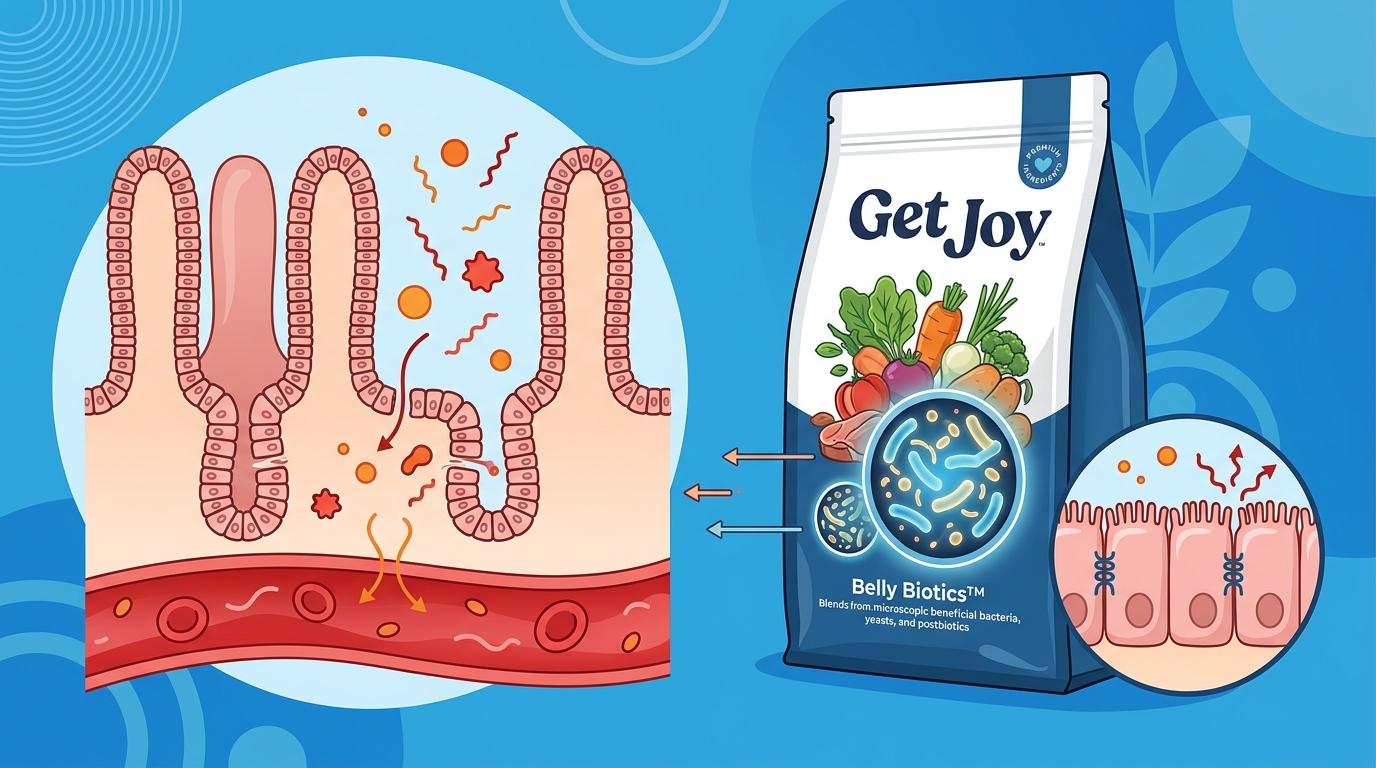
Leaky gut, also known as increased intestinal permeability, is a condition where the lining of a dog's intestines becomes damaged, allowing toxins and undigested food particles to pass through into the bloodstream. This can lead to various health issues, including allergies, inflammation, and autoimmune diseases. In this tutorial, we'll discuss the causes, symptoms, and prevention methods for leaky gut in dogs. (Shop All Dog Food)
Causes of Leaky Gut in Dogs
The exact cause of leaky gut in dogs is not fully understood, but several factors are believed to contribute to its development:
- Diet: Feeding your dog processed foods, grains, and sugars can damage the intestinal lining.
- Medications: Certain medications, such as antibiotics and NSAIDs, can disrupt the gut microbiome and damage the intestinal lining.
- Stress: Chronic stress can lead to increased intestinal permeability.
- Genetics: Some breeds may be more prone to developing leaky gut due to genetic predispositions.
Symptoms of Leaky Gut in Dogs
Symptoms of leaky gut in dogs can vary, but some common signs include:
- Chronic diarrhea or constipation
- Gas and bloating
- Excessive flatulence
- Lethargy and lack of energy
- Skin issues, such as itching, rashes, and hot spots
- Food sensitivities and allergies
- Autoimmune diseases, such as inflammatory bowel disease (IBD) and arthritis
Prevention of Leaky Gut in Dogs
To prevent leaky gut in dogs, consider the following steps:
- Feed your dog a high-quality, balanced diet. Avoid processed foods, grains, and sugars.
- Provide plenty of clean water to keep your dog hydrated.
- Limit the use of medications, especially antibiotics and NSAIDs, whenever possible.
- Reduce stress in your dog's environment.
- Consider adding probiotics and prebiotics to your dog's diet to support a healthy gut microbiome.
- Regularly schedule check-ups with your veterinarian to monitor your dog's health and address any potential issues early.
Frequently Asked Questions
What foods should I avoid feeding my dog to prevent leaky gut?
Avoid processed foods, grains, and sugars in your dog's diet. Instead, focus on feeding them high-quality, balanced meals made from whole, nutritious ingredients.
Can stress cause leaky gut in dogs?
Yes, chronic stress can contribute to the development of leaky gut in dogs by damaging the intestinal lining.
How can I tell if my dog has leaky gut?
Symptoms of leaky gut in dogs can include chronic diarrhea or constipation, gas and bloating, excessive flatulence, lethargy, skin issues, food sensitivities, and autoimmune diseases. If you suspect your dog has leaky gut, consult your veterinarian for a proper diagnosis and treatment plan.
What are probiotics and prebiotics, and how do they help prevent leaky gut in dogs?
Probiotics are beneficial bacteria that help maintain a healthy gut microbiome in dogs. Prebiotics are non-digestible fibers that feed the beneficial bacteria in the gut, promoting their growth and activity.
How often should I schedule check-ups with my veterinarian to monitor my dog's health?
Regularly scheduling check-ups with your veterinarian is essential for monitoring your dog's health and addressing any potential issues early.
Prevent Leaky Gut in Your Dog: Shop Now
Keep your dog healthy and happy by preventing leaky gut. Shop now for high-quality, balanced meals made from whole, nutritious ingredients at Get Joy.