

Modern veterinary research indicates that approximately 80 percent of a dog's immune system resides within the gastrointestinal tract. According to the American Veterinary Medical Association, maintaining a balanced microbiome directly correlates with reduced inflammation and improved nutrient absorption. Pet owners frequently ask whether daily supplementation is necessary or potentially disruptive. Understanding the distinct roles of prebiotics, probiotics, and postbiotics provides a clear roadmap for canine digestive wellness. This guide breaks down the science behind each category and explains how freeze-dried raw nutrition naturally supports these biological processes. (Shop All Dog Food)
Understanding the Canine Gut Microbiome
The canine digestive system relies on a complex ecosystem of bacteria, fungi, and viruses. Probiotics are live microorganisms that confer health benefits when consumed in adequate amounts. These beneficial strains compete with harmful pathogens for space and nutrients. When the balance shifts, dogs may experience loose stools, excessive gas, or chronic skin irritation. A diverse microbiome supports immune function, metabolic regulation, and even behavioral stability.
Daily Probiotics: Benefits and Risks
Many pet parents administer daily probiotic supplements to manage recurring digestive issues. According to a 2023 clinical review published in the Journal of Veterinary Internal Medicine, targeted bacterial strains can significantly reduce stool quality scores in sensitive dogs. Clinical review data shows that consistent bacterial introduction improves digestive transit times. However, constant supplementation may occasionally cause microbial adaptation. Your dog's native flora might eventually downregulate its natural production capabilities. Cycling supplements or rotating bacterial strains helps maintain microbial diversity. Always consult a veterinarian before establishing a daily regimen.
Prebiotics: Fueling the Good Bacteria
Prebiotics are non-digestible fibers that selectively stimulate beneficial gut bacteria. These compounds pass through the upper digestive tract without breaking down. They arrive intact in the colon, where they serve as food for existing probiotic populations. Common sources include chicory root, pumpkin, and sweet potatoes. Incorporating these fibers into daily meals encourages natural bacterial proliferation. This approach reduces the need for constant external bacterial introduction. You can explore our complete product lineup at our main shop page. The gut health focus drives every recipe we develop. This strategy aligns with evolutionary canine dietary requirements.
Postbiotics: The Metabolic Byproducts
Postbiotics are the metabolic byproducts and structural components produced by probiotic bacteria during fermentation. These substances include short-chain fatty acids, enzymes, and antimicrobial peptides. Research from the National Institutes of Health demonstrates that postbiotics actively strengthen intestinal barrier function. They reduce intestinal permeability and support mucosal immunity. Postbiotic supplementation offers a stable alternative to live cultures. These compounds remain effective even after processing or storage. They provide consistent digestive support without refrigeration requirements.
How Freeze-Dried Raw Supports Gut Balance
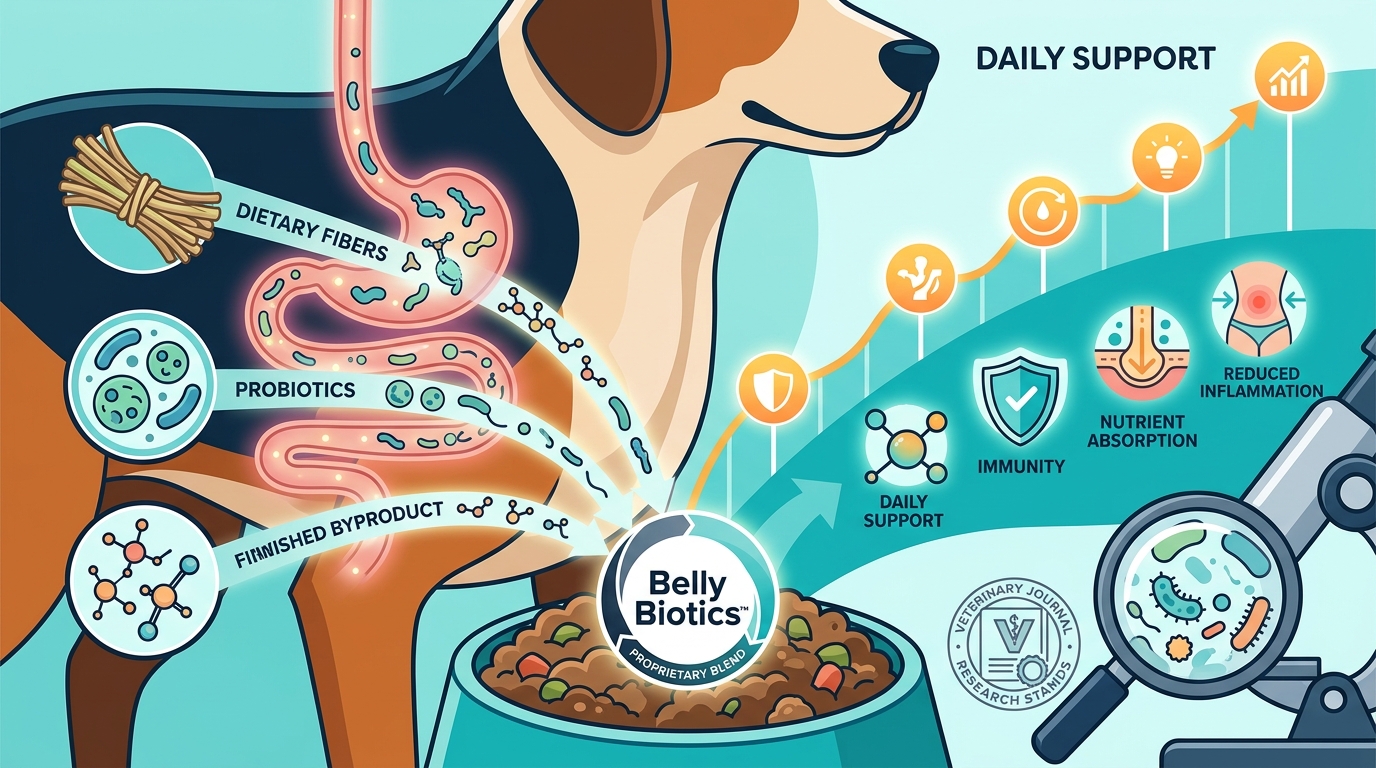
Freeze-dried raw nutrition naturally concentrates these three digestive pillars. Our formulation process preserves heat-sensitive enzymes and beneficial bacterial metabolites. Each bag of freeze-dried raw meals delivers concentrated nutrients without artificial preservatives. The gut health focus drives every recipe we develop. This approach aligns with evolutionary canine dietary requirements. You can explore our complete product lineup at our main shop page. The gut health focus drives every recipe we develop. This strategy aligns with evolutionary canine dietary requirements. Trusted by 30,000+ happy pet parents who prioritize whole-food nutrition, our recipes deliver consistent digestive support.
Choosing the Right Supplement Strategy
Selecting the optimal digestive support requires matching your dog's specific health profile. Some animals thrive on dietary fiber alone. Others require targeted bacterial strains for acute digestive recovery. We recommend starting with whole-food nutrition before adding isolated supplements. You can review our current seasonal promotions here. This strategy ensures you address root causes rather than masking symptoms. Consistent monitoring of stool quality and energy levels guides long-term decisions. Regular veterinary checkups help track progress and adjust formulations as needed.
Comparative Supplement Breakdown
| Supplement Type | Primary Function | Best Use Case | Recommended Source |
|---|---|---|---|
| Prebiotics | Fuels existing beneficial bacteria | Maintenance and prevention | Whole food ingredients |
| Probiotics | Introduces live bacterial strains | Acute digestive recovery | Targeted supplements |
| Postbiotics | Strengthens intestinal barrier | Long-term immune support | Freeze-dried formulations |
Key Takeaways
- Approximately 80 percent of canine immune activity occurs within the gastrointestinal tract.
- Prebiotics function as selective food sources for native bacterial populations.
- Probiotics introduce live microorganisms to temporarily restore microbial balance.
- Postbiotics deliver stable metabolic compounds that reinforce intestinal lining integrity.
- Freeze-dried raw recipes naturally preserve heat-sensitive digestive enzymes.
- Trusted by 30,000+ happy pet parents who prioritize whole-food nutrition.
- Consulting a veterinarian ensures safe supplementation for sensitive breeds.
Frequently Asked Questions
Can I give my dog probiotics every single day?
Daily probiotic administration is generally safe for most dogs, but cycling strains prevents microbial adaptation. Veterinarians often recommend periodic breaks or rotating bacterial formulas to maintain native flora diversity.
What is the main difference between prebiotics and probiotics?
Prebiotics are indigestible fibers that feed existing bacteria, while probiotics are live microorganisms that actively colonize the digestive tract. Both work synergistically to optimize gut health.
Are postbiotics safe for puppies and senior dogs?
Postbiotics are highly stable and generally safe across all life stages. Their non-living nature eliminates the risk of bacterial overgrowth in immunocompromised animals.
How long does it take for digestive supplements to show results?
Most dogs exhibit noticeable improvements in stool consistency within seven to fourteen days. Long-term immune and metabolic benefits typically require consistent supplementation over ninety days.
Should I combine freeze-dried raw food with additional supplements?
Our recipes already contain balanced prebiotic fibers and postbiotic compounds. Additional supplementation is usually unnecessary unless addressing specific veterinary diagnoses.
What ingredients should I avoid when managing canine gut health?
Artificial preservatives, excessive fillers, and low-quality protein sources disrupt microbial balance. Focus on single-protein recipes with recognizable whole-food ingredients.
Optimize Your Dog's Digestive Health Today
Take the next step toward lasting gut wellness by exploring our complete nutrition lineup. Visit our homepage to browse recipes, bundles, and subscription options tailored to your dog's specific needs. Schedule a consultation with our nutrition team or place your first order today. Your dog deserves science-backed, whole-food nutrition that delivers real results. Explore recipes and start transforming your pet's digestive wellness today.