

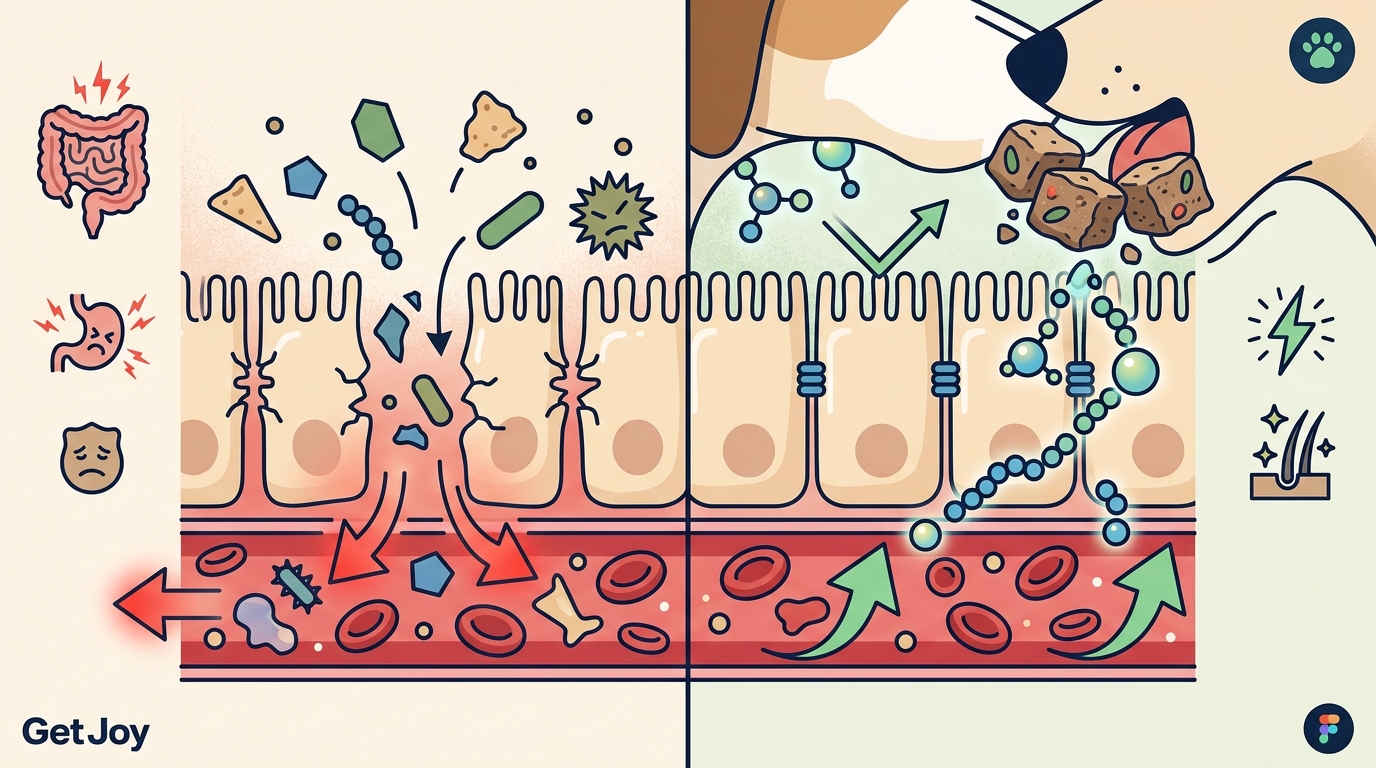
Understanding intestinal permeability is critical for long-term canine wellness. Leaky gut in dogs refers to a condition where the intestinal lining becomes compromised, allowing undigested particles and toxins to enter the bloodstream. This biological response often triggers systemic inflammation and chronic digestive distress. Pet owners who recognize early warning signs can intervene effectively. Proactive dietary adjustments and targeted nutritional support remain the most reliable defense strategies. This guide explores the underlying mechanisms and provides actionable prevention protocols.
Understanding Intestinal Permeability
The intestinal barrier serves as a highly selective filter. It allows essential nutrients to pass into circulation while blocking harmful pathogens. When this barrier weakens, the condition known as intestinal permeability develops. This biological state disrupts normal digestive function and compromises immune system coordination. Many dogs exhibit subtle symptoms that owners often overlook. Persistent scratching, irregular bowel movements, and unexplained fatigue frequently signal underlying digestive stress. Addressing these early indicators prevents long-term complications.
Identifying Early Warning Signs
Dogs rarely vocalize digestive discomfort directly. Instead, they display behavioral and physical changes that require careful observation. Chronic ear infections often stem from systemic inflammation triggered by compromised gut barriers. Unhealthy coat quality and excessive shedding indicate poor nutrient absorption. Owners should monitor stool consistency and track energy levels over extended periods. Regular veterinary checkups provide essential baseline data for tracking digestive health. Early intervention significantly improves long-term outcomes.
Dietary Interventions for Gut Health
Nutrition serves as the primary lever for restoring intestinal integrity. High-quality protein sources and carefully balanced micronutrients support mucosal repair. Freeze dried raw dog food formulations often contain naturally occurring enzymes that aid digestion. These specialized diets minimize artificial additives that commonly irritate sensitive digestive tracts. Transitioning to a biologically appropriate diet requires gradual implementation. Consistent feeding schedules reinforce healthy circadian rhythms within the digestive system.
Microbiome Balance and Mucosal Repair
A healthy microbiome directly influences barrier strength. Beneficial bacterial colonies produce short-chain fatty acids that nourish intestinal cells. These metabolic byproducts strengthen tight junction proteins between epithelial layers. Disrupted microbial diversity allows opportunistic pathogens to colonize vulnerable tissue. Restoring microbial equilibrium requires consistent exposure to prebiotic fibers and targeted probiotic strains. This biological reinforcement creates a resilient environment that resists inflammatory triggers.
Supplemental Support Strategies
Targeted nutritional supplements bridge common dietary gaps. Probiotic strains introduce beneficial bacteria that compete with harmful pathogens. Prebiotic fibers provide essential fuel for existing microbial colonies. Organ-based treats deliver concentrated nutrients that support natural detoxification pathways. Beef organ treats containing kidney, heart, and liver components offer highly bioavailable minerals. These specialized supplements work synergistically to reinforce mucosal defenses. Consistent supplementation yields measurable improvements in digestive resilience.
Essential Fatty Acids and Barrier Integrity
Lipid composition directly impacts cell membrane flexibility. Omega-3 fatty acids reduce inflammatory signaling pathways that weaken intestinal walls. These essential lipids integrate into cellular structures to improve barrier flexibility. Owners should prioritize high-quality fish oils or flaxseed extracts to support membrane health. Regular lipid supplementation complements dietary changes and accelerates mucosal recovery.
Lifestyle Factors and Environment
Environmental stressors directly impact digestive system stability. Chronic anxiety triggers cortisol release that weakens intestinal tight junctions. Regular physical activity promotes healthy peristalsis and reduces stagnation. Adequate hydration supports mucosal lubrication and nutrient transport. Owners should minimize exposure to environmental toxins and harsh cleaning chemicals. Creating a predictable daily routine reduces physiological stress. A calm environment directly correlates with improved digestive function.
Comparing Prevention Methods
Different approaches offer varying levels of efficacy. Traditional kibble diets often contain fillers that delay digestive recovery. Fresh meal preparations provide higher moisture content and natural enzymes. Freeze dried options retain maximum nutritional value while offering convenient storage. Each method requires careful evaluation against individual dog requirements. Owners must weigh cost, convenience, and biological appropriateness. Selecting the right approach depends on specific health goals and budget constraints.
| Dietary Approach | Primary Benefit | Implementation Difficulty | Best For |
|---|---|---|---|
| Freeze Dried Raw | Maximum nutrient retention and enzymatic activity | Low | Dogs requiring rapid digestive recovery |
| Fresh Meal Preparations | High moisture content and natural fiber | Medium | Owners prioritizing whole-food nutrition |
| Targeted Supplements | Targeted microbial support and mucosal repair | Low | Supplementing existing diets |
| Curated Bundles | Cost-effective comprehensive nutrition | Low | Long-term maintenance and budget management |
Key Takeaways
- Intestinal permeability allows undigested particles to cross into systemic circulation.
- Chronic ear infections and coat deterioration frequently signal underlying digestive stress.
- Freeze dried raw formulations preserve natural enzymes critical for mucosal repair.
- Organ-based treats deliver concentrated minerals that support natural detoxification pathways.
- Environmental stress and inconsistent routines directly weaken intestinal tight junctions.
- Gradual dietary transitions prevent additional digestive shock during recovery.
- Consistent supplementation yields measurable improvements in long-term digestive resilience.
Frequently Asked Questions
Can leaky gut in dogs be reversed completely?
Yes, intestinal permeability can be fully reversed through consistent dietary management and targeted nutritional support. The intestinal lining regenerates rapidly when provided with appropriate nutrients and reduced inflammatory triggers. Most dogs show significant improvement within three to four months of strict protocol adherence.
What specific foods should I avoid feeding a dog with compromised gut health?
Owners should eliminate highly processed fillers, artificial preservatives, and excessive carbohydrate loads. These ingredients commonly trigger inflammatory cascades that further damage the intestinal barrier. Switching to biologically appropriate diets removes these irritants and supports natural healing processes.
How long does it take to see improvements after changing a dog's diet?
Visible improvements typically emerge within four to six weeks of consistent dietary implementation. Stool consistency normalizes first, followed by improvements in coat quality and energy levels. Full mucosal repair requires sustained nutritional support over several months.
Are probiotics necessary for dogs with sensitive digestive systems?
Targeted probiotic strains provide essential microbial balance that supports intestinal barrier integrity. These beneficial bacteria compete with harmful pathogens and reinforce natural defense mechanisms. High-quality supplements deliver concentrated strains that survive stomach acid and colonize the lower digestive tract.
Can stress directly cause digestive issues in dogs?
Chronic psychological stress triggers cortisol release that directly weakens intestinal tight junctions. This physiological response compromises barrier function and increases systemic inflammation. Establishing predictable routines and minimizing environmental triggers significantly improves digestive stability.
Is freeze dried raw dog food safe for puppies with developing digestive systems?
Freeze dried raw formulations are highly appropriate for developing digestive systems. These diets provide easily digestible proteins and naturally occurring enzymes that support early gut maturation. Gradual introduction ensures smooth adaptation without triggering digestive distress.
Next Steps for Optimal Digestive Health
Restoring intestinal integrity requires consistent dietary management and proactive monitoring. Our Story outlines our commitment to biologically appropriate nutrition that supports long-term canine wellness. Frequently Asked Questions address common concerns regarding dietary transitions and supplement protocols. Visit our Dog Food Blog for ongoing educational resources. Explore our complete product catalog at All Products to find the ideal nutritional solution. Take advantage of our current Summer Of Joy Sale to begin your dog's digestive recovery today. Schedule a consultation with your veterinarian to establish a personalized prevention protocol.