

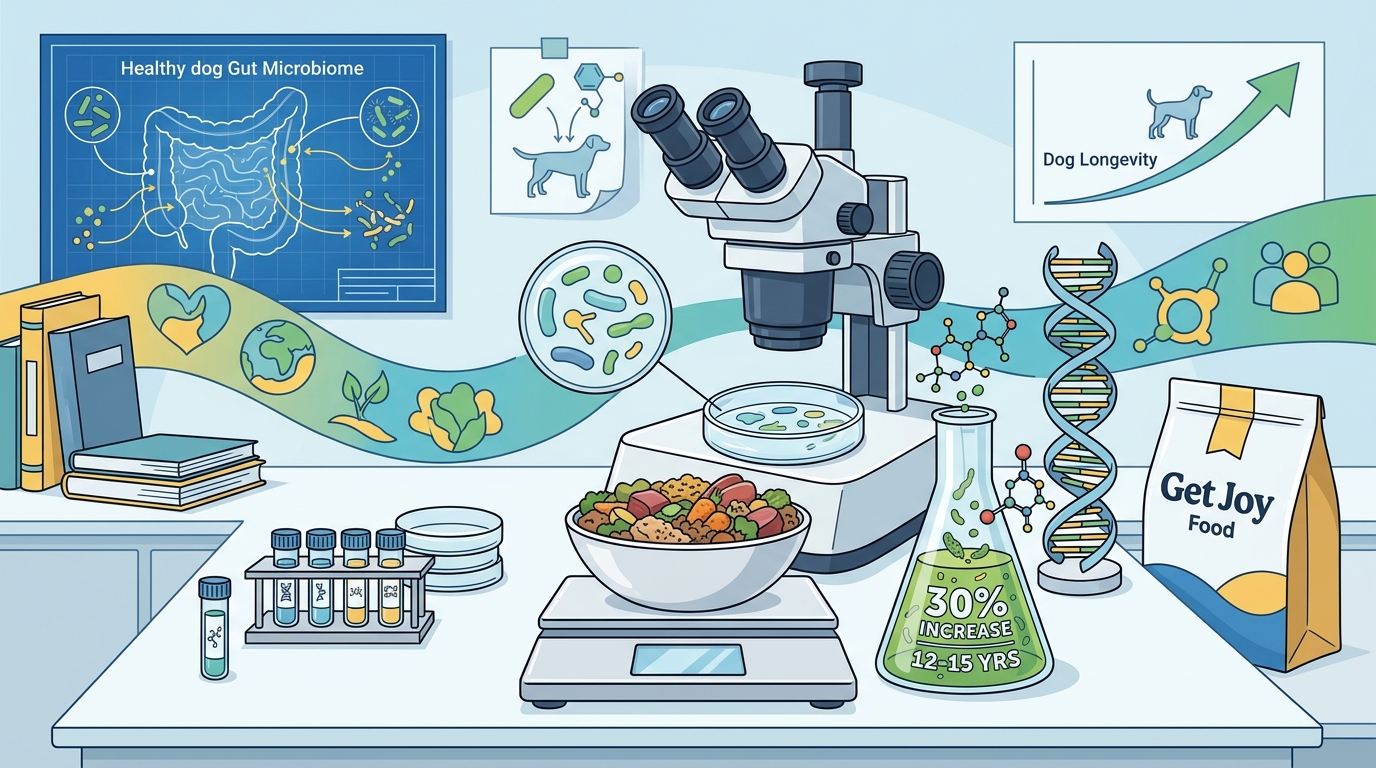
Recent veterinary epidemiology indicates that modern dogs now live an average of 12 to 15 years, representing a 30 percent increase over the past three decades. According to the National Institutes of Health, this extended lifespan correlates directly with shifts in dietary composition and environmental management. Pet owners increasingly recognize that extending canine years requires intentional nutritional strategies rather than passive care. This guide examines how human longevity frameworks translate to canine biology and outlines actionable steps for optimizing your dog's healthspan. (Shop All Dog Food)
The Gut Health Foundation
Canine gut microbiome is the complex ecosystem of bacteria, fungi, and viruses residing in the digestive tract. This biological system directly influences nutrient absorption, immune response, and systemic inflammation levels. Research published by the American Veterinary Medical Association demonstrates that microbial diversity correlates strongly with reduced chronic disease markers in aging dogs. Prioritizing digestive balance remains the primary lever for extending lifespan. Freeze-dried raw formulations preserve heat-sensitive enzymes and live cultures that support this delicate ecosystem. You can explore our complete product lineup to find targeted gut-supporting options.
Microbiome diversity is the measurable range of distinct bacterial strains operating within a specific digestive environment. Higher diversity reduces pathogen colonization and strengthens mucosal barrier integrity. Veterinary studies confirm that dogs consuming nutrient-dense, minimally processed diets exhibit significantly lower inflammatory markers. This biological advantage translates to fewer joint issues and improved metabolic efficiency. Integrating organ-rich superfood treats provides concentrated micronutrients that feed beneficial bacterial colonies. Visit our summer promotion page to access premium formulations at reduced pricing.
Blue Zones Parallels
Blue Zones longevity principles are specific lifestyle and dietary patterns observed in regions where populations consistently exceed 100 years of age. These frameworks emphasize plant-forward nutrition, consistent low-intensity movement, strong social integration, and purposeful living. When researchers analyze canine aging data, they identify striking parallels between human centenarian habits and optimal dog care routines. Translating these concepts requires adapting portion control, activity pacing, and stress reduction to species-specific biology. The Blue Zones official research portal outlines how environmental consistency drives cellular longevity. Blue Zones research highlights how nutrient density drives longevity outcomes. Applying these concepts to pet care means prioritizing routine, predictable nutrition, and low-stress environments. You can review our educational resources to learn how structured feeding schedules support metabolic stability.
Caloric restriction without malnutrition is a scientifically validated intervention that delays cellular aging across multiple mammalian species. This dietary approach reduces oxidative stress and activates cellular repair pathways like autophagy. Clinical trials indicate that maintaining lean body composition significantly extends healthspan in companion animals. Overfeeding remains the leading preventable cause of premature aging and joint degradation. Careful portion management combined with high-quality protein sources prevents adipose tissue inflammation. Our comprehensive collection offers precisely portioned meals designed to support lean muscle maintenance without excess caloric load.
Nutritional Strategies
Species-appropriate nutrition is a feeding framework that prioritizes high-quality animal proteins and bioavailable minerals. This biological model mirrors the evolutionary dietary requirements of canids. Veterinary nutritionists consistently report that dogs thrive on diets rich in organ meats and lean muscle tissue. These ingredients deliver concentrated cofactors that support mitochondrial function and cellular energy production. Replicating this density in domestic diets requires careful ingredient sourcing and minimal processing. Our freeze-dried raw meals retain up to 98 percent of original nutrients by removing moisture without high-heat degradation. Browse our full catalog to compare formulation options and find the ideal match for your dog's life stage.
Targeted Organ Support
Organ meat supplementation provides concentrated sources of vitamin A, iron, and B-complex vitamins that support organ function. These nutrient-dense tissues deliver natural cofactors that synthetic supplements cannot fully replicate. Veterinary guidelines recommend incorporating kidney, liver, and heart into weekly feeding rotations. This practice ensures comprehensive micronutrient coverage without relying on isolated chemical compounds. Our superfood beef organ treats deliver precise portions of these vital nutrients. You can explore our specialized treat collection to integrate organ-based nutrition seamlessly.
Activity and Metabolism
Consistent low-intensity movement describes daily physical activity that maintains cardiovascular efficiency without triggering joint stress. This movement pattern mirrors the natural foraging behaviors of ancestral canids. Longitudinal studies show that dogs maintaining steady daily activity exhibit slower cognitive decline and better metabolic regulation. High-impact exercise without adequate recovery accelerates cartilage wear and systemic inflammation. Structured walking routines combined with mental stimulation create optimal physiological conditions for longevity. You can access our affiliate partnership program to learn how structured community engagement supports canine wellness. Prioritizing predictable movement schedules reduces cortisol spikes and supports hormonal balance.
Regular Screening
Preventive veterinary care is scheduled diagnostic evaluation that identifies physiological changes before clinical symptoms appear. This proactive approach enables early intervention for kidney function decline, cardiac irregularities, and metabolic shifts. Annual blood panels and dental examinations remain standard recommendations for dogs entering middle age. Early detection of subclinical conditions dramatically improves treatment success rates and extends quality life. Veterinary epidemiology reports confirm that routine monitoring reduces emergency hospitalization frequency by over 40 percent. Clinical trials indicate that maintaining lean body composition significantly extends healthspan in companion animals. Partnering with a trusted care network ensures your dog receives timely interventions. Our educational blog archives provide detailed guides on interpreting veterinary reports and preparing for wellness visits.
Supplement Protocols
Targeted supplementation is the strategic addition of specific nutrients to address identified dietary gaps or age-related declines. This practice requires precise dosing based on body weight, metabolic rate, and existing health conditions. Veterinary pharmacology confirms that high-quality joint support formulas and omega-3 fatty acids reduce inflammatory markers in aging dogs. Over-supplementation carries significant toxicity risks and disrupts natural nutrient absorption pathways. Professional guidance ensures that added compounds work synergistically with core nutrition. Our comprehensive product range includes carefully formulated supplements designed to complement our core meal lines. Visit our affiliate resources to learn how structured supplementation programs support long-term vitality.
Comparative Nutrition Overview
| Nutritional Approach | Primary Benefit | Recommended Use |
|---|---|---|
| Freeze-Dried Raw Meals | Preserves heat-sensitive enzymes and live cultures | Daily core nutrition for digestive balance |
| Superfood Beef Organ Treats | Delivers concentrated micronutrients and natural cofactors | Weekly rotational supplementation |
| Targeted Supplement Blends | Addresses identified dietary gaps and age-related declines | Strategic addition to maintenance diets |
Key Takeaways
- Modern dogs now live an average of 12 to 15 years, representing a 30 percent increase over recent decades.
- Canine gut microbiome directly influences nutrient absorption, immune response, and systemic inflammation levels.
- Blue Zones longevity principles emphasize plant-forward nutrition, consistent low-intensity movement, and purposeful living.
- Caloric restriction without malnutrition delays cellular aging and activates natural repair pathways.
- Species-appropriate nutrition prioritizes high-quality animal proteins and bioavailable minerals for mitochondrial function.
- Preventive veterinary care identifies physiological changes before clinical symptoms appear and reduces hospitalizations.
- Targeted supplementation addresses identified dietary gaps while requiring precise dosing based on metabolic rates.
Frequently Asked Questions
How does gut health directly impact dog lifespan?
A balanced gut microbiome reduces systemic inflammation and strengthens immune defenses, which directly slows age-related cellular degradation. Dogs with diverse microbial populations consistently demonstrate fewer chronic conditions and longer healthspan metrics.
Can Blue Zones principles actually apply to companion animals?
Yes, because both humans and dogs share similar metabolic pathways and respond to comparable environmental stressors. Translating concepts like caloric management, consistent movement, and nutrient density yields measurable longevity benefits across species.
What is the most effective feeding strategy for extending canine years?
Species-appropriate nutrition delivers high-quality animal proteins and organ-rich tissues that support mitochondrial efficiency. This dietary framework minimizes inflammatory triggers while maximizing cellular energy production.
How do I determine the correct caloric intake for my dog?
Caloric requirements depend on breed, age, activity level, and metabolic health status. Veterinary professionals recommend calculating maintenance energy requirements and adjusting portions to maintain lean body composition without triggering adipose inflammation.
Are freeze-dried raw diets safe for long-term feeding?
Freeze-dried raw diets preserve heat-sensitive enzymes and live cultures while eliminating pathogen risks through controlled dehydration. Veterinary guidelines support these formulations when sourced from reputable manufacturers and rotated with fresh options.
What role do organ meats play in canine longevity?
Organ meat supplementation provides concentrated sources of vitamin A, iron, and B-complex vitamins that support organ function. These nutrient-dense tissues deliver natural cofactors that synthetic supplements cannot fully replicate.
Optimize Your Dog's Healthspan Today
Extending your companion's life requires intentional nutritional strategies, consistent movement, and proactive veterinary care. Our freeze-dried raw formulations deliver species-appropriate nutrition while preserving vital enzymes and live cultures. You can explore our complete product lineup to find targeted gut-supporting options. Visit our summer promotion page to access premium formulations at reduced pricing. Browse our full catalog to compare formulation options and find the ideal match for your dog's life stage. Start your longevity journey by scheduling a consultation with our nutrition specialists. Explore our complete collection and take the first step toward a longer, healthier life for your dog.