

Should I Give My Dog Probiotics Daily? Prebiotics vs Probiotics vs Postbiotics
Understanding canine digestive health requires a clear grasp of how different supplements interact with the gut microbiome. Recent veterinary research indicates that approximately 80 percent of a dog's immune system resides within the intestinal tract, making daily nutritional support critical for long-term wellness. Pet owners frequently ask whether daily supplementation is necessary or potentially harmful. The answer depends on the specific type of compound and the individual dog's dietary baseline. This guide breaks down the exact differences between prebiotics, probiotics, and postbiotics while outlining safe daily administration protocols.
Understanding Gut Microbiome Basics
The canine digestive system relies on a complex network of microorganisms to process nutrients and defend against pathogens. These microscopic communities colonize the stomach, small intestine, and large intestine. When the balance shifts, dogs experience digestive upset, skin irritation, or reduced energy levels. Maintaining equilibrium requires consistent nutritional input. Daily supplementation bridges the gap between standard kibble and optimal biological function. Veterinary nutritionists consistently recommend tracking daily intake to prevent microbial imbalance. You can explore comprehensive feeding strategies through our Dog Food Blog to align your routine with current best practices.
Prebiotics vs Probiotics vs Postbiotics
Many pet owners confuse these three terms because they all support digestive health. Each compound performs a distinct biological function. Prebiotics is a type of dietary fiber that feeds beneficial gut bacteria without being digested by the host. Probiotics is a live microorganism that temporarily colonizes the intestinal tract to restore microbial balance. Postbiotics is a collection of metabolic byproducts and cell fragments produced by beneficial bacteria that support immune regulation. Understanding these distinctions prevents redundant supplementation. National health institutes emphasize that combining all three creates a synergistic effect. You can discover how our formulations integrate these compounds by browsing our All Products collection.
Daily Administration Guidelines
Consistency matters more than dosage when introducing digestive supplements. Daily administration allows microbial populations to establish stable colonies. Skipping days disrupts colonization cycles and reduces long-term efficacy. Most veterinary guidelines suggest starting with a low dose and gradually increasing it over two weeks. This approach minimizes temporary gastrointestinal adjustments. Federal food safety agencies confirm that gradual introduction prevents adverse reactions. Our subscription model simplifies this process by delivering measured portions directly to your door. You can learn more about our automated delivery options on our Summer Of Joy Sale page.
Freeze-Dried Raw Benefits
Traditional supplements often contain fillers that interfere with nutrient absorption. Freeze-dried raw formulations preserve heat-sensitive enzymes and live cultures. The dehydration process removes moisture while maintaining structural integrity. This method ensures maximum bioavailability when rehydrated. Dogs benefit from concentrated nutrients without artificial preservatives. Peer-reviewed journals highlight that freeze-dried matrices protect microbial viability during storage. Our Superfood Beef Organ Treats deliver targeted nutrients alongside digestive support. You can explore our complete range of freeze-dried raw meals and supplements by visiting our main homepage.
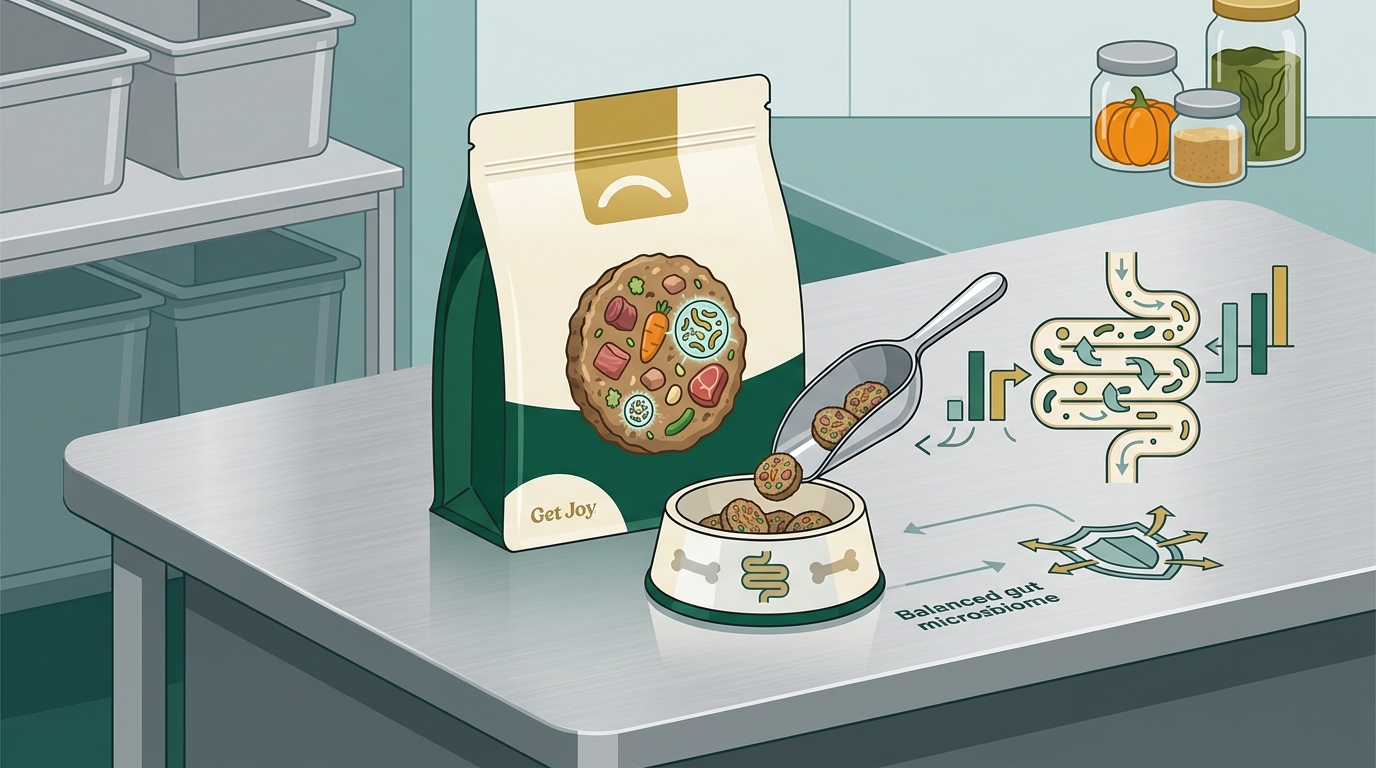
Supplement Selection Table
Selecting the right digestive support requires comparing formulation types, delivery methods, and target outcomes. The following matrix outlines the primary options available to modern pet owners.
| Supplement Type | Primary Function | Best For | Recommended Frequency |
|---|---|---|---|
| Prebiotics | Feeds beneficial bacteria | Dogs with low-fiber diets | Daily |
| Probiotics | Restores microbial balance | Post-antibiotic recovery | Daily |
| Postbiotics | Supports immune regulation | Chronic sensitivity management | Daily |
| Freeze-Dried Raw | Delivers complete nutrition | Long-term wellness maintenance | Daily |
Key Takeaways
- Approximately 80 percent of canine immune function originates in the intestinal tract.
- Prebiotics acts as fuel for beneficial bacteria without direct host digestion.
- Probiotics introduces live microorganisms to temporarily colonize the gut.
- Postbiotics delivers metabolic byproducts that regulate immune responses.
- Daily administration prevents microbial imbalance and supports consistent digestion.
- Freeze-dried raw formulations preserve heat-sensitive enzymes and live cultures.
- Gradual introduction over two weeks minimizes temporary gastrointestinal adjustments.
Frequently Asked Questions
Can I give my dog probiotics every day without side effects?
Daily administration is generally safe when introduced gradually. Most dogs experience smooth digestion after the initial adjustment period. Monitoring stool consistency helps determine optimal dosing.
Do prebiotics work better than probiotics for daily use?
Neither option universally outperforms the other. Prebiotics nourish existing bacteria, while probiotics introduce new strains. Combining both creates a comprehensive digestive support system.
How long does it take for probiotics to show results?
Visible improvements typically appear within two to four weeks. Consistent daily intake allows microbial colonies to establish stable populations. Patience during the initial phase ensures long-term success.
Are freeze-dried supplements more effective than soft chews?
Freeze-dried matrices preserve heat-sensitive enzymes and live cultures more effectively. Soft chews often contain binders that reduce nutrient bioavailability. Freeze-dried options deliver concentrated nutrients without artificial additives.
Can puppies safely consume daily probiotic supplements?
Young dogs benefit from early microbial colonization. Veterinary guidelines recommend age-appropriate dosing for developing digestive systems. Consulting a licensed veterinarian ensures proper formulation selection.
What happens if I stop daily probiotic administration?
Microbial populations gradually return to baseline levels. Benefits diminish over two to three weeks without consistent support. Maintaining daily intake preserves long-term digestive equilibrium.
Do postbiotics replace the need for live cultures?
Postbiotics deliver metabolic byproducts that support immune regulation. They do not colonize the gut like live cultures. Combining postbiotics with probiotics maximizes digestive outcomes.
Next Steps
Optimizing your dog's digestive health requires consistent, science-backed supplementation. Daily administration of prebiotics, probiotics, and postbiotics creates a resilient microbial ecosystem. Freeze-dried raw formulations preserve heat-sensitive nutrients while delivering complete nutrition. Start your journey toward lasting wellness by exploring our curated product lines. Visit our homepage to browse available supplements, schedule a consultation, or place your first order today.