

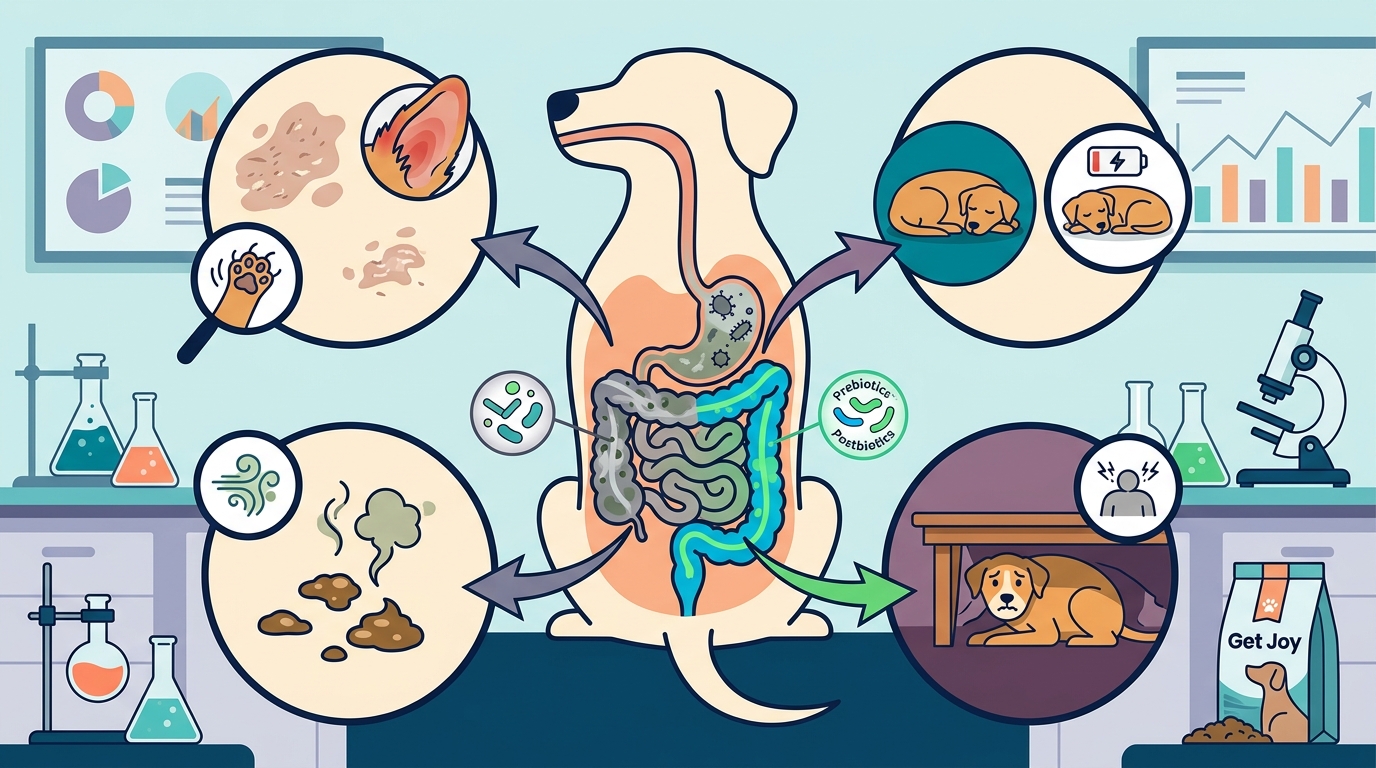
Your dog cannot tell you when their stomach hurts, but their body sends plenty of signals. Because 70 to 80 percent of a dog's immune system lives in the gut, an imbalance there can ripple into skin problems, low energy, mood changes, and more. Learning to read these signs early gives you the power to act before minor discomfort becomes a chronic issue. Below, we break down the most common symptoms of poor gut health in dogs, explain what causes them, and show you how the right nutrition can help restore balance from the inside out.
What Is the Gut Microbiome in Dogs?
The gut microbiome is an ecosystem of trillions of bacteria, fungi, and other microorganisms living in your dog's gastrointestinal tract. These microbes help digest food, synthesize vitamins, fight off pathogens, and regulate immune responses. When the community of beneficial bacteria thrives, your dog's whole body benefits.
Dysbiosis is the clinical term for an imbalance in which harmful bacteria outnumber beneficial microbes. According to Veterinary Partner (VIN), gut bacteria regulate neurotransmitters like serotonin, dopamine, and GABA, meaning an unhealthy gut can affect far more than digestion.
1. Digestive Warning Signs
Chronic Diarrhea or Constipation
A single bout of loose stool after a dietary indiscretion is normal. Chronic diarrhea lasting more than a few days, or persistent constipation, signals a deeper issue. Alternating between the two is also a red flag. Inspecting your dog's poop is one of the easiest ways to monitor gut health on a daily basis.
Vomiting and Excessive Gas
Frequent vomiting, especially when accompanied by bloating or foul-smelling gas, often points to bacterial imbalance or poor nutrient absorption. Occasional gas is normal, but a persistent increase deserves attention.
Bad Breath
Halitosis that is not linked to dental disease can indicate microbial imbalance further down the GI tract. If brushing teeth does not resolve the issue, the gut may be the culprit.
2. Skin and Coat Red Flags
The gut-skin axis is a well-documented connection. When the gut is inflamed, it can trigger immune responses that show up on the surface. Common signs include:
- Persistent itching, hot spots, or paw licking
- Chronic ear infections that keep returning
- A dull, dry, or flaky coat despite regular grooming
A shiny coat is one of the most visible indicators of good internal health. If your dog's fur has lost its luster, poor nutrient absorption from a compromised gut could be the reason. Providing nutrient-dense whole-food meals can help support coat health from the inside.
3. Behavioral and Mood Changes
The gut-brain axis is a two-way communication channel between the digestive system and the brain. Research published on Veterinary Partner explains that gut inflammation releases cytokines that travel to the brain and trigger lethargy, withdrawal, and even aggression. These are not simply "bad behavior" but potential signs of gastrointestinal distress.
Watch for increased anxiety, irritability, or sudden withdrawal from play. If your normally social dog becomes reclusive or reactive, a gut check may be in order. Supporting the microbiome with a balanced, gut-focused diet that includes prebiotics, probiotics, and postbiotics may help stabilize mood over time.
4. Unexplained Weight and Energy Shifts
An unhealthy gut disrupts nutrient absorption, which can lead to surprising changes in weight or energy levels.
| Symptom | Possible Gut-Related Cause | What to Monitor |
|---|---|---|
| Unexplained weight loss | Poor nutrient absorption | Eating normally but losing mass |
| Unexpected weight gain | Metabolic disruption, blood sugar imbalance | Gaining weight on the same portion size |
| Chronic lethargy | Nutrient deficiency, systemic inflammation | Reduced interest in walks or play |
| Increased hunger | Body compensating for unabsorbed nutrients | Begging more despite full meals |
A healthy gut helps maintain steady energy by ensuring nutrients from food are properly absorbed and utilized. If your dog seems sluggish despite adequate rest and exercise, their gut may not be doing its job. Targeted gut supplements can help fill nutritional gaps alongside a high-quality diet.
5. Common Causes of Gut Imbalance
Diet and Food Transitions
Poor-quality food loaded with fillers and artificial additives is one of the most common triggers. Switching diets too quickly can also disrupt the microbiome. A gradual transition over 7 to 10 days is recommended whenever you change your dog's food.
Antibiotics and Medications
Antibiotics kill harmful bacteria, but they also wipe out beneficial microbes. If your dog has been on a course of antibiotics, proactively restoring gut flora with prebiotics, probiotics, and postbiotics is essential.
Stress and Environmental Factors
Stress triggers hormonal responses that slow digestion and disturb microbial balance. Events like moving, boarding, or changes in routine can all impact your dog's gut. The gut-brain axis means emotional stress quickly becomes physical stress in the digestive tract.
6. How Nutrition Can Restore Gut Health
Nutrition is the single most controllable factor in gut health. A whole-food diet rich in high-quality protein, fiber, and functional ingredients can re-establish microbial balance over time.
Get Joy's Freeze-Dried Raw Meals are built around a gut-first philosophy. Every recipe includes Belly Biotics, a proprietary blend of prebiotics, probiotics, and postbiotics designed to nourish beneficial gut bacteria and support digestion, immunity, and whole-body wellness. Unlike supplements added as an afterthought, these biotics are formulated directly into the food.
For dogs that need additional support, pairing meals with Get Joy's science-backed supplements can diversify the microbiome with complementary probiotic strains. The recipes are free from common allergens like wheat, soy, and dairy, making them suitable for dogs with sensitivities.
Key Takeaways
- Chronic diarrhea, constipation, vomiting, and excessive gas are the most obvious signs of an unhealthy gut.
- Skin issues like itching, hot spots, and a dull coat often trace back to gut imbalance through the gut-skin axis.
- Behavioral changes such as anxiety, lethargy, and irritability can be driven by the gut-brain axis.
- Unexplained weight changes and chronic fatigue may indicate poor nutrient absorption.
- Antibiotics, stress, and low-quality food are leading causes of dysbiosis in dogs.
- A whole-food diet with built-in prebiotics, probiotics, and postbiotics is the most effective daily intervention.
- Symptoms lasting more than 48 hours, or any sign of blood or severe lethargy, require an immediate veterinary visit.
Frequently Asked Questions
What are the first signs of an unhealthy gut in dogs?
The earliest signs are usually digestive: loose stools, excessive gas, or changes in appetite. Subtle clues like increased lethargy or a slightly dull coat can also appear before more obvious symptoms develop.
Can poor gut health cause skin problems in dogs?
Yes. The gut-skin axis means that intestinal inflammation can trigger immune reactions that manifest as itchy skin, hot spots, chronic ear infections, and a dry or flaky coat.
How does stress affect my dog's gut?
Stress activates hormones that slow gastric function and disrupt the balance of bacteria in the digestive tract. This can lead to diarrhea, bloating, or loss of appetite, especially after events like moving or boarding.
What is dysbiosis in dogs?
Dysbiosis is a condition in which harmful bacteria outnumber beneficial microbes in the digestive tract. It can result from antibiotics, poor diet, illness, or chronic stress, and it often underlies recurring digestive and immune problems.
What are prebiotics, probiotics, and postbiotics?
Prebiotics are dietary fibers that feed beneficial gut bacteria. Probiotics are live beneficial bacteria that support microbial balance. Postbiotics are the beneficial metabolic byproducts produced by probiotic bacteria. Together, they form a complete support system for the gut microbiome.
How long does it take to improve a dog's gut health?
Many dog owners notice improvements in stool quality and energy within one to two weeks of switching to a gut-supportive diet. Full microbiome rebalancing can take four to six weeks depending on the severity of the imbalance.
When should I take my dog to the vet for gut issues?
If symptoms like diarrhea, vomiting, or lethargy last more than 48 hours, or if you see blood in the stool or signs of severe dehydration, contact your veterinarian immediately. Persistent symptoms warrant professional evaluation to rule out serious conditions.
Is freeze-dried raw food good for dogs with sensitive stomachs?
Freeze-dried raw food preserves nutrients without high-heat processing, which can be easier on sensitive digestive systems. Get Joy's recipes are free from wheat, soy, and dairy, and include built-in Belly Biotics to support digestion from the first bowl.
Give Your Dog's Gut the Support It Deserves
If you have noticed any of these warning signs, nutrition is the best place to start. Explore Get Joy's Freeze-Dried Raw Meals with built-in Belly Biotics and give your dog a diet designed for whole-body wellness, starting from the gut.