

Seed oils have become one of the most debated ingredients in both human and canine nutrition. From corn and soybean oil to sunflower and safflower oil, these cheap fats show up in a surprising number of commercial dog foods. But are they actually harmful to your dog? The answer is nuanced. While small amounts of certain fatty acids from seed oils are essential, the heavy reliance on these highly processed oils in kibble and even some fresh foods can tip the balance toward chronic inflammation. Here is what the science says and what you can do about it.
What Are Seed Oils?
Seed oils are oils extracted from the seeds of various plants. Common examples include sunflower oil, soybean oil, corn oil, canola oil, and safflower oil. These oils are rich in polyunsaturated fatty acids (PUFAs), particularly omega-6 linoleic acid (LA).
In the pet food industry, seed oils are popular because they are inexpensive and have a long shelf life. They appear in kibble, canned food, and even some fresh or raw diets. The issue is not that omega-6 fats exist in your dog's bowl. Linoleic acid is an essential nutrient dogs need for skin health, coat quality, and cell function. The problem arises when seed oils push omega-6 intake far beyond what is beneficial.
The Omega-6 to Omega-3 Balance Problem
Dogs require only two essential fatty acids: the omega-6 linoleic acid (LA) and the omega-3 alpha-linolenic acid (ALA). The ideal dietary ratio of omega-6 to omega-3 is thought to be around 5:1 or even less. However, many commercial pet foods contain ratios as high as 20:1 or even 30:1 due to their heavy use of seed oils.
This imbalance matters because LA and ALA compete for the same metabolic enzymes. When omega-6 intake overwhelms omega-3, fewer anti-inflammatory compounds are produced. A 2023 study published in PMC confirmed that a balanced n-6:n-3 ratio is needed to ensure sufficient conversion to longer-chain fatty acids in both pro- and anti-inflammatory pathways.
How Seed Oils May Promote Inflammation in Dogs
Linoleic acid, the dominant fatty acid in most seed oils, contributes to inflammatory pathways once it is converted to arachidonic acid (AA) in the body. In moderate amounts this process is healthy and necessary. In excess, it can fuel chronic, low-grade inflammation linked to joint pain, allergies, skin conditions, and digestive problems.
Dogs with pre-existing health concerns may be especially vulnerable. Chronic inflammation can also weaken the immune system, making dogs more susceptible to infections. This is one reason why a gut-first approach to canine nutrition is so important. A healthy gut microbiome helps regulate inflammatory responses throughout the body.
The Role of the Gut Microbiome
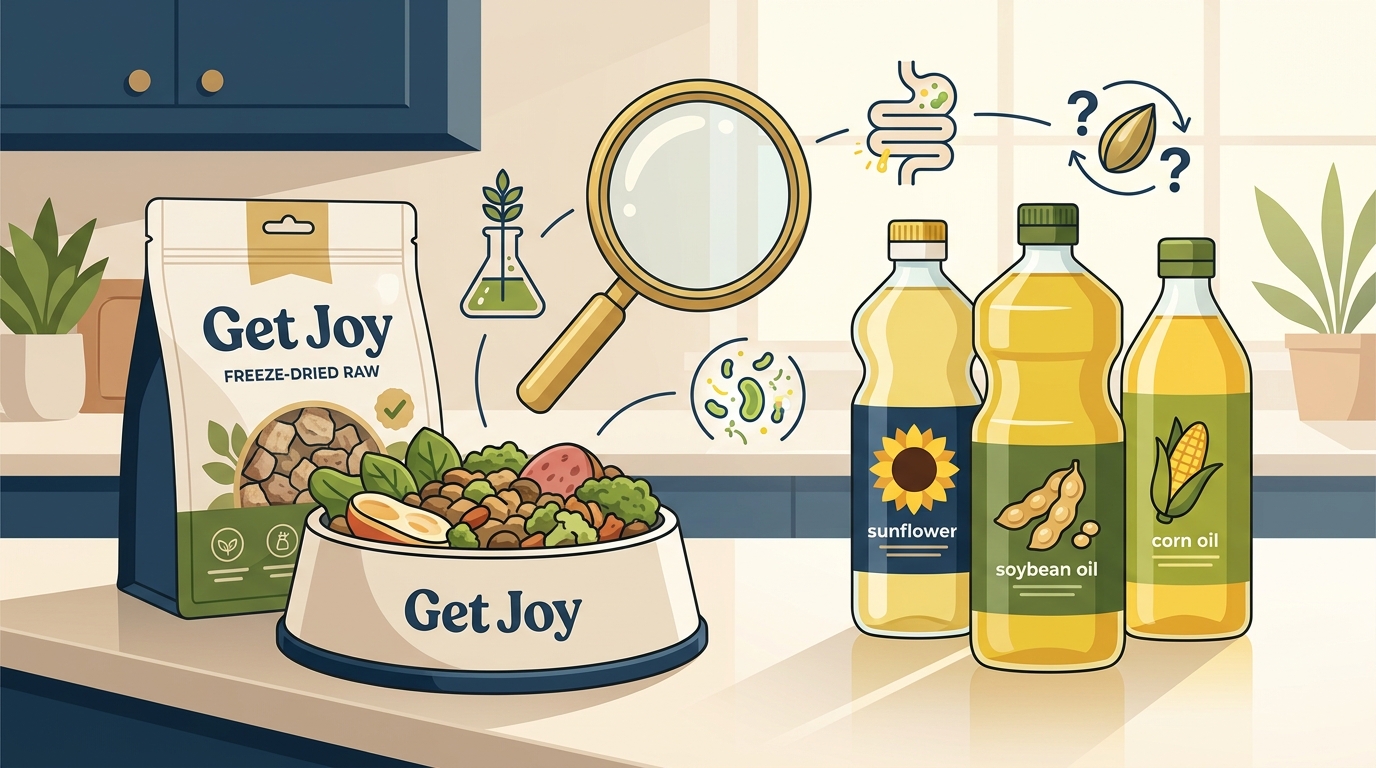
Your dog's gut is home to roughly 70% of their immune cells. When the gut lining is irritated by an inflammatory diet, nutrient absorption drops and systemic inflammation can rise. Supporting the microbiome with prebiotics, probiotics, and postbiotics can help counterbalance dietary stressors. Get Joy's proprietary Belly Biotics™ blend is built directly into every meal for this reason.
Processing Concerns: Hexane, Heat, and Oxidation
Beyond the fatty acid profile, the way seed oils are manufactured raises additional red flags. Most commercial seed oils are extracted using hexane, a petroleum-derived solvent. The oils then undergo refining, bleaching, and deodorizing at high temperatures, which strips beneficial compounds like vitamin E and phenols.
Seed oils are also prone to oxidation when exposed to heat, light, and air during processing and storage. Oxidized fats can generate harmful byproducts, including Advanced Glycation End products (AGEs). According to AGE researcher Dr. David Turner, Ph.D. of Virginia Commonwealth University, dog food may contain roughly 100 times more AGEs than human food, potentially reducing canine quality of life and lifespan.
Seed Oils vs. Healthier Fat Sources for Dogs
| Fat Source | Primary Fatty Acids | Omega-6:Omega-3 Ratio | Processing Level | Notes for Dogs |
|---|---|---|---|---|
| Corn Oil | Omega-6 (LA) | ~46:1 | High (solvent-extracted) | Very high omega-6; common in kibble |
| Soybean Oil | Omega-6 (LA) | ~7:1 | High (solvent-extracted) | Widely used filler fat in pet food |
| Sunflower Oil | Omega-6 (LA) | ~40:1 (high-oleic varies) | Moderate to High | Useful in small, balanced amounts |
| Coconut Oil | MCTs (saturated) | N/A (minimal PUFAs) | Low (cold-pressed) | Easily digestible; supports energy and immunity |
| Fish Oil | Omega-3 (EPA/DHA) | Omega-3 dominant | Low to Moderate | Anti-inflammatory; supports joints and coat |
| Animal Fats (e.g., beef, chicken) | Balanced mix | Varies by source | Minimal | Natural source of essential fats and fat-soluble vitamins |
The takeaway: not all fats are created equal. Whole-food animal fats, fish oil, and coconut oil generally offer a more favorable fatty acid profile and undergo far less chemical processing than industrial seed oils.
What to Look for in Your Dog's Food
Read the Ingredient Label
Flip the bag or check the product page. If corn oil, soybean oil, canola oil, or generic "vegetable oil" appears in the first several ingredients, your dog's food likely relies on seed oils as a primary fat source. Look for foods that derive fats from whole-food ingredients like USDA meats, organ meats, and nutrient-dense superfoods instead.
Prioritize Whole-Food Nutrition
Fresh and freeze-dried raw diets that use real meat as the primary fat source naturally deliver a better fatty acid balance. Get Joy's freeze-dried raw meals are made with premium raw meats and superfoods, avoiding the heavy seed-oil reliance found in many kibbles. Every recipe includes Belly Biotics™ to support digestion, immunity, and nutrient absorption.
Consider Gut Health Support
Even the best dietary change takes time to repair an inflamed gut. Combining clean nutrition with targeted gut health supplements can accelerate your dog's progress. Prebiotics feed beneficial bacteria, probiotics replenish them, and postbiotics help suppress harmful microbes.
Key Takeaways
- Seed oils are oils extracted from plant seeds such as corn, soy, sunflower, and canola. They are high in omega-6 fatty acids.
- Dogs need some omega-6 (linoleic acid), but excess amounts can promote chronic inflammation linked to allergies, joint pain, and digestive issues.
- The ideal omega-6 to omega-3 ratio for dogs is around 5:1; many commercial foods exceed 20:1.
- Industrial processing with hexane and high heat strips seed oils of beneficial nutrients and can create harmful oxidation byproducts.
- Healthier fat alternatives include animal fats from whole meats, fish oil rich in EPA and DHA, and coconut oil with easily digestible MCTs.
- Reading your dog's ingredient label is the simplest first step toward reducing unnecessary seed oil exposure.
- Supporting the gut microbiome with prebiotics, probiotics, and postbiotics helps manage inflammation from the inside out.
Frequently Asked Questions
Are all seed oils harmful to dogs?
No. Seed oils are not toxic in small amounts, and linoleic acid from seed oils is actually an essential nutrient for dogs. The concern is with excessive quantities that skew the omega-6 to omega-3 ratio and promote inflammation. Quality and quantity both matter.
Which seed oils are most commonly found in dog food?
Soybean oil, corn oil, canola oil, sunflower oil, and safflower oil are the most common seed oils used in commercial pet food. They are inexpensive and shelf-stable, which makes them attractive to manufacturers.
What is a healthy omega-6 to omega-3 ratio for dogs?
Most canine nutrition experts recommend a ratio of around 5:1 (omega-6 to omega-3) or lower. Many commercial dog foods exceed 20:1 due to seed oil content, which can contribute to inflammatory imbalances.
Can seed oils cause allergies in dogs?
Seed oils themselves are not common allergens, but the chronic inflammation caused by excessive omega-6 intake can worsen allergy symptoms such as itchy skin, hot spots, and ear infections.
What fats should I look for in my dog's food instead?
Look for whole-food fat sources such as named animal fats (chicken fat, beef fat), fish oil for omega-3s, and coconut oil for MCTs. These provide essential fatty acids without the heavy processing of industrial seed oils.
Does Get Joy use seed oils in its recipes?
Get Joy focuses on whole-food, vet-formulated recipes made with USDA meats and superfoods. The brand's gut-first philosophy prioritizes real, minimally processed ingredients and includes Belly Biotics™ in every meal to support digestion and overall wellness.
How can I help my dog if they have been eating seed-oil-heavy food?
Transition gradually to a higher-quality diet with better fatty acid balance. Supporting your dog's gut health during the switch is important. A combination of nutrient-dense superfoods and a prebiotic-probiotic-postbiotic blend can help restore digestive balance over several weeks.
Should I add fish oil to my dog's current food?
Fish oil is a popular way to boost omega-3 intake and improve the omega-6 to omega-3 ratio. However, supplementing on top of a seed-oil-heavy diet only partially addresses the problem. The most effective approach is choosing a food with a balanced fatty acid profile from the start.
Give Your Dog a Better Bowl
Your dog's nutrition should work for them, not against them. If seed oils, fillers, and heavily processed fats have been the norm, it is time for an upgrade. Explore Get Joy's freeze-dried raw meals and fresh meal plans, all built with whole-food ingredients and Belly Biotics™ to fuel your dog's gut health and whole-body wellness. Because joy truly starts from within.