

If you have scrolled through pet nutrition forums or Instagram lately, you have probably seen alarming claims about seed oils in dog food. The debate has migrated from human wellness circles into the pet world, and dog owners are rightfully asking questions. Are seed oils actually harmful to your dog, or is the concern overblown? The answer, like most things in nutrition, depends on the type of oil, how it is processed, and how much your dog consumes. In this guide, we break down the science, separate fact from hype, and explain what to look for on your dog's food label so you can make a confident choice for your pup.
What Are Seed Oils?
Seed oils are oils extracted from the seeds of various plants. Common examples include sunflower oil, soybean oil, corn oil, safflower oil, and canola oil. These oils are rich in polyunsaturated fatty acids (PUFAs), particularly omega-6 fatty acids like linoleic acid (LA).
Linoleic acid is actually an essential nutrient for dogs. Their bodies cannot produce it, so it must come from food. In appropriate amounts, omega-6 supports healthy skin, a glossy coat, immune function, and cellular repair. The problem arises when dogs consume too much omega-6 relative to omega-3 fatty acids.
The Omega-6 to Omega-3 Balance Problem
The ideal ratio of omega-6 to omega-3 fatty acids for dogs is generally considered to be around 5:1 or even lower. However, many commercial pet foods contain ratios as high as 20:1 or 30:1 because of the heavy use of seed oils and omega-6-rich rendered fats.
This imbalance matters. Omega-6 fatty acids tend to promote inflammatory pathways in the body, while omega-3 fatty acids have anti-inflammatory effects. When the ratio tips too far toward omega-6, it can set the stage for chronic low-grade inflammation that affects multiple body systems.
| Fat Source | Primary Fatty Acid | Omega-6 to Omega-3 Ratio | Concern Level |
|---|---|---|---|
| Corn Oil | Omega-6 (LA) | ~46:1 | High |
| Soybean Oil | Omega-6 (LA) | ~7:1 | Moderate |
| Sunflower Oil | Omega-6 (LA) | ~40:1 | High |
| Canola Oil | Omega-6 (LA) | ~2:1 | Low |
| Fish Oil | Omega-3 (EPA/DHA) | Omega-3 dominant | Beneficial |
| Hemp Seed Oil | Balanced | ~3:1 | Low |
| Flaxseed Oil | Omega-3 (ALA) | ~1:4 (O3 dominant) | Beneficial |
How Seed Oil Processing Affects Quality
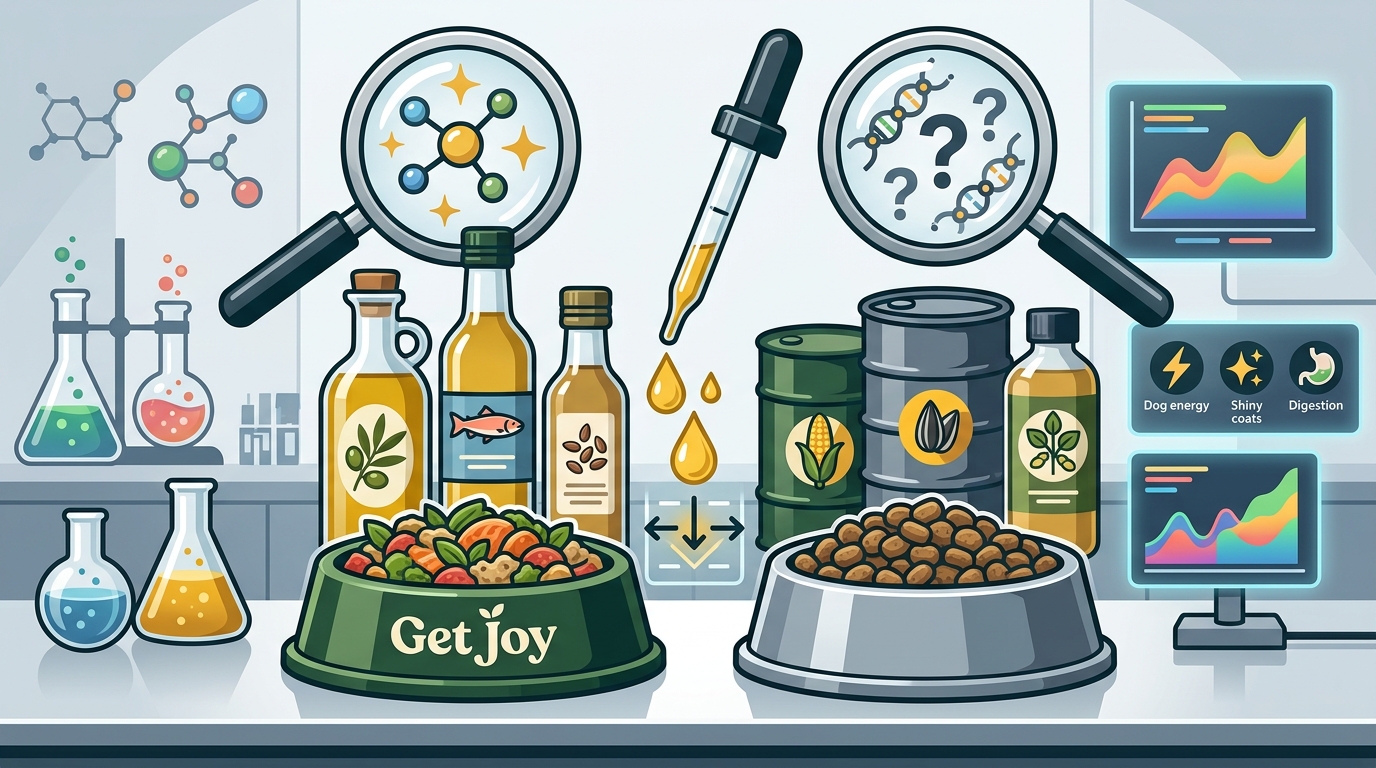
Beyond the fatty acid profile, how seed oils are manufactured raises additional red flags. Most commercial seed oils are produced through solvent extraction using hexane, a petroleum-derived chemical. They then undergo refining, bleaching, and deodorizing processes that strip away beneficial compounds like vitamin E and phenols.
Oxidation and Rancidity
Seed oils are prone to oxidation when exposed to heat, light, and air during processing and storage. Oxidized fats generate free radicals that can damage cells and contribute to chronic disease. Some pet food manufacturers use low-quality or already-rancid oils to cut costs, which compounds the problem.
Advanced Glycation End Products (AGEs)
When seed oils are subjected to high heat during kibble manufacturing, they can form Advanced Glycation End products, or AGEs. AGEs are glycotoxins linked to metabolic dysfunction, oxidative stress, and increased risk of diseases like cancer, heart disease, and diabetes. One AGE researcher at Virginia Commonwealth University has estimated that dog food can contain roughly 100 times more AGEs than human food.
Seed Oils and Inflammation in Dogs
Chronic inflammation is a root driver of many common canine health problems. Dogs consuming diets heavy in omega-6 seed oils may experience itchy or dry skin, recurring allergies, joint pain, and digestive upset. Dogs with pre-existing conditions may see their symptoms worsen on high-omega-6 diets.
Inflammation also directly impacts the gut microbiome. An inflamed gut lining weakens nutrient absorption, disrupts immune signaling, and can lead to a cycle of digestive issues. Supporting gut health is one of the most effective ways to keep systemic inflammation in check, which is why understanding your dog's gut health is so important.
Not All Seed Oils Are Created Equal
It is important to note that the seed oil conversation is nuanced. Not every seed-derived oil is problematic. Hemp seed oil, for example, offers a naturally balanced omega-6 to omega-3 ratio of roughly 3:1 and contains gamma-linolenic acid (GLA), which research suggests may actually help modulate inflammation rather than promote it.
Oils to Be Cautious About
Corn oil, generic vegetable oil blends, high-oleic sunflower oil in excess, and heavily refined canola oil are the most common culprits in commercial dog food. These tend to be the cheapest, most shelf-stable options for manufacturers.
Healthier Fat Alternatives for Dogs
Fish oil is a direct source of EPA and DHA, the most bioavailable omega-3 fatty acids for dogs. Flaxseed provides plant-based omega-3 (ALA), though dogs have limited ability to convert ALA into EPA and DHA. Coconut oil provides medium-chain triglycerides (MCTs) for quick energy. When evaluating dog food labels, look for named fat sources and evidence of a balanced fatty acid profile.
What to Look for in Dog Food Instead
The best approach is choosing dog food made with whole-food ingredients and transparent fat sources. Minimally processed foods, such as freeze-dried raw meals and gently cooked fresh meals, avoid the extreme heat processing that degrades oils and generates AGEs.
At Get Joy, recipes are formulated by ACVN Board Certified Veterinary Nutritionists using USDA meats, superfoods, and functional ingredients like flaxseed oil, which is rich in omega-3s and supports skin, coat, and joint health. Every recipe includes Belly Biotics, a proprietary blend of prebiotics, probiotics, and postbiotics designed to support digestion, immunity, and reduced inflammation from the inside out.
Belly Biotics is a proprietary tri-biotic system built directly into Get Joy meals rather than sprinkled on as an afterthought. This gut-first philosophy matters because a balanced microbiome helps regulate the inflammatory response that excess omega-6 can trigger. Paired with whole-food fats and zero fillers, it is a fundamentally different approach to the seed-oil-laden kibble sitting on most store shelves.
If your dog is currently eating kibble and you are considering a switch, learning about superfoods in dog nutrition is a great next step. You can also explore how biotics work in supplements versus whole meals for a deeper understanding of gut support strategies.
Key Takeaways
- Seed oils are oils extracted from plant seeds. They are high in omega-6 fatty acids and commonly found in commercial dog food.
- Small amounts of omega-6 (linoleic acid) are essential for dogs, but excess intake relative to omega-3 promotes chronic inflammation.
- The ideal omega-6 to omega-3 ratio for dogs is around 5:1 or lower; many kibbles exceed 20:1.
- Heavy processing of seed oils strips nutrients and can create harmful oxidation byproducts and AGEs.
- Not all seed oils are equal. Hemp seed oil and flaxseed oil offer more balanced or omega-3-favorable profiles.
- Whole-food, minimally processed diets with named fat sources and balanced fatty acids are the safest choice.
- Supporting gut health with prebiotics, probiotics, and postbiotics helps manage the inflammatory effects of dietary fat imbalances.
Frequently Asked Questions
What exactly are seed oils in dog food?
Seed oils are oils extracted from the seeds of plants such as sunflower, corn, soybean, safflower, and canola. They are used in dog food primarily as a fat source and to meet essential fatty acid requirements. They are among the cheapest fat ingredients available to pet food manufacturers.
Are all seed oils bad for dogs?
No. The concern centers on heavily refined, high-omega-6 oils like corn and generic vegetable oil consumed in excess. Some seed oils, such as hemp seed oil and flaxseed oil, offer beneficial omega-3 fatty acids and a more balanced ratio that can support rather than harm your dog's health.
Why do dog food companies use seed oils?
Seed oils are inexpensive, widely available, and shelf-stable, making them attractive to manufacturers looking to minimize production costs. They also help meet minimum fat and linoleic acid requirements set by AAFCO.
How do seed oils cause inflammation in dogs?
Excessive omega-6 fatty acids are metabolized into pro-inflammatory compounds like prostaglandin E2 (PGE2) and certain cytokines. When the omega-6 to omega-3 ratio is too high, these inflammatory signals go unchecked, contributing to skin issues, joint pain, allergies, and gut problems.
What is a healthy omega-6 to omega-3 ratio for dogs?
Most veterinary nutritionists recommend a ratio between 2:1 and 5:1 (omega-6 to omega-3). Anti-inflammatory dietary recommendations for dogs often target the lower end of that range. Many commercial kibbles far exceed these ratios.
Can switching to fresh or freeze-dried food reduce seed oil exposure?
Yes. Fresh and freeze-dried raw foods are typically made with whole, named ingredients and avoid the heavily refined seed oils common in kibble. Freeze-dried raw processing uses very low temperatures, which also prevents oil oxidation and AGE formation.
How does gut health relate to seed oil inflammation?
The gut microbiome plays a central role in regulating immune response and inflammation throughout the body. When the gut lining is healthy and populated with beneficial bacteria, the body is better equipped to manage inflammatory signals from dietary fats. Supporting gut health with prebiotics, probiotics, and postbiotics can help offset the effects of omega-6 imbalance.
What should I look for on a dog food ingredient label?
Look for named fat sources (e.g., "chicken fat" or "salmon oil") rather than generic terms like "vegetable oil" or "animal fat." Check for omega-3 sources such as fish oil or flaxseed. Avoid products listing multiple refined seed oils high on the ingredient panel.
Give Your Dog a Cleaner Bowl
Your dog deserves nutrition that fuels wellness, not inflammation. Get Joy's freeze-dried raw and fresh meals are made with USDA meats, whole-food superfoods, and our proprietary Belly Biotics blend to support gut health, digestion, and whole-body vitality. No mystery oils, no fillers, no shortcuts. Try Get Joy today and save 50% on your first order.