

Seed oils have become one of the most hotly debated ingredients in human nutrition, and the conversation has now crossed over to our dogs. If you have ever flipped over a bag of kibble and spotted canola oil, soybean oil, or sunflower oil on the label, you are not alone in wondering whether those ingredients belong in your dog's bowl. The truth is nuanced: dogs need certain fatty acids to thrive, but the type, quality, and ratio of those fats matter enormously. Below, we break down the science so you can make an informed choice about what goes into your pup's meals.
What Are Seed Oils?
Seed oils are oils extracted from the seeds of various plants. Common examples include corn oil, soybean oil, canola oil, sunflower oil, and safflower oil. These oils are rich in polyunsaturated fatty acids (PUFAs), particularly omega-6 fatty acids like linoleic acid (LA). They became widespread in commercial food production because they are inexpensive to manufacture and extend shelf life.
In the pet food industry, seed oils serve a similar economic purpose. They are added to kibble and other processed dog foods as a cheap fat source. While dogs do require some omega-6 fatty acids for healthy skin and coat function, problems arise when these fats dominate the diet at the expense of omega-3 fatty acids.
The Omega-6 to Omega-3 Balance
A balanced ratio of omega-6 to omega-3 fatty acids is one of the most important factors in canine nutrition. According to Dogs Naturally Magazine, the ideal ratio is thought to be around 5:1 or even lower. However, many commercial pet foods contain ratios as high as 20:1 or 30:1 due to heavy reliance on seed oils and omega-6-rich ingredients.
Why Ratio Matters
Linoleic acid (LA) is an essential omega-6 fatty acid that dogs need in small amounts for cell function, immunity, and skin health. Alpha-linolenic acid (ALA) is an omega-3 that has anti-inflammatory effects. When omega-6 intake vastly exceeds omega-3 intake, the body shifts toward pro-inflammatory pathways that can affect joints, digestion, and immune response.
| Oil Type | Primary Fatty Acid | Omega-6 : Omega-3 Ratio | Common in Dog Food? |
|---|---|---|---|
| Corn Oil | Omega-6 (LA) | ~46:1 | Yes |
| Soybean Oil | Omega-6 (LA) | ~7:1 | Yes |
| Canola Oil | Omega-6 (LA) | ~2:1 | Yes |
| Salmon Oil | Omega-3 (EPA/DHA) | ~1:3 (favors omega-3) | Premium brands |
| Flaxseed | Omega-3 (ALA) | ~1:4 (favors omega-3) | Premium brands |
Seed Oils and Inflammation in Dogs
Chronic inflammation is a root cause of many canine health problems. Excess omega-6 fatty acids from seed oils can promote inflammatory responses in dogs, potentially contributing to joint pain, allergies, and digestive problems. Dogs with pre-existing conditions may experience worsened symptoms when their diet is loaded with omega-6-heavy oils.
The AGE Connection
Refined seed oils that undergo high-heat processing can also contribute to the formation of Advanced Glycation End products (AGEs). AGEs are glycotoxins that accumulate in body tissue and are linked to oxidative stress, metabolic dysfunction, and increased disease risk. Dr. David Turner of Virginia Commonwealth University has estimated that dog food may contain up to 100 times more AGEs than human food, raising concerns about long-term health impacts.
This is one reason why minimally processed foods, like freeze-dried raw meals, are gaining popularity among health-conscious dog owners. Freeze-drying preserves nutrients at low temperatures without the high-heat processing that degrades oils.
Processing and Oxidation Concerns
Beyond their fatty acid profile, the way seed oils are manufactured raises additional red flags. Most commercial seed oils are extracted using chemical solvents like hexane, a petroleum byproduct. The oils then undergo refining, bleaching, and deodorizing, which strips away beneficial compounds like vitamin E and natural antioxidants.
Seed oils are also prone to oxidation when exposed to heat, light, and air during processing and storage. Oxidized fats can generate free radicals that contribute to cellular damage. For dogs eating the same kibble every day, this repeated exposure adds up over time. Choosing foods made with whole-food ingredients and naturally sourced fats can help reduce this risk.
Not All Oils Are Created Equal
It is important to note that not every oil from a plant seed is harmful. Flaxseed, for instance, is a rich source of omega-3 ALA and fiber. Hemp seed oil offers a favorable omega ratio. The concern is specifically with highly refined, omega-6-dominant oils like corn, soy, and generic "vegetable oil" that appear in many mass-produced dog foods.
What to Look for on the Label
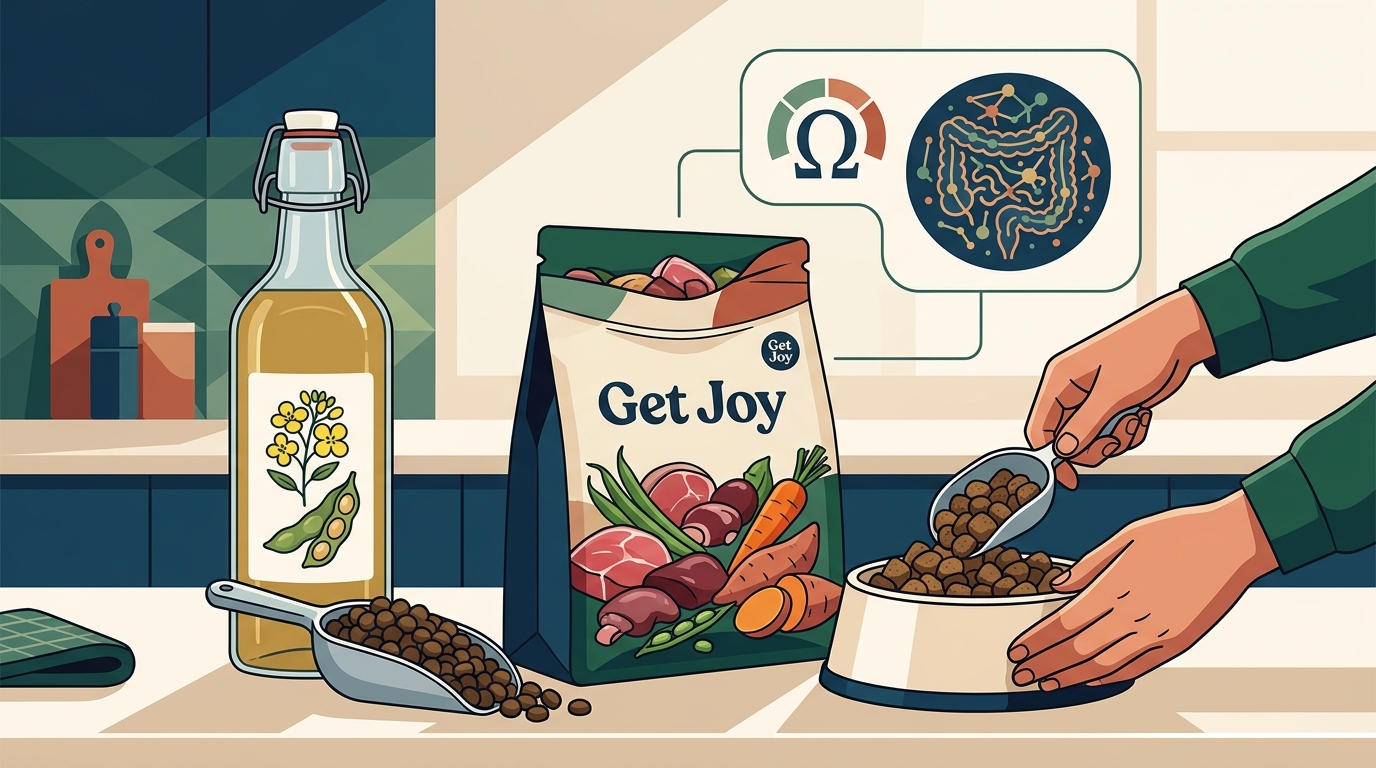
When evaluating your dog's food, check whether fats come from named, high-quality sources such as salmon oil, flaxseed, or chicken fat rather than vague terms like "animal fat" or "vegetable oil." Get Joy's Fresh Freeze-Dried recipes, for example, use salmon oil and flaxseed as their primary fat sources, providing omega-3 fatty acids with anti-inflammatory properties rather than relying on cheap seed oils.
Better Fat Sources for Dogs
If you want to steer your dog away from seed-oil-heavy foods, focus on these healthier alternatives:
- Salmon oil: Salmon oil is a concentrated source of EPA and DHA omega-3 fatty acids that support skin, coat, joint, and brain health.
- Flaxseed: Flaxseed is a plant-based source of omega-3 ALA plus fiber and lignans with antioxidant properties.
- Coconut oil: Contains medium-chain triglycerides (MCTs) that are easily digestible and may support immune function.
- Animal fats from quality proteins: Fats naturally present in beef, chicken, or lamb provide essential fatty acids alongside bioavailable nutrients.
Get Joy builds its recipes around these principles. Every meal features Belly Biotics, a proprietary blend of prebiotics, probiotics, and postbiotics that supports gut health, which in turn helps manage inflammation from the inside out. Supporting your dog's overall wellness starts with what goes into the bowl.
Key Takeaways
- Seed oils like corn, soy, and canola oil are high in omega-6 fatty acids and prevalent in many commercial dog foods.
- An imbalanced omega-6 to omega-3 ratio can promote chronic inflammation, affecting joints, skin, digestion, and immunity.
- The ideal omega-6 to omega-3 ratio for dogs is around 5:1 or lower; many kibbles exceed 20:1.
- Refined seed oils undergo chemical processing that strips beneficial nutrients and may introduce harmful byproducts.
- Not all plant-based oils are bad; flaxseed and hemp seed oil offer favorable fatty acid profiles.
- Look for named fat sources like salmon oil and flaxseed on ingredient labels instead of generic "vegetable oil."
- A gut-healthy diet with whole-food ingredients and balanced fats is the best foundation for long-term canine wellness.
Frequently Asked Questions
Are all seed oils toxic to dogs?
No. Seed oils are not acutely toxic, but highly refined, omega-6-dominant oils like corn and soybean oil can contribute to inflammation when consumed in excess over time. Some seed-derived oils, like flaxseed oil, actually provide beneficial omega-3 fatty acids.
Which seed oils are worst for dogs?
Corn oil, soybean oil, and generic vegetable oil tend to have the highest omega-6 to omega-3 imbalance. Grapeseed oil should also be avoided because it may contain tartaric acid, the same compound found in grapes that is toxic to dogs.
What is the ideal omega-6 to omega-3 ratio for dogs?
Most experts recommend a ratio of 5:1 or lower. Anti-inflammatory dietary recommendations for dogs often target a range of 4:1 to 2:1, depending on the dog's health needs.
Does Get Joy dog food contain seed oils?
Get Joy recipes use salmon oil and flaxseed as primary fat sources rather than refined seed oils. These ingredients deliver omega-3 fatty acids that support skin, coat, and joint health. You can review every ingredient on the Our Ingredients page.
Can I add fish oil to my dog's kibble to offset seed oils?
Adding a high-quality fish oil supplement can help improve the omega-3 content of your dog's diet. However, it is generally better to choose a food that already has a balanced fatty acid profile rather than trying to correct an imbalanced one.
How does gut health relate to inflammation from seed oils?
The gut microbiome plays a central role in regulating immune response and inflammation. A healthy gut can help moderate inflammatory pathways. Foods that include prebiotics, probiotics, and postbiotics, like Get Joy's Belly Biotics blend, support a balanced microbiome that helps keep inflammation in check.
Is fresh or freeze-dried dog food better than kibble for avoiding seed oils?
Generally, yes. Fresh and freeze-dried dog foods tend to use higher-quality fat sources and undergo less aggressive processing. Freeze-dried raw food avoids the high temperatures that can oxidize oils and degrade nutrients.
Feed Your Dog Better Starting Today
Your dog deserves nutrition that works for their body, not against it. If you are ready to move away from seed-oil-heavy kibble and toward whole-food, gut-healthy meals, explore Get Joy's full product line. Every recipe is vet-formulated with USDA meats, superfoods, and Belly Biotics to support digestion, immunity, and long-term vitality. Joy truly starts from within.