

Seed oils have become one of the most debated ingredients in human nutrition, and the conversation has officially reached the dog bowl. Canola oil, soybean oil, sunflower oil, and safflower oil appear on countless commercial pet food labels, yet a growing number of veterinarians and canine nutritionists are raising red flags. So, are seed oils actually harmful to your dog? The answer depends on the type of oil, how it is processed, and how much your dog is consuming. In this article we break down the science, separate fact from hype, and explain what to look for in healthier alternatives.
What Are Seed Oils?
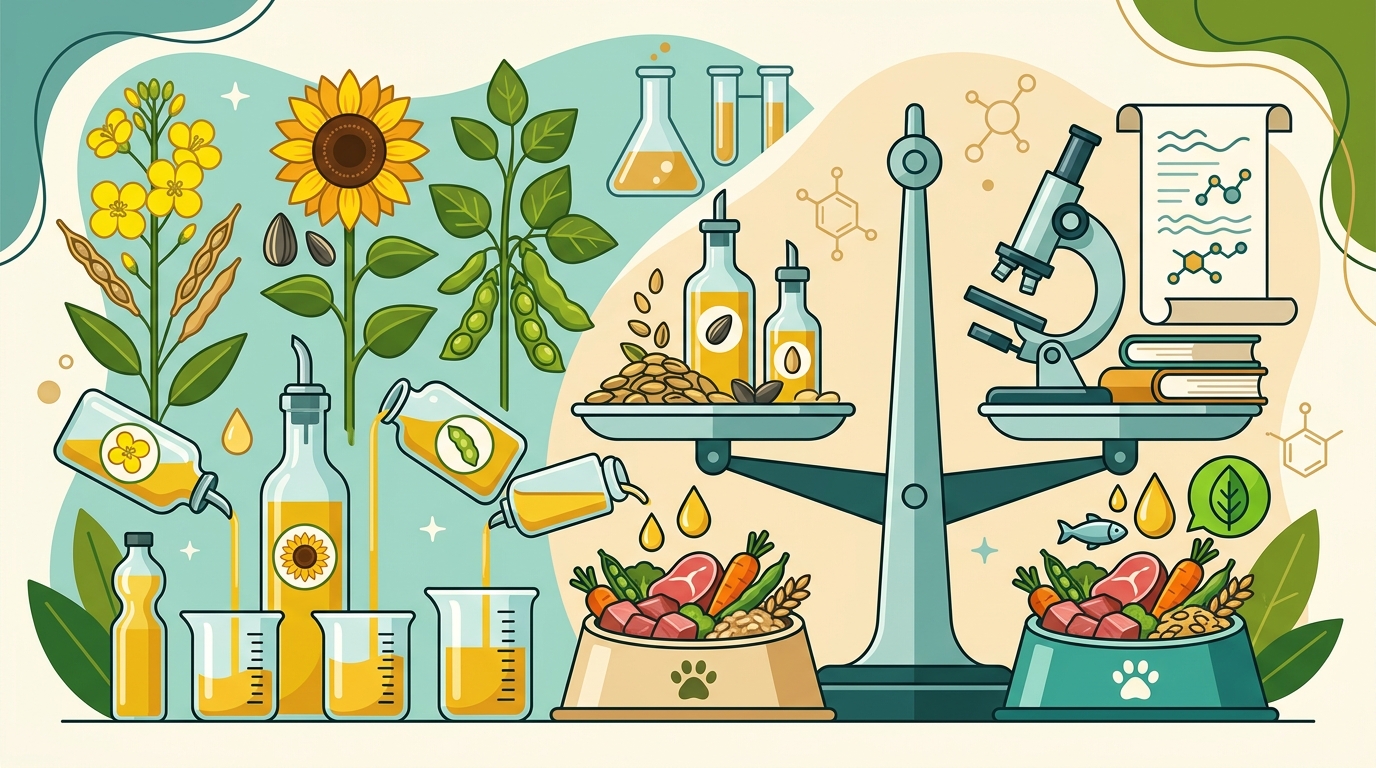
Seed oils are oils extracted from the seeds of various plants. Common examples include corn oil, soybean oil, sunflower oil, safflower oil, and canola (rapeseed) oil. These oils are rich in polyunsaturated fatty acids (PUFAs), particularly omega-6 linoleic acid (LA), which is an essential nutrient for dogs in small amounts.
The issue is not that seed oils exist; it is how they are used. In many commercial kibbles they serve as cheap, shelf-stable fat sources that can tip your dog's fatty acid balance in the wrong direction.
The Omega-6 to Omega-3 Imbalance Problem
Dogs need both omega-6 and omega-3 fatty acids. The ideal ratio of omega-6 to omega-3 is thought to be around 5:1 or even less. However, many commercial pet foods push that ratio to 20:1 or higher because of heavy reliance on seed oils.
Why the Ratio Matters
Omega-6 fatty acids, when consumed in excess, promote pro-inflammatory pathways in the body. Omega-3s do the opposite, acting as natural anti-inflammatories. When your dog eats a diet skewed heavily toward omega-6, the inflammation balance tips, and chronic issues can follow.
| Factor | Omega-6 (Linoleic Acid) | Omega-3 (ALA, EPA, DHA) |
|---|---|---|
| Primary role | Cell structure, skin barrier | Anti-inflammatory support |
| Common sources | Corn, soy, sunflower oils | Fish oil, flaxseed, green-lipped mussel |
| Risk when excessive | Chronic inflammation | Generally low risk |
| Ideal dietary ratio | 5:1 (omega-6 to omega-3) or lower | |
How Seed Oil Processing Affects Your Dog
Seed oil processing is a concern that goes beyond fatty acid ratios. Most commercial seed oils are produced through solvent extraction using hexane, a petroleum-derived chemical. The refining process also involves bleaching and deodorizing, which strips away beneficial compounds like vitamin E and phenols.
Oxidation and AGEs
Seed oils are prone to oxidation when exposed to heat, light, and air. During kibble manufacturing, high temperatures can cause these oils to break down and form Advanced Glycation End products (AGEs). One AGE researcher at Virginia Commonwealth University has estimated that dog food may contain roughly 100 times more AGEs than human food. High AGE consumption is linked to oxidative stress, metabolic dysfunction, and increased disease risk.
Inflammation and Long-Term Health Risks
Chronic inflammation is a root driver of many canine health problems. Excessive omega-6 fatty acids from seed oils can contribute to joint pain, allergies, digestive problems, and weakened immunity. Dogs with pre-existing conditions may see symptoms worsen when their diet is rich in these unbalanced fats.
This is one reason why gut health matters so much. Inflammation in the digestive tract disrupts the gut microbiome, which in turn affects immunity, mood, and nutrient absorption. A diet built on whole-food ingredients with balanced fats supports the gut rather than working against it.
Not All Oils Are Created Equal
It is important to avoid painting every oil with the same brush. Some plant-based oils can benefit dogs when used correctly:
- Flaxseed oil provides fiber, antioxidants, and omega-3 ALA. Get Joy includes flaxseed in its recipes specifically for its anti-inflammatory properties.
- Coconut oil contains medium-chain triglycerides (MCTs) that are easily digestible and can support immune function.
- Fish oil delivers EPA and DHA, the omega-3s dogs cannot efficiently produce on their own.
The seed oils to watch out for are the highly refined, omega-6-heavy varieties like corn oil, soybean oil, and generic "vegetable oil" that appear in many kibbles and processed treats.
Healthier Fat Sources for Dogs
Choosing a dog food with intentional, high-quality fat sources makes a measurable difference. Look for foods that use named animal fats, fish oils, or minimally processed plant oils rather than generic seed oils.
What to Look for on a Label
Prioritize foods listing specific ingredients like chicken fat, salmon oil, or flaxseed over vague terms like "animal fat" or "vegetable oil." Better yet, choose whole-food recipes where every ingredient earns its place.
The Gut Health Connection
Balanced fats do more than reduce inflammation. They support the gut lining, improve nutrient absorption, and create an environment where beneficial bacteria can thrive. This is central to Get Joy's approach: pairing Belly Biotics™, a proprietary blend of prebiotics, probiotics, and postbiotics, with whole-food ingredients including omega-3-rich green-lipped mussel and flaxseed. The result is functional nutrition that supports digestion, immunity, and long-term vitality from the inside out.
Key Takeaways
- Seed oils are oils extracted from plant seeds and are high in omega-6 fatty acids, which can promote inflammation when consumed in excess.
- The ideal omega-6 to omega-3 ratio for dogs is around 5:1; many commercial foods exceed 20:1.
- Heavily refined seed oils lose beneficial nutrients and may generate harmful compounds like AGEs during high-heat processing.
- Not all plant oils are problematic. Flaxseed oil, coconut oil, and fish oil offer anti-inflammatory and gut-supporting benefits.
- Reading ingredient labels carefully helps you avoid vague, low-quality fat sources.
- A whole-food diet with balanced fats and built-in gut support, like Get Joy's fresh and freeze-dried meals, can help reduce chronic inflammation and strengthen overall wellness.
Frequently Asked Questions
What exactly are seed oils?
Seed oils are oils extracted from the seeds of plants such as corn, soybean, sunflower, safflower, and canola. They are commonly used in commercial pet foods as an inexpensive fat source.
Are all seed oils bad for dogs?
No. The concern is primarily with highly refined, omega-6-heavy oils like corn and soybean oil. Some seed-derived oils, like flaxseed oil, provide beneficial omega-3 fatty acids and antioxidants when used in appropriate amounts.
What is the ideal omega-6 to omega-3 ratio for dogs?
Most canine nutrition experts suggest an omega-6 to omega-3 ratio of around 5:1 or lower. Many commercial dog foods far exceed this, sometimes reaching 20:1 or 30:1.
How do seed oils cause inflammation in dogs?
Excess omega-6 linoleic acid from seed oils feeds pro-inflammatory metabolic pathways. When omega-3 intake is not sufficient to counterbalance, the result is chronic low-grade inflammation that can affect joints, skin, digestion, and immunity.
What are AGEs and why do they matter?
Advanced Glycation End products (AGEs) are harmful compounds formed when fats, sugars, and proteins react under high heat. Refined seed oils in heavily processed kibble can contribute to AGE formation, which is linked to oxidative stress and increased disease risk in dogs.
What fats should I look for in dog food instead?
Look for named animal fats (like chicken fat or salmon oil), fish oil for EPA and DHA, flaxseed for plant-based omega-3s, and coconut oil for easily digestible MCTs. Avoid generic labels like "vegetable oil" or "animal fat."
Does Get Joy use seed oils in its recipes?
Get Joy focuses on whole-food, functional ingredients. Its recipes include omega-3-rich sources like flaxseed and green-lipped mussel, paired with its proprietary Belly Biotics™ blend to support gut health, digestion, and balanced inflammation response.
How can I transition my dog away from a seed-oil-heavy diet?
Introduce new food gradually over 7 to 10 days, mixing increasing amounts of the new food with the old. This allows your dog's digestive system to adjust. Learn more about transitioning with Get Joy's feeding guidelines.
Give Your Dog Better Fats, Starting Today
Your dog deserves nutrition that works with their body, not against it. Explore Get Joy's whole-food recipes made with intentional ingredients, balanced fats, and built-in gut support. Because joy truly starts from within.