

Seed oils have become one of the most debated ingredients in both human and canine nutrition. If you have scrolled past headlines warning about sunflower, canola, or soybean oil, you have probably wondered whether these same concerns apply to your dog's bowl. The short answer is nuanced: dogs need certain fatty acids to thrive, but the type, quality, and ratio of fats in their food matter enormously. In this guide, we break down the science behind seed oils in dog food, explain the omega-6 to omega-3 balance, and show you how to choose nutrition that supports your dog's gut health and whole-body wellness.
What Are Seed Oils?
Seed oils are fats extracted from plant seeds such as corn, soybean, sunflower, safflower, and canola. They are rich in polyunsaturated fatty acids (PUFAs), including omega-6 and omega-3 fatty acids. These oils became widespread in the food supply after industrialized extraction methods made them cheap to produce at scale.
A seed oil is a refined fat derived from plant seeds using mechanical pressing or chemical solvents. Because they are inexpensive and shelf-stable, seed oils are one of the most common fat sources in commercial kibble and canned dog food.
The Omega-6 to Omega-3 Balance in Dogs
Dogs require two essential fatty acids that their bodies cannot manufacture: the omega-6 linoleic acid (LA) and the omega-3 alpha-linolenic acid (ALA). Puppies also need the omega-3s EPA and DHA for brain and eye development.
The issue is not that omega-6 fats exist in your dog's food. The problem is the ratio. The ideal ratio of omega-6 to omega-3 fatty acids is thought to be around 5:1 or even less, yet many commercial diets skew to 20:1 or higher because of heavy seed oil use.
| Fat Source | Primary Fatty Acid | Omega-6 : Omega-3 Tendency |
|---|---|---|
| Sunflower oil | Linoleic acid (omega-6) | Very high omega-6 |
| Corn oil | Linoleic acid (omega-6) | Very high omega-6 |
| Fish oil | EPA & DHA (omega-3) | High omega-3 |
| Coconut oil | Medium-chain triglycerides | Neutral |
| Flaxseed | ALA (omega-3) | Favorable omega-3 |
Potential Risks of Excess Seed Oils
When omega-6 intake far outpaces omega-3 intake, the body's inflammatory pathways can shift out of balance. Chronic inflammation can contribute to joint pain, allergies, and digestive problems in dogs.
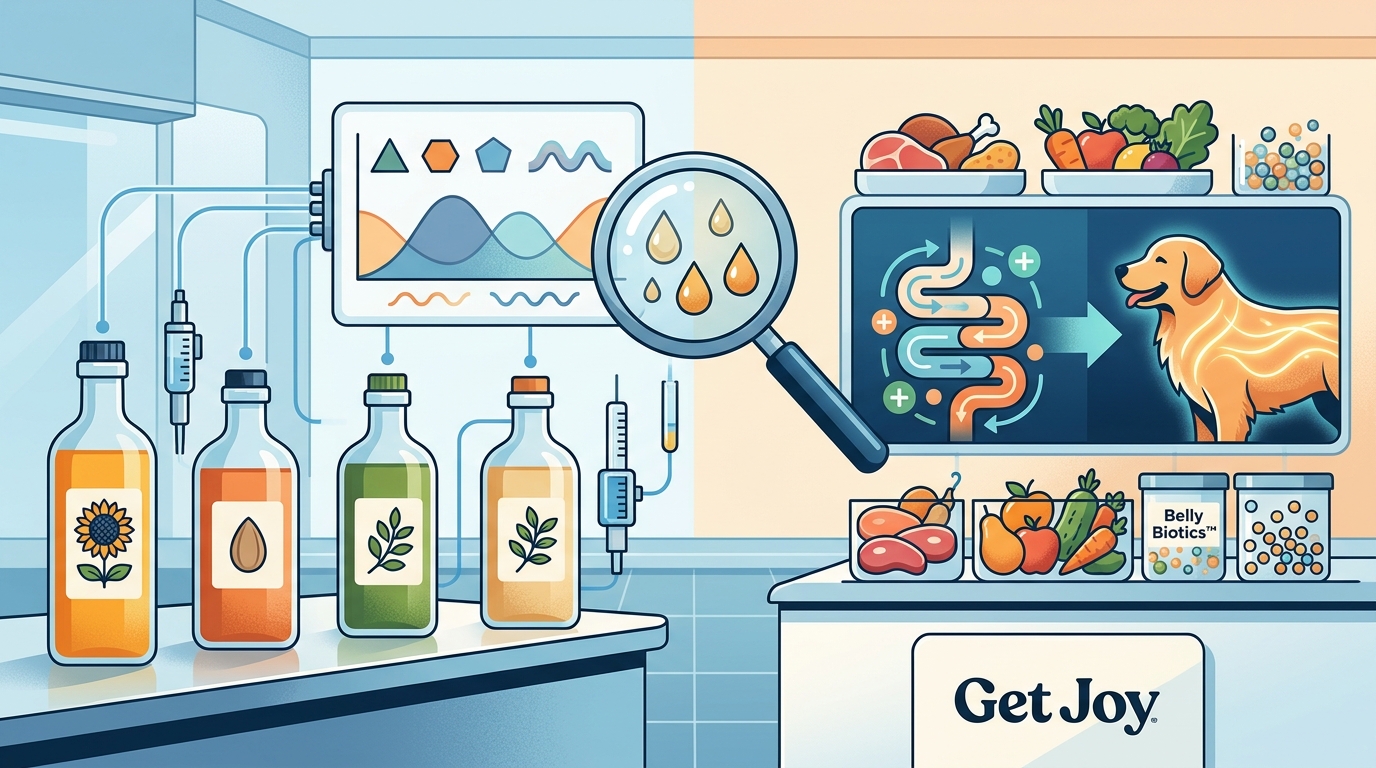
Inflammation and Immune Function
Linoleic acid is metabolized into arachidonic acid, a precursor to pro-inflammatory signaling molecules. In moderate amounts, this process is healthy and supports healing. But when seed oils dominate the fat profile, the resulting inflammatory load can weaken immune defenses over time.
Skin and Coat Issues
Dogs consuming diets with excessive omega-6 may develop itchy, dry skin and dull coats. Ironically, small amounts of omega-6 are essential for healthy skin and coat, making balance the real goal.
How Processing Degrades Oil Quality
Beyond the fatty acid ratio, the way seed oils are manufactured raises concerns. Most commercial seed oils are extracted using the petroleum-based solvent hexane, then refined through bleaching and deodorizing at high temperatures. This heavy processing can strip beneficial compounds like vitamin E and generate oxidation byproducts.
Oxidative stress is a condition in which unstable free radicals damage cells faster than the body can repair them. Research from Virginia Commonwealth University suggests that dog food may be about 100 times higher in AGEs (Advanced Glycation End products) than human food, partly because of repeated high-heat processing of fats.
Not All Fats Are Created Equal
It is important to avoid painting every oil with the same brush. Some plant-based fats, like coconut oil, come from the fruit's flesh rather than a seed and provide medium-chain triglycerides (MCTs) that are easily digestible. Flaxseed delivers beneficial omega-3 ALA alongside fiber and lignans.
Better Fat Alternatives for Dogs
- Fish oil: Rich in EPA and DHA, directly anti-inflammatory.
- Coconut oil: Provides MCTs for quick energy and immune support.
- Flaxseed: Supplies omega-3 ALA plus antioxidant lignans.
Get Joy's freeze-dried raw recipes use whole-food fat sources like coconut oil and flaxseed rather than relying on cheap, heavily refined seed oils. Every ingredient earns its place in the bowl.
The Gut Health Connection
Your dog's gut microbiome is the command center for digestion, immunity, and even mood. Chronic inflammation driven by fatty acid imbalance can disrupt the delicate ecosystem of beneficial bacteria that keeps your dog healthy from the inside out.
That is why gut health matters so much when evaluating fats in dog food. A balanced omega ratio, combined with prebiotics, probiotics, and postbiotics, creates the conditions for a thriving microbiome. Get Joy builds its proprietary Belly Biotics™ blend directly into every meal, delivering a clinically proven trio of prebiotics, probiotics, and postbiotics that supports digestion, immunity, and reduced inflammation.
Belly Biotics™ is a proprietary blend of prebiotics, probiotics, and postbiotics designed to support a dog's gut health from every angle. Unlike toppers or supplements added after the fact, it is formulated into the food itself for consistent daily intake.
What to Look for in Your Dog's Food
Reading ingredient labels is the single most impactful step you can take. Here is a quick checklist:
- Named protein first: Look for chicken, beef, or lamb as the first ingredient.
- Quality fat sources: Coconut oil, fish oil, or flaxseed over generic "vegetable oil."
- No unnamed fats: Avoid "animal fat" or "poultry fat" without a specific source.
- Biotic support: Prebiotics, probiotics, and postbiotics for gut health.
- Minimal processing: Gently cooked or freeze-dried methods preserve nutrients better than high-heat extrusion.
Get Joy's recipes are developed by ACVN Board Certified Veterinary Nutritionists and made with USDA meats, superfoods, and zero fillers. They are also free from common allergens like wheat, soy, and dairy.
Key Takeaways
- Seed oils are not inherently toxic, but excess omega-6 from refined seed oils can promote chronic inflammation in dogs.
- The ideal omega-6 to omega-3 ratio for dogs is around 5:1 or lower; many commercial foods far exceed this.
- Heavily processed seed oils may contain oxidation byproducts and lack beneficial nutrients.
- Better fat choices include fish oil, coconut oil, and flaxseed, which supply omega-3s or stable MCTs.
- Gut health is directly impacted by fatty acid balance; a disrupted microbiome can worsen inflammation.
- Belly Biotics™ from Get Joy delivers prebiotics, probiotics, and postbiotics in every meal to support digestion and immunity.
- Always read ingredient labels and consult your veterinarian before making dietary changes.
Frequently Asked Questions
Are all seed oils bad for dogs?
No. Small amounts of certain seed oils provide essential linoleic acid that dogs need for healthy skin and coat. The concern is with excessive amounts of heavily refined seed oils that create an omega-6 to omega-3 imbalance and promote inflammation.
What is the ideal omega-6 to omega-3 ratio for dogs?
Most veterinary nutrition experts recommend a ratio between 5:1 and 2:1. Many commercial kibbles exceed 20:1 because of their reliance on seed oils and grain-based ingredients.
Can seed oils cause allergies in dogs?
Seed oils themselves are not common allergens, but the inflammation triggered by excessive omega-6 intake can worsen allergy symptoms like itching, redness, and ear infections.
Is coconut oil a seed oil?
No. Coconut oil comes from the flesh of the coconut fruit, not from a seed. It is rich in medium-chain triglycerides and does not carry the same omega-6 concerns as traditional seed oils.
How does gut health relate to seed oils?
Chronic inflammation from fatty acid imbalance can disrupt the gut microbiome, reducing populations of beneficial bacteria. Supporting gut health with balanced nutrition and biotics helps counteract this effect.
What fats does Get Joy use in its recipes?
Get Joy uses whole-food fat sources such as coconut oil, flaxseed, and omega-3-rich oils alongside USDA meats. Every recipe also includes the Belly Biotics™ blend to support digestive balance.
Should I add fish oil to my dog's diet?
Fish oil is one of the best direct sources of EPA and DHA for dogs. If your dog's current food lacks adequate omega-3s, a fish oil supplement can help restore balance. Always consult your vet for proper dosing.
How can I tell if my dog's food has too much omega-6?
Check the ingredient list for multiple seed oils (sunflower, corn, soybean, safflower, canola). If seed oils appear prominently and no omega-3 sources like fish oil or flaxseed are listed, the ratio is likely skewed.
Feed Your Dog Better Today
Your dog deserves nutrition that works from the inside out. Explore Get Joy's freeze-dried raw meals, made with whole-food fats, USDA meats, superfoods, and the proprietary Belly Biotics™ blend. Build a personalized meal plan and see why joy starts from within.