

Seed oils have become one of the most debated ingredients in both human and canine nutrition. If you have been scrolling social media, you have probably seen warnings about canola, soybean, and sunflower oils. But are seed oils actually harmful to your dog, or is the concern overblown? The answer lies in the type, processing, and quantity of the oil. In this guide, we break down what the science says about seed oils in dog food, why fatty acid balance matters for your pup's gut and immune health, and what to look for in a truly nutritious alternative.
What Are Seed Oils?
Seed oils are oils extracted from the seeds of various plants. Common examples include corn oil, soybean oil, sunflower oil, safflower oil, and canola (rapeseed) oil. They are widely used in commercial pet foods because they are inexpensive and provide essential polyunsaturated fatty acids (PUFAs), including omega-6 and omega-3 fatty acids.
While omega-6 fatty acids are necessary in small amounts for healthy skin, coat, and cell function, problems arise when dogs consume too much of them relative to omega-3s. Understanding this balance is critical when evaluating your dog's diet.
The Omega-6 to Omega-3 Imbalance Problem
One of the primary concerns with seed oils in dog food is the imbalance between omega-6 and omega-3 fatty acids. The ideal ratio is thought to be around 5:1 or even less. However, many commercial dog foods skew the ratio dramatically higher, sometimes reaching 20:1 or 30:1, because of their heavy reliance on seed oils.
Linoleic acid (LA) is an essential omega-6 fatty acid found abundantly in seed oils. Dogs need it, but only in limited quantities. Once that baseline need is met, additional LA does not provide extra benefit and may actually tip the scales toward chronic inflammation.
| Fatty Acid Type | Primary Sources | Role in Dogs | Risk When Excessive |
|---|---|---|---|
| Omega-6 (Linoleic Acid) | Corn, soy, sunflower, safflower oils | Skin barrier, cell membrane integrity | Promotes inflammatory pathways |
| Omega-3 (ALA) | Flax, chia, hemp seeds | Anti-inflammatory support | Limited conversion to EPA/DHA in dogs |
| Omega-3 (EPA/DHA) | Fish oil, marine algae | Joint, brain, and immune health | Rarely excessive in typical diets |
How Seed Oils Can Promote Inflammation in Dogs
Excessive omega-6 fatty acids from seed oils can promote inflammation in dogs. Chronic inflammation is a silent contributor to a range of health issues, including joint pain, allergies, digestive problems, and a weakened immune system. Dogs with pre-existing conditions like arthritis or skin sensitivities may experience worsened symptoms when their diet is heavy in omega-6 fats.
Inflammation is the immune system's response to perceived threats, but when it becomes chronic, it stops being protective and starts causing damage. Choosing foods with a properly balanced fatty acid profile is one of the simplest ways to reduce this risk. If your dog struggles with skin issues or digestive upset, exploring how gut health impacts overall wellness is a smart first step.
Processing Concerns: Hexane, Heat & Oxidation
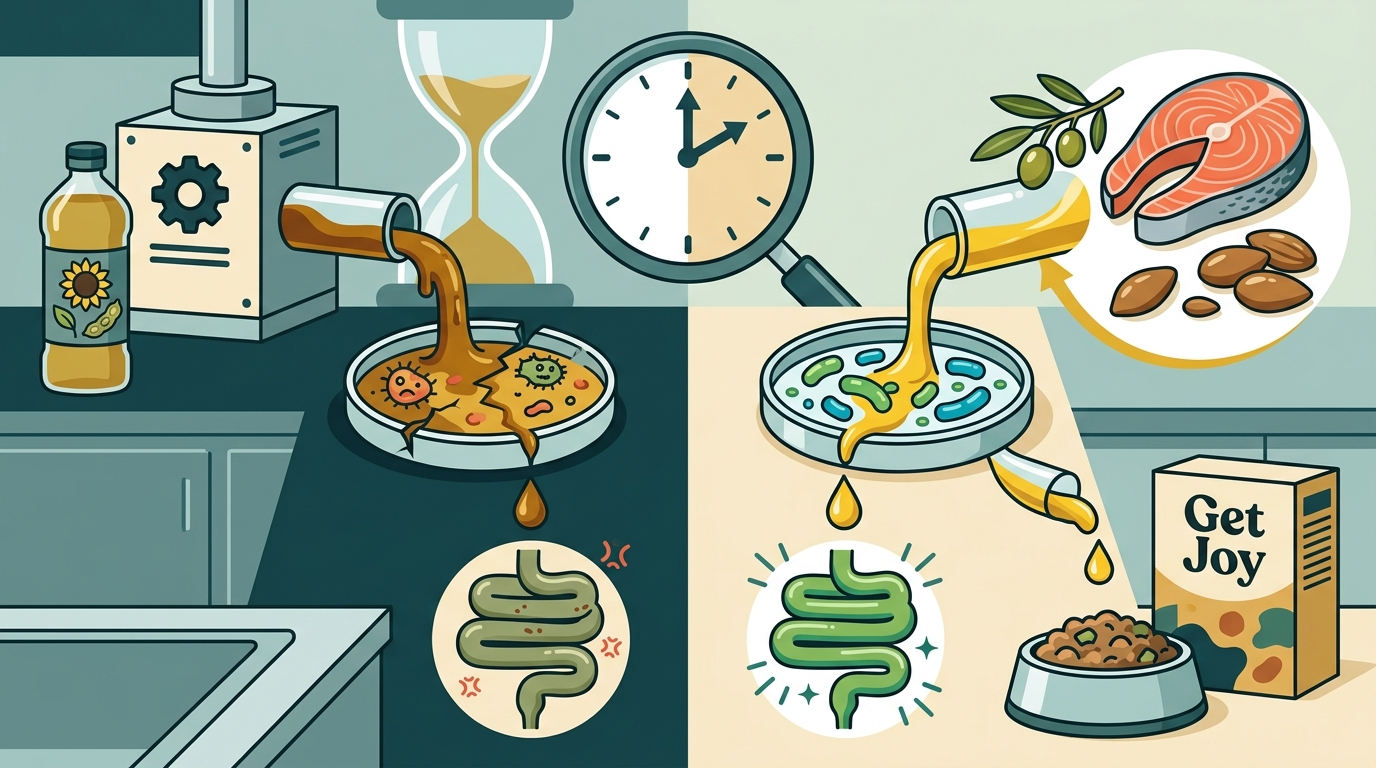
The problem with seed oils goes beyond their fatty acid profile. Many are produced through solvent extraction using the petroleum product hexane. This industrial process strips beneficial compounds like vitamin E and phenols from the oil.
Oxidation and AGEs
Seed oils are prone to oxidation when exposed to heat, light, and air during processing and storage. Oxidized fats generate harmful byproducts, including Advanced Glycation End products (AGEs). AGEs are glycotoxins linked to metabolic dysfunction, oxidative stress, and increased disease risk. One veterinary researcher has estimated that dog food can be roughly 100 times higher in AGEs than human food, raising serious questions about the long-term impact of heavily processed kibble.
Refining Strips Nutritional Value
Refining processes like bleaching and deodorizing improve shelf life and appearance but remove the naturally occurring antioxidants that would otherwise protect against oxidation. The result is a cheaper, longer-lasting oil that offers far less nutritional value.
Not All Seed Oils Are Created Equal
It is important to note that not every seed oil is harmful. Hemp seed oil, for example, offers a relatively balanced omega profile and can provide genuine health benefits. Small, measured amounts of high-linoleic sunflower oil are used in some vet-formulated recipes specifically to meet dogs' essential linoleic acid requirements.
The concern is primarily with highly refined, mass-produced seed oils used in large quantities as cheap filler fats. Context, quality, and quantity all matter. Some oils, such as grapeseed oil, may be outright unsafe for dogs due to compounds like tartaric acid.
Better Fat Sources for Your Dog
If you want to minimize seed oil exposure in your dog's diet, focus on whole-food fat sources that are minimally processed and naturally balanced.
Recommended Alternatives
- Animal fats from quality meats: Lean meats, fish, and eggs provide essential omega-3s alongside protein.
- Fish oil: A direct source of EPA and DHA that dogs cannot efficiently produce from plant-based ALA.
- Coconut oil: Contains medium-chain triglycerides (MCTs) for easy digestion and quick energy.
Get Joy's freeze-dried raw meals are made with 100% USDA meats, organ meats, and superfoods. Every recipe is free from grains, fillers, preservatives, and artificial additives, so you know exactly what fats your dog is getting.
Gut Health, Fats & Whole-Body Wellness
The fats your dog eats directly impact gut health. Inflammatory fats from excess seed oils can compromise the gut lining, disrupt the microbiome, and reduce nutrient absorption. A healthy gut, on the other hand, supports immunity, energy, mood, and digestion.
Belly Biotics is a proprietary blend of prebiotics, probiotics, and postbiotics built directly into every Get Joy recipe to support the gut microbiome from every angle. Rather than relying on separate supplements, this approach ensures your dog receives functional gut support in every meal.
When you pair clean, whole-food fats with active gut support, you create the conditions for whole-body wellness. That is the philosophy behind Get Joy's approach to dog nutrition: joy starts from within.
Key Takeaways
- Seed oils are not inherently toxic, but excessive amounts create a dangerous omega-6 to omega-3 imbalance that promotes chronic inflammation.
- The ideal omega-6 to omega-3 ratio for dogs is roughly 5:1, yet many commercial foods reach 20:1 or higher.
- Highly refined seed oils undergo chemical extraction and processing that strips nutritional value and may generate harmful AGEs.
- Not all seed oils are equal. Small amounts of high-quality oils can meet essential fatty acid needs when properly balanced.
- Whole-food fat sources like quality meats, fish oil, and coconut oil are preferable to industrial seed oils.
- Gut health and fat quality are closely linked. Inflammatory fats compromise the microbiome and reduce nutrient absorption.
- Choosing a food with built-in gut support, like superfood-rich recipes with Belly Biotics, helps address both fat quality and digestive wellness simultaneously.
Frequently Asked Questions
Are all seed oils bad for dogs?
No. Small amounts of certain seed oils, like sunflower oil, can help meet essential linoleic acid requirements. The problem arises with large quantities of highly refined oils that skew the omega-6 to omega-3 ratio and introduce processing byproducts.
What is the ideal omega-6 to omega-3 ratio for dogs?
Most experts recommend a ratio of around 5:1 or lower. Many commercial dog foods far exceed this, sometimes reaching 20:1 or 30:1 due to heavy use of seed oils.
Can seed oils cause allergies in dogs?
Seed oils themselves are not common allergens, but the chronic inflammation caused by omega-6 excess can worsen allergy symptoms like itchy skin, hot spots, and digestive issues.
What fats should I look for in dog food?
Look for named animal fats (like chicken fat or salmon oil), fish oil for EPA and DHA, and coconut oil for MCTs. Avoid generic terms like "vegetable oil" or unnamed fat sources on ingredient labels.
Does Get Joy use seed oils in its recipes?
Get Joy focuses on whole-food ingredients, USDA meats, organ meats, and superfoods. Their recipes are free from fillers and artificial additives, with every ingredient earning its place in the bowl.
How does gut health relate to the fats in my dog's food?
Inflammatory fats can damage the gut lining and disrupt the microbiome. A balanced fat profile combined with prebiotic, probiotic, and postbiotic support helps maintain a healthy gut, which in turn supports immunity, digestion, and overall vitality.
What are AGEs and why should I care?
AGEs (Advanced Glycation End products) are harmful compounds formed when fats and proteins are exposed to high heat during processing. They contribute to oxidative stress, inflammation, and increased disease risk, and are found at especially high levels in heavily processed kibble.
Is fresh or freeze-dried food better than kibble for avoiding seed oils?
Generally, yes. Fresh and freeze-dried foods tend to use higher-quality fat sources, undergo less extreme processing, and retain more nutrients. Get Joy's freeze-dried raw meals retain up to 97% of nutrients through gentle freeze-drying rather than high-heat extrusion.
Give Your Dog Better Nutrition Today
Your dog deserves food made with real ingredients, balanced fats, and built-in gut support. Explore Get Joy's freeze-dried raw meals and see why thousands of dog parents are making the switch to functional, gut-healthy nutrition.