

Seed oils have become one of the most debated ingredients in human nutrition, and the conversation is now spilling into the pet food world. Dog owners scrolling social media are seeing warnings about canola oil, soybean oil, and sunflower oil lurking in their pup's kibble. But is the concern justified, or is it overblown? The answer is nuanced. While dogs do need certain fats, the type, quality, and ratio of those fats matter enormously for long-term health. Below, we break down the science so you can make an informed decision about what goes in your dog's bowl.
What Are Seed Oils?
Seed oils are oils extracted from the seeds of various plants. Common examples include corn oil, soybean oil, sunflower oil, safflower oil, and canola oil. These oils are rich in polyunsaturated fatty acids (PUFAs), particularly omega-6 linoleic acid (LA), which is found in many plant and animal ingredients.
Seed oils became widespread after industrial processing methods made them cheap to produce. Today they appear in everything from fast food to commercial kibble, often used to extend shelf life and keep manufacturing costs low.
The Omega-6 to Omega-3 Imbalance Problem
Dogs require two essential fatty acids: omega-6 linoleic acid and omega-3 alpha-linolenic acid. In small amounts, omega-6 is necessary for healthy skin, coat, and cell function. The problem arises when dogs consume far too much omega-6 relative to omega-3.
The ideal ratio of omega-6 to omega-3 fatty acids is thought to be around 5:1 or even less. However, many commercial pet foods push that ratio to 20:1 or even 30:1 because of heavy seed oil use. This skewed ratio is a primary driver of chronic inflammation.
| Fat Source | Dominant Fatty Acid | Omega-6 : Omega-3 Ratio | Common in Kibble? |
|---|---|---|---|
| Corn Oil | Omega-6 (LA) | ~46:1 | Yes |
| Soybean Oil | Omega-6 (LA) | ~7:1 | Yes |
| Sunflower Oil | Omega-6 (LA) | ~40:1 | Yes |
| Salmon Oil | Omega-3 (EPA/DHA) | ~1:3 (favors omega-3) | Rare |
| Flaxseed | Omega-3 (ALA) | ~1:4 (favors omega-3) | Rare |
As you can see, the seed oils most commonly found in dog food are dramatically tilted toward omega-6. That is exactly why ingredient sourcing matters so much when choosing your dog's meals. Brands that prioritize nutrient-dense superfoods and omega-3-rich fats deliver a far healthier fatty acid profile.
How Seed Oils Are Processed
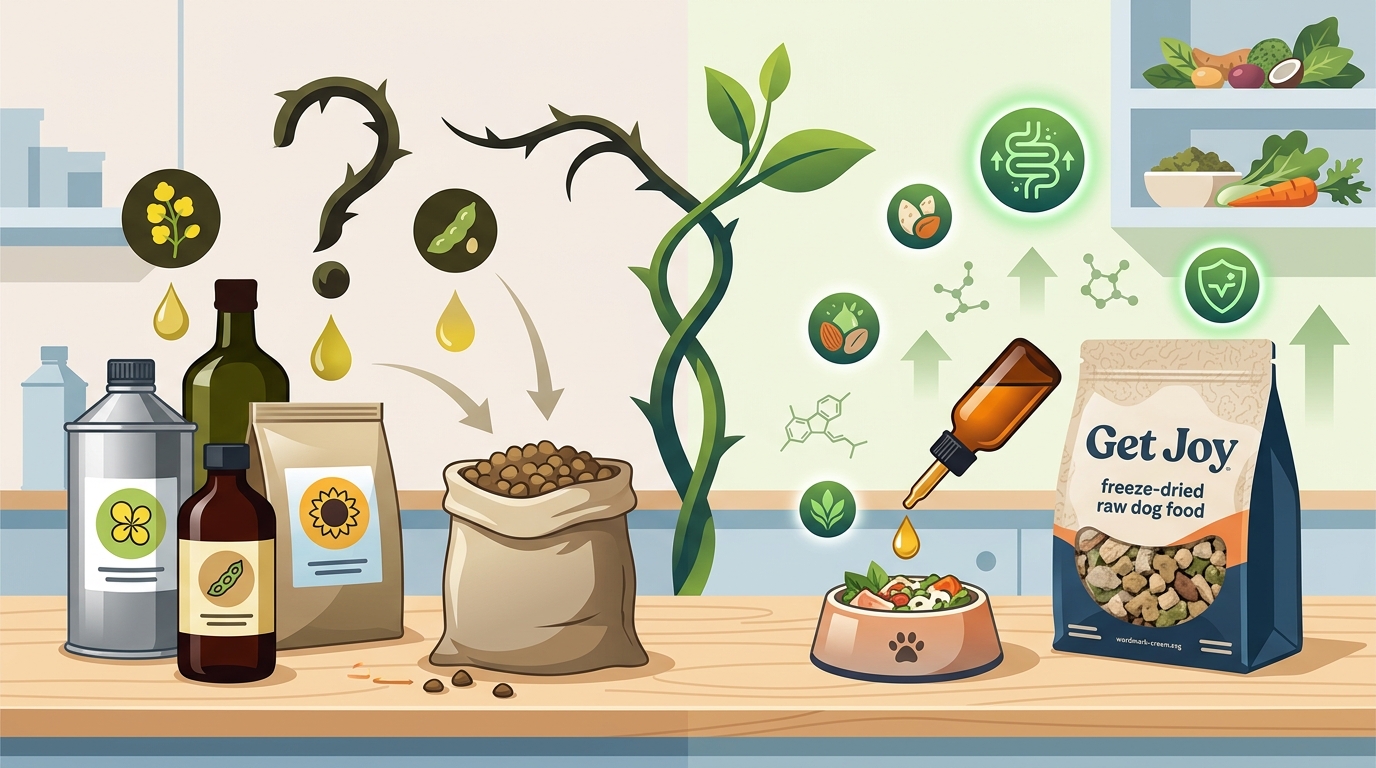
Beyond the omega imbalance, there is a legitimate concern about how seed oils reach your dog's bowl. Most commercial seed oils are produced through solvent extraction using the petroleum product hexane. The oil is then refined, bleached, and deodorized at high temperatures.
This heavy processing strips beneficial compounds like vitamin E and phenols. It also makes the oils prone to oxidation, which can generate harmful byproducts. Oxidized fats contribute to oxidative stress in the body, accelerating cellular damage over time.
Advanced Glycation End Products (AGEs)
Research highlighted by Dr. David Turner of Virginia Commonwealth University suggests that repeated high-temperature processing of seed oils increases the formation of Advanced Glycation End products (AGEs). AGEs are glycotoxins linked to metabolic dysfunction, oxidative stress, and increased disease risk. One estimate places AGE levels in commercial dog food at roughly 100 times higher than in human food.
Seed Oils and Inflammation in Dogs
Chronic inflammation is a root cause of many canine health issues. Excessive omega-6 fatty acids can promote inflammatory pathways in a dog's body. Over time, this can contribute to joint pain, allergies, skin conditions, digestive problems, and a weakened immune system.
Dogs with pre-existing conditions may be especially vulnerable. An inflamed gut, for instance, compromises nutrient absorption and disrupts the microbiome. Understanding why dog gut health matters is essential for any owner looking to reduce inflammation through diet.
The Gut-Inflammation Connection
The gut houses roughly 70% of your dog's immune cells. When inflammatory fats dominate the diet, they can damage the intestinal lining and reduce the diversity of beneficial gut bacteria. This is why a gut-first approach to nutrition, one that includes prebiotics, probiotics, and postbiotics, can help counteract the damage caused by poor-quality fats.
Not All Oils Are Created Equal
It is important to note that not every seed-derived oil is harmful. Hemp seed oil, for example, offers a more balanced fatty acid profile and may provide health benefits when used appropriately. Flaxseed is a good source of fiber and omega-3 ALA, and it may help reduce inflammation and support heart health.
The real issue is the overreliance on cheap, heavily refined seed oils like corn, soy, and generic vegetable oil blends in mass-market kibble. When evaluating your dog's food, read the ingredient label carefully. If you see multiple seed oils listed, it is worth questioning whether that product prioritizes your dog's health or its own profit margins.
Better Fat Sources for Dogs
So what should you look for instead? High-quality dog foods use named animal fats and omega-3-rich oils as their primary fat sources.
Salmon Oil
Salmon oil is naturally rich in EPA and DHA omega-3 fatty acids, which have the highest bioavailability for dogs. These fats support skin and coat health, reduce inflammation, and promote cardiovascular function. Get Joy's freeze-dried raw recipes include salmon oil as a key ingredient for exactly this reason.
Flaxseed
Flaxseed is one of the best plant sources of omega-3 fatty acids and also delivers soluble fiber and lignans with antioxidant properties. It is a staple in well-formulated dog foods that aim to balance the omega ratio naturally.
Whole-Food Fats
Animal fats from quality meats, organ meats, and eggs provide essential nutrients alongside healthy fats. When combined with omega-3 supplements like salmon oil, they create a balanced fatty acid profile without needing cheap seed oil fillers. Explore the full range of whole-food dog nutrition options to see what intentional ingredient sourcing looks like.
Key Takeaways
- Seed oils are oils extracted from plant seeds such as corn, soy, and sunflower, commonly used in commercial dog food for cost efficiency.
- The main risk is an excessive omega-6 to omega-3 ratio, which can promote chronic inflammation.
- Industrial processing of seed oils involves chemical solvents and high heat, stripping nutrients and creating harmful byproducts.
- Not all plant-based oils are bad; flaxseed and hemp seed oil can be beneficial in moderation.
- Salmon oil and flaxseed are superior fat sources that support anti-inflammatory pathways and gut health.
- Reading ingredient labels is critical. Multiple seed oils on a label is a red flag.
- A gut-first nutrition approach with prebiotics, probiotics, and postbiotics helps counteract inflammation from poor-quality fats.
Frequently Asked Questions
What are seed oils in dog food?
Seed oils are fats extracted from plant seeds, including corn oil, soybean oil, sunflower oil, and canola oil. They are commonly added to commercial dog food as an inexpensive fat source rich in omega-6 fatty acids.
Are all seed oils bad for dogs?
No. While heavily refined corn, soy, and sunflower oils can contribute to inflammation, some seed-derived oils like flaxseed and hemp seed oil offer beneficial omega-3 fatty acids and antioxidants when used in appropriate amounts.
Why are seed oils linked to inflammation?
Seed oils are high in omega-6 linoleic acid. When consumed in excess relative to omega-3, this imbalance activates pro-inflammatory pathways that can lead to joint pain, allergies, skin conditions, and digestive issues.
What is a healthy omega-6 to omega-3 ratio for dogs?
Most experts recommend a ratio of 5:1 or lower. Many commercial dog foods contain ratios of 20:1 or higher due to heavy seed oil use, which is far from ideal.
What fats should I look for in dog food instead?
Look for named animal fats, salmon oil (rich in EPA and DHA), and flaxseed. These provide omega-3 fatty acids with high bioavailability and anti-inflammatory benefits. Check out Get Joy's fresh meal plans for an example of intentional fat sourcing.
Does Get Joy dog food contain seed oils?
Get Joy uses salmon oil and flaxseed as primary fat sources rather than cheap seed oils. Their recipes are free from common allergens like wheat, soy, and dairy and are formulated by board-certified veterinary nutritionists.
How does gut health relate to seed oil consumption?
Excess inflammatory fats from seed oils can damage the gut lining and reduce beneficial bacteria diversity. Supporting gut health with prebiotics, probiotics, and postbiotics helps repair and maintain the microbiome, which is why Get Joy includes its proprietary Belly Biotics™ blend in every meal.
Should I stop feeding my dog food with seed oils immediately?
Any dietary transition should be gradual. Start by mixing a small amount of the new food into your dog's current diet and increase it over about a week. Consult your veterinarian before making significant changes, especially for dogs with existing health conditions.
Give Your Dog Better Fats, Starting Today
Your dog deserves nutrition built on quality fats, whole-food ingredients, and science-backed gut support. Skip the seed oil fillers and choose meals made with salmon oil, flaxseed, USDA meats, and Belly Biotics™. Explore Get Joy's Fresh Freeze-Dried Raw meals and see the difference real nutrition makes. Joy starts from within.