

Seed oils have become one of the most debated ingredients in human nutrition, and that conversation has officially crossed over into the dog bowl. From canola and sunflower to soybean and safflower, these oils appear on countless pet food labels. But are they actually harmful to your dog? The answer is more nuanced than a simple yes or no. In this guide, we break down the science behind seed oils, explain the real risks of fatty acid imbalance, and show you how to choose dog food that supports whole-body wellness instead of undermining it.
What Are Seed Oils?
Seed oils are oils extracted from the seeds of various plants. Common examples include sunflower oil, soybean oil, corn oil, canola oil, safflower oil, and cottonseed oil. These oils are rich in polyunsaturated fatty acids (PUFAs), particularly omega-6 fatty acids like linoleic acid (LA).
In small amounts, omega-6 fatty acids are essential for dogs. They support skin barrier function, coat quality, and cellular health. The concern is not about eliminating omega-6 entirely but about what happens when dogs consume far too much of it relative to omega-3 fatty acids.
The Omega-6 to Omega-3 Imbalance Problem
The ideal ratio of omega-6 to omega-3 fatty acids for dogs is thought to be around 5:1 or even less. However, many commercial dog foods contain ratios of 20:1 or higher because they rely heavily on seed oils and omega-6-rich rendered fats.
Linoleic acid (LA) tends to contribute to inflammatory pathways in the body, while alpha-linolenic acid (ALA) and the marine omega-3s EPA and DHA have anti-inflammatory effects. When the ratio skews too far toward omega-6, dogs may experience chronic, low-grade inflammation that affects joints, skin, digestion, and immune function.
Why Commercial Kibble Is Often the Worst Offender
Pet food is frequently made from byproducts of the human food industry, which already contains an overabundance of omega-6 fats. When manufacturers add cheap seed oils on top of that, the imbalance compounds. This is one reason many pet owners are exploring whole-food alternatives that prioritize balanced fatty acid profiles.
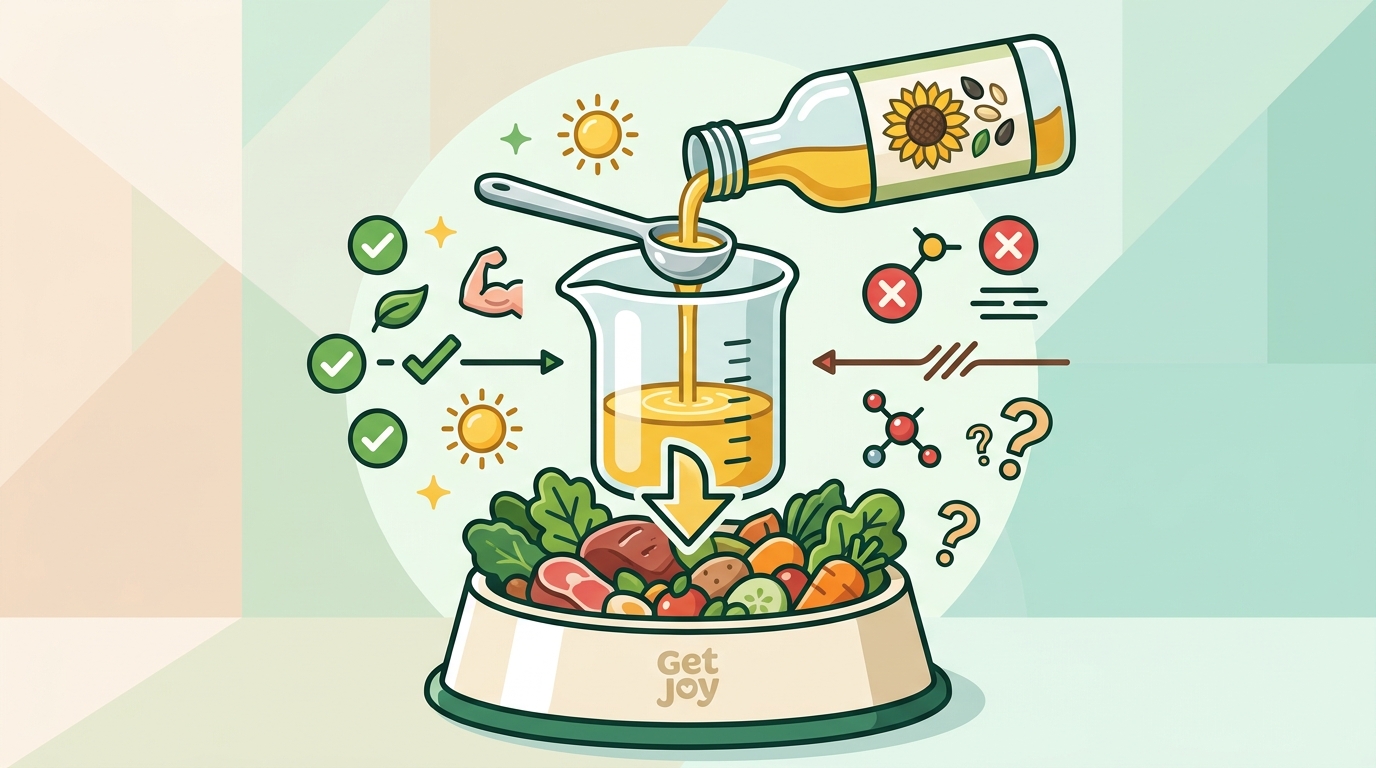
How Seed Oils Are Processed (and Why It Matters)
Beyond the fatty acid ratio, the way seed oils are produced raises additional red flags. Most commercial seed oils are extracted using high heat and chemical solvents like the petroleum product hexane. This refining process strips the oils of beneficial compounds such as vitamin E and antioxidant phenols.
Seed oils are also prone to oxidation when exposed to heat, light, and air during processing and storage. Oxidized fats can generate harmful byproducts, including Advanced Glycation End products (AGEs). Research from Virginia Commonwealth University suggests that dog food may contain roughly 100 times more AGEs than human food, potentially reducing quality of life and lifespan.
Health Risks of Excess Seed Oils in Dogs
When dogs consume too many refined seed oils over time, several health concerns can emerge. The table below summarizes the primary risks and the mechanisms behind them.
| Health Risk | Mechanism | Common Signs |
|---|---|---|
| Chronic inflammation | Excess omega-6 activates pro-inflammatory pathways | Joint stiffness, skin redness, ear infections |
| Skin and coat problems | Fatty acid imbalance disrupts skin barrier | Itching, flaking, dull coat |
| Digestive issues | Oxidized fats and inflammation stress the gut lining | Loose stools, gas, vomiting |
| Weakened immunity | Chronic inflammation suppresses immune response | Frequent illness, slow wound healing |
| Weight gain | Calorie-dense oils added in excess | Obesity, low energy |
Dogs with pre-existing conditions like allergies, arthritis, or digestive sensitivities may be especially vulnerable. Supporting the gut with prebiotics, probiotics, and postbiotics can help counterbalance some of these effects.
Not All Seed Oils Are Created Equal
It is important to note that not every seed oil carries the same risk profile. Hemp seed oil, for example, offers a more favorable omega-6 to omega-3 ratio and contains gamma-linolenic acid (GLA), which is actually anti-inflammatory. Flaxseed oil is another beneficial option because it is rich in ALA, an omega-3 precursor.
The biggest concerns center on highly refined oils like corn, soybean, and canola oil that dominate conventional pet food. These are the cheapest to produce and the most likely to be over-consumed.
Oils to Be Cautious About
- Corn oil
- Soybean oil
- Canola (rapeseed) oil
- Safflower oil (high-linoleic varieties)
- Cottonseed oil
Better Fat Sources for Dogs
If seed oils are problematic, what should dogs eat instead? The best fat sources provide omega-3 and omega-6 in a balanced ratio without heavy processing.
Top Fat Sources for Canine Health
- Fish oil (salmon, sardine): Rich in EPA and DHA, the omega-3s dogs can actually use directly.
- Flaxseed: A whole-food source of ALA, fiber, and antioxidants. Get Joy includes flaxseed in its recipes to support digestion and reduce inflammation.
- Coconut oil: Contains medium-chain triglycerides (MCTs) that are easily digestible and provide quick energy.
- Animal fats from quality proteins: Fats naturally present in USDA meats, organ meats, and eggs deliver a complete fatty acid profile.
A dog food built on whole-food ingredients, like Get Joy's Freeze Dried Raw meals, can deliver balanced fats without relying on cheap, processed seed oils.
What to Look for in Dog Food Ingredients
Reading ingredient labels is the single most effective step you can take. Avoid foods where corn oil, soybean oil, or canola oil appear in the first several ingredients. Instead, look for named animal proteins, whole-food fat sources, and functional ingredients that support gut health.
Belly Biotics is a proprietary blend of prebiotics, probiotics, and postbiotics designed to support your dog's gut health from every angle. Get Joy builds this blend directly into its Fresh Meals and freeze-dried recipes, which means your dog gets functional gut support in every bowl rather than from a separate supplement.
Foods that are free from common allergens like wheat, soy, and dairy, and are formulated by board-certified veterinary nutritionists, offer an additional layer of confidence. Learn more about how Get Joy recipes are developed.
Key Takeaways
- Seed oils are not inherently toxic, but excess consumption creates a harmful omega-6 to omega-3 imbalance in dogs.
- The ideal omega-6 to omega-3 ratio for dogs is around 5:1; many commercial foods exceed 20:1.
- Highly refined seed oils lose beneficial nutrients during processing and may contain oxidized byproducts.
- Chronic inflammation from excess omega-6 can contribute to joint pain, allergies, digestive problems, and weakened immunity.
- Better fat sources include fish oil, flaxseed, coconut oil, and fats naturally present in quality animal proteins.
- Always check ingredient labels and choose foods formulated by veterinary nutritionists with balanced fatty acid profiles.
- Supporting gut health with prebiotics, probiotics, and postbiotics can help mitigate inflammation caused by poor-quality fats.
Frequently Asked Questions
Are all seed oils bad for dogs?
No. Not all seed oils carry the same risks. Hemp seed oil and flaxseed oil, for example, offer beneficial fatty acid profiles. The concern is primarily with highly refined, omega-6-heavy oils like corn, soybean, and canola oil when they are consumed in excess.
What is the ideal omega-6 to omega-3 ratio for dogs?
Most canine nutrition experts recommend a ratio of around 5:1 or lower. Many commercial dog foods far exceed this, sometimes reaching ratios of 20:1 or 30:1, which can promote chronic inflammation.
Can seed oils cause allergies in dogs?
Seed oils themselves are not common allergens, but the chronic inflammation caused by excessive omega-6 intake can worsen allergy symptoms. A balanced fatty acid profile helps support a healthy immune response.
How do I know if my dog's food contains too many seed oils?
Check the ingredient label. If you see corn oil, soybean oil, canola oil, or generic "vegetable oil" listed prominently, the food likely contains a high proportion of omega-6-heavy fats. Look for foods that list named animal proteins and whole-food fat sources instead.
What role does gut health play in managing inflammation from seed oils?
The gut is where roughly 70% of a dog's immune cells reside. A healthy, balanced gut microbiome helps regulate the inflammatory response. Foods that include prebiotics, probiotics, and postbiotics can support gut integrity and help the body manage inflammation more effectively.
Is coconut oil a good replacement for seed oils in dog food?
Coconut oil contains MCTs that are easily digestible and can provide quick energy. However, it is low in essential fatty acids like linoleic acid, so it works best as a complement to other fat sources rather than a sole replacement.
Does Get Joy use seed oils in its recipes?
Get Joy focuses on whole-food ingredients and includes beneficial fat sources like flaxseed and fish oil. Its recipes are formulated by ACVN Board Certified Veterinary Nutritionists and are free from common allergens like wheat, soy, and dairy.
Give Your Dog Better Nutrition Today
Your dog deserves food made with intention, not industrial shortcuts. Explore Get Joy's Freeze Dried Raw meals and Fresh Meal plans, crafted with whole-food ingredients, balanced fats, and the proprietary Belly Biotics blend to support gut health in every bowl. Start your dog's wellness journey at getjoyfood.com.