

Seed oils have become one of the most debated ingredients in human nutrition, and the conversation has officially reached the dog bowl. From corn oil to sunflower oil, these plant-derived fats appear on countless pet food labels. But should you be worried? The answer is more nuanced than a simple yes or no. The real issue is not whether seed oils exist in your dog's food but how much is used, how it is processed, and whether the overall fatty acid profile is balanced. In this guide, we break down the science, the risks, and what to look for in a truly gut-healthy diet for your dog.
What Are Seed Oils?
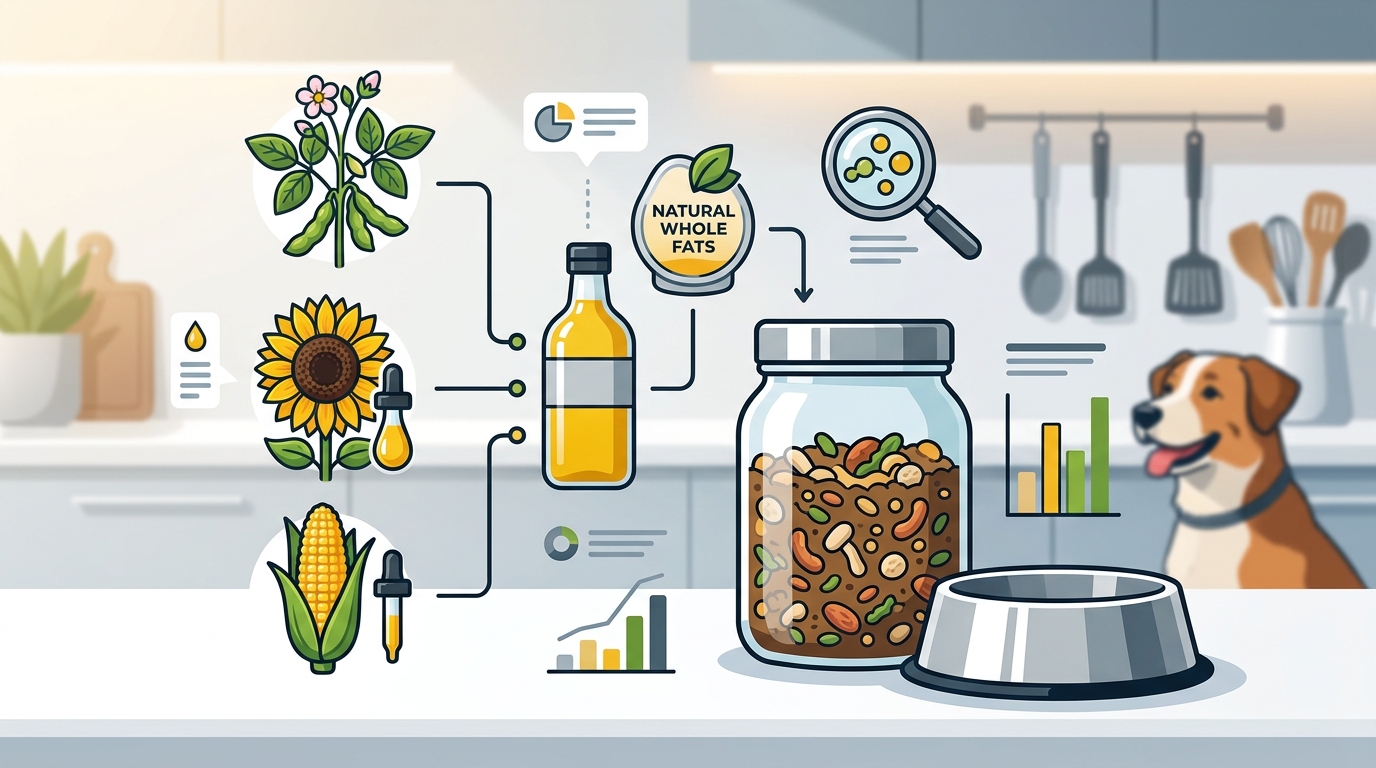
Seed oils are fats extracted from the seeds of plants such as corn, soybean, sunflower, safflower, and canola. They are rich in polyunsaturated fatty acids (PUFAs), particularly omega-6 fatty acids like linoleic acid. These oils became popular in commercial food production because they are inexpensive to manufacture and extend shelf life.
Linoleic acid is an essential fatty acid for dogs, meaning their bodies cannot produce it on their own. It supports skin health, coat quality, and cell membrane function. The problem begins when seed oils are used in excessive quantities, tipping the balance of fatty acids in your dog's diet.
The Omega-6 to Omega-3 Balance Problem
One of the primary concerns with seed oils in dog food is the imbalance they create between omega-6 and omega-3 fatty acids. The AAFCO sets a maximum omega-6 to omega-3 ratio of 30:1 for dog foods, while the National Research Council (NRC) recommends a tighter range of 2.6:1 to 26:1 for adult dogs. Many experts consider a ratio closer to 5:1 ideal for reducing chronic inflammation.
| Guideline Body | Recommended Omega-6:Omega-3 Ratio | Notes |
|---|---|---|
| NRC | 2.6:1 to 26:1 | Range for adult dog maintenance |
| AAFCO | 30:1 maximum | Upper safe limit for all dog foods |
| Many veterinary nutritionists | ~5:1 | Often cited as optimal for anti-inflammatory benefit |
| Typical kibble with seed oils | 20:1 to 30:1+ | Heavily skewed toward omega-6 |
When commercial dog foods rely on corn, soybean, or sunflower oil as a primary fat source without adequate omega-3 supplementation, the ratio can easily exceed 20:1. This chronic omega-6 excess may contribute to a state of low-grade inflammation linked to conditions such as obesity, cancer, and diabetes in dogs.
How Processing Makes Seed Oils Worse
Beyond the fatty acid ratio, the way seed oils are manufactured raises additional concerns. Most commercial seed oils undergo heavy processing that includes solvent extraction with petroleum-based hexane, bleaching, and deodorizing. This refining process strips the oils of beneficial compounds like vitamin E and natural antioxidants.
Oxidation and AGEs
Seed oils are prone to oxidation when exposed to heat, light, and air during processing and storage. Oxidized oils generate free radicals and contribute to the formation of Advanced Glycation End products (AGEs). AGEs are glycotoxins that accumulate in body tissue and promote oxidative stress and inflammation. One Virginia Commonwealth University researcher estimates that dog food can contain up to 100 times more AGEs than human food, potentially reducing canine quality of life and lifespan.
Rancidity in Pet Food
Some pet food manufacturers use recycled or low-grade frying oils that may already be rancid. Rancid oil is a source of inflammation-causing oxygen free radicals and has been associated with heart disease, arthritis, and digestive disorders in animals.
Potential Health Risks for Dogs
When seed oils dominate a dog's diet, several health consequences can follow:
- Chronic inflammation: Excess omega-6 fatty acids activate pro-inflammatory pathways that can worsen joint pain, allergies, and digestive problems.
- Skin and coat issues: Paradoxically, while linoleic acid supports skin health, an omega imbalance can trigger itching, dryness, and irritation.
- Weakened immunity: Inflammation can suppress immune function, making dogs more susceptible to infections.
- Gut disruption: Oxidized fats and AGEs stress the digestive system, undermining the gut microbiome that drives overall canine wellness.
Dogs with pre-existing conditions like arthritis or food sensitivities may be especially vulnerable to these effects.
Not All Seed Oils Are Created Equal
It is important to note that not every seed oil is harmful. Some, like flaxseed oil and hemp seed oil, provide beneficial omega-3 fatty acids and can be part of a healthy diet when used in measured amounts. The concern is primarily with highly refined, omega-6-heavy oils like corn, soybean, and generic vegetable oil blends that dominate cheap kibble formulations.
Additionally, context matters. A small, controlled amount of high-linoleic sunflower oil in a diet that also includes omega-3-rich fish oil can be perfectly appropriate. The danger lies in formulations where seed oils are the primary fat source with no balancing omega-3 supplementation.
What to Look for in Dog Food Instead
If you want to minimize your dog's exposure to problematic seed oils, focus on foods that prioritize whole-food fat sources and transparent ingredient lists. Here is what matters most:
Whole-Food Ingredients Over Cheap Fillers
Look for dog food made with premium raw meats, named animal fats, and nutrient-dense superfoods rather than vague terms like "vegetable oil" or "animal fat." Whole-food recipes naturally deliver a better fatty acid balance.
Built-In Gut Support
Inflammation from poor-quality fats takes a toll on the gut. A food that includes prebiotics, probiotics, and postbiotics can help maintain a resilient microbiome. Get Joy's Belly Biotics™ blend is a proprietary combination of all three, designed to nourish beneficial gut bacteria and support digestion, immunity, and vitality from within.
Recipes Developed by Board-Certified Nutritionists
Formulations created by ACVN Board Certified Veterinary Nutritionists are more likely to achieve proper fatty acid ratios and meet or exceed AAFCO standards. This level of expertise matters when balancing essential fats correctly.
Key Takeaways
- Seed oils are plant-derived fats rich in omega-6 fatty acids, commonly used in commercial dog food to reduce cost.
- Linoleic acid is an essential nutrient for dogs, but excess omega-6 without adequate omega-3 drives chronic inflammation.
- AAFCO allows a maximum omega-6 to omega-3 ratio of 30:1, but many experts recommend closer to 5:1 for optimal health.
- Heavily processed seed oils can be oxidized and rancid, introducing harmful AGEs and free radicals into your dog's diet.
- Not all seed oils are bad. Flaxseed oil and hemp seed oil provide omega-3s and can be beneficial in moderation.
- Choosing whole-food, minimally processed dog food with built-in gut support is the best way to avoid seed oil pitfalls.
- Always look for recipes formulated by board-certified veterinary nutritionists with transparent ingredient lists.
Frequently Asked Questions
What are seed oils in dog food?
Seed oils are fats extracted from plant seeds such as corn, soybean, sunflower, and canola. They are commonly added to commercial dog food as an inexpensive fat source rich in omega-6 fatty acids.
Are all seed oils bad for dogs?
No. Some seed oils like flaxseed and hemp seed oil provide beneficial omega-3 fatty acids. The concern is with heavily refined, omega-6-dominant oils used in large quantities without balancing omega-3s.
What is the ideal omega-6 to omega-3 ratio for dogs?
While AAFCO allows up to 30:1, the NRC recommends a range of 2.6:1 to 26:1. Many veterinary nutritionists suggest a ratio near 5:1 for anti-inflammatory benefits.
Can seed oils cause allergies in dogs?
Seed oils themselves are not common allergens, but the chronic inflammation caused by excess omega-6 fatty acids can worsen existing allergies and skin conditions in dogs.
How do I know if my dog's food has too many seed oils?
Check the ingredient list. If corn oil, soybean oil, or generic "vegetable oil" appears in the first several ingredients with no fish oil or other omega-3 source listed, the formula likely has an unbalanced fatty acid profile.
Does Get Joy dog food contain seed oils?
Get Joy focuses on whole-food, vet-formulated recipes made with premium proteins and superfoods. Their recipes include omega-3-rich oils for a balanced fatty acid profile, and every formula features Belly Biotics™ for gut health support.
What fats are healthiest for dogs?
Named animal fats (like chicken fat), fish oil rich in EPA and DHA, and minimally processed plant oils such as flaxseed oil are among the healthiest fat sources for dogs. The key is balance and quality.
Should I add fish oil to my dog's diet?
If your dog eats a commercial diet high in omega-6 fatty acids, supplementing with fish oil can help restore balance. However, consult your veterinarian first, as excessive EPA and DHA intake can affect blood clotting.
Give Your Dog a Gut-Healthy Start
Skip the guesswork on ingredient labels. Explore Get Joy's freeze-dried raw meals, made with premium proteins, whole-food superfoods, and Belly Biotics™ built right in. No seed oil fillers. No shortcuts. Just radically better nutrition that starts from within.