

Should You Give Your Dog Probiotics Every Day? Prebiotics, Probiotics & Postbiotics Explained
If you have ever stood in the supplement aisle wondering whether your dog really needs a daily probiotic, you are not alone. The terms prebiotics, probiotics, and postbiotics get tossed around constantly, yet most pet parents are unclear on what each one actually does or how they work together. Understanding the difference is the first step toward supporting your dog's gut health, immunity, and long-term vitality. In this guide we break down the science, compare all three biotics side by side, and explain why a combined approach may be the smartest move you make for your pup.
What Are Prebiotics, Probiotics & Postbiotics?
Before you can choose the right gut-health strategy for your dog, you need to understand three core terms.
Prebiotics
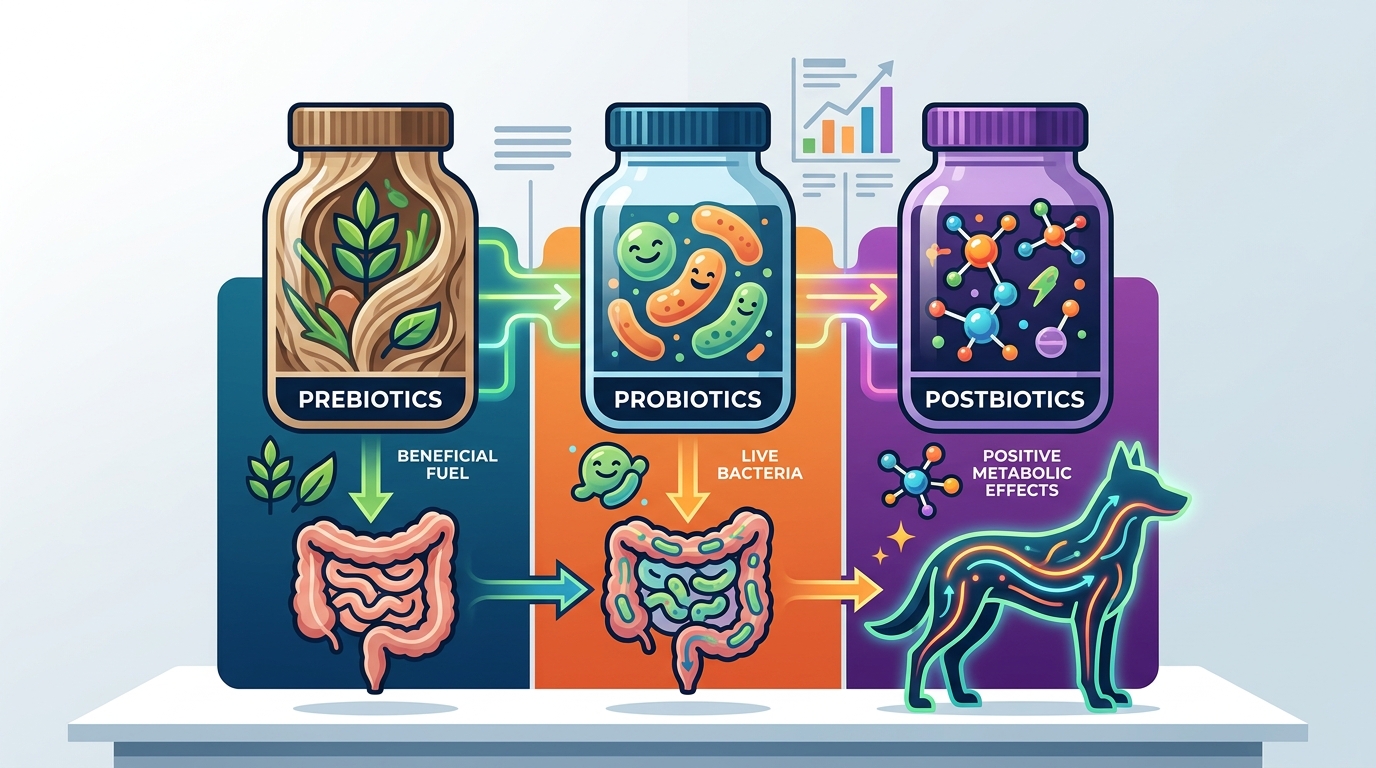
Prebiotics are compounds naturally found in food that foster the growth of healthy bacteria in the gut and support a healthy digestive system. Think of them as fertilizer: they serve as "food" for the beneficial microorganisms already living in your dog's intestines. Common prebiotic sources include pumpkin, chicory root, and inulin. Without enough prebiotics, probiotics simply cannot sustain themselves.
Probiotics
Probiotics are live, beneficial microorganisms that maintain balance in your dog's digestive system. According to Cornell University's College of Veterinary Medicine, probiotics normalize intestinal conditions by adjusting acidity and releasing short-chain fatty acids. The most commonly studied strains in dogs include Lactobacillus, Bifidobacterium, and Enterococcus.
Postbiotics
Postbiotics are the byproduct "goodies" that result when probiotics feed on prebiotics. These metabolites include short-chain fatty acids, amino acids, vitamins such as B12 and vitamin K, and digestive enzymes. Unlike live probiotics, postbiotics are shelf-stable and do not require surviving stomach acid, making them a reliable, consistent option for daily wellness.
How the Three Biotics Work Together
Each biotic plays a distinct role, but the real power emerges when all three operate as a system. Prebiotics feed beneficial bacteria you already have. Probiotics add more good bacteria into the mix. Postbiotics deliver the downstream benefits of both throughout the rest of the body.
A 2023 review published in PMC confirmed that probiotic use in dogs can improve gut microbiota balance, modulate inflammation, enhance immune function, and protect against enteropathogens. Pairing probiotics with prebiotic fiber and stable postbiotics amplifies those benefits even further.
This synergy is why leading nutritionists now recommend a combined approach rather than relying on probiotics alone. When your dog's food already contains all three, you avoid the guesswork of stacking separate supplements.
Should You Give Your Dog Probiotics Every Day?
The short answer: yes, for most dogs a daily probiotic is both safe and beneficial. Cornell's Riney Canine Health Center states that you can give probiotics daily as part of your dog's long-term health care. Approximately 70 percent of a dog's immune system resides in the gut, so consistent support matters.
Daily use is especially helpful for dogs that experience stress-related digestive upset, are recovering from antibiotics, or have food sensitivities. Even healthy dogs benefit because consistent probiotic intake helps maintain microbial diversity before problems start.
One important caveat: always consult your veterinarian before introducing any supplement, particularly if your dog has a chronic health condition.
Prebiotics vs. Probiotics vs. Postbiotics: Side-by-Side Comparison
| Feature | Prebiotics | Probiotics | Postbiotics |
|---|---|---|---|
| What they are | Non-digestible fibers | Live beneficial bacteria | Metabolic byproducts of fermentation |
| Primary role | Feed good bacteria | Add good bacteria | Deliver systemic health benefits |
| Stability | Stable in food | Sensitive to heat and stomach acid | Highly stable; no live organisms needed |
| Key benefits | Microbiome balance, mineral absorption | Digestion, immunity, mood via gut-brain axis | Anti-inflammatory, immune modulation, nutrient absorption |
| Common sources | Pumpkin, chicory root, inulin | Lactobacillus, Bifidobacterium strains | Short-chain fatty acids, peptides, enzymes |
| Limitation | Does not introduce new bacteria | Effectiveness varies with survival through GI tract | Requires initial probiotic activity to be produced |
Signs Your Dog Needs Better Gut Support
Not sure if your dog's gut microbiome is out of balance? Watch for these common signals:
- Loose stools, constipation, or excessive gas
- Dull coat or persistent itchy skin
- Recurring ear infections
- Low energy or mood changes
- Bad breath that does not improve with dental care
Because roughly 90 percent of a dog's serotonin production occurs in the gut, an imbalanced microbiome can even affect mood and behavior. If your dog shows any combination of the symptoms above, a gut-focused nutrition plan is worth exploring.
Why Belly Biotics™ Combines All Three
Belly Biotics™ is Get Joy's clinically proven, proprietary blend of prebiotics, probiotics, and postbiotics designed to support your dog's gut health from every angle. Rather than asking you to buy three separate supplements, Belly Biotics™ is built directly into every freeze-dried raw recipe and fresh meal.
This integrated approach means every bowl your dog eats feeds the good bacteria they already have, introduces more beneficial microbes, and delivers stable postbiotic metabolites that support digestion, immunity, and inflammation reduction. For targeted extra support, Get Joy also offers a standalone Gut+ supplement formulated with the same tri-biotic philosophy.
All meals are crafted in human food facilities using USDA-sourced proteins, whole vegetables, and superfoods with zero fillers or preservatives.
Key Takeaways
- Prebiotics feed good gut bacteria; probiotics add more; postbiotics deliver the downstream benefits.
- Daily probiotic support is safe for most dogs and recommended by veterinary institutions like Cornell.
- About 70% of your dog's immune system lives in the gut, making microbiome health a whole-body priority.
- Postbiotics are uniquely stable and effective because they do not rely on live organisms surviving digestion.
- A combined pre-, pro-, and postbiotic approach outperforms any single biotic used alone.
- Belly Biotics™ from Get Joy integrates all three biotics into every meal, eliminating supplement guesswork.
- Always consult your veterinarian before making significant dietary changes.
Frequently Asked Questions
Can I give my dog probiotics every single day?
Yes. According to Cornell University's Riney Canine Health Center, probiotics can be given daily as part of long-term health care. Consistent use helps maintain microbial balance and supports immunity.
What is the difference between prebiotics and probiotics?
Prebiotics are non-digestible fibers that serve as food for beneficial gut bacteria. Probiotics are live microorganisms that directly add beneficial bacteria to the digestive tract. Both are essential, but they play different roles.
What exactly are postbiotics?
Postbiotics are bioactive compounds produced when probiotics ferment prebiotic fibers. They include short-chain fatty acids, peptides, and vitamins. Because they are non-living, they are more stable than probiotics and still deliver significant health benefits.
Are there side effects of probiotics for dogs?
Side effects are uncommon and usually mild, such as temporary gas or soft stools when first introduced. Starting with a lower dose and gradually increasing can help your dog adjust. Consult your vet if symptoms persist.
Do puppies benefit from probiotics too?
Yes. Puppies can take dog-specific probiotics, which may help them develop a balanced intestinal microbiome, support a healthy immune system, and reduce the incidence of diarrhea and digestive infections.
Why does Get Joy include all three biotics instead of just probiotics?
Probiotics alone are subject to limitations like stomach acid and heat sensitivity. By combining prebiotics, probiotics, and postbiotics in its Belly Biotics™ blend, Get Joy ensures your dog receives the full spectrum of gut-health support in every meal.
How is Belly Biotics™ different from a standalone supplement?
Belly Biotics™ is built into Get Joy's food recipes rather than added as a separate product. This means your dog receives consistent tri-biotic support with every meal without extra steps. For dogs needing additional support, Get Joy also offers a dedicated Gut+ supplement.
Where can I buy Get Joy dog food?
Get Joy meals are available at getjoyfood.com and through retail partners including Chewy, Amazon, and Sprouts stores across the United States.
Start Supporting Your Dog's Gut Health Today
Your dog's wellness truly starts from within. Take two minutes to complete the Get Joy meal plan questionnaire and receive a customized nutrition plan with Belly Biotics™ built into every recipe. Give your pup the daily gut support they deserve.