

Seed oils have become one of the most debated ingredients in human nutrition, and the controversy has now spilled into the pet food aisle. If you have ever flipped over your dog's food bag and spotted sunflower oil, canola oil, or soybean oil on the label, you are not alone in wondering whether those ingredients belong there. The short answer is nuanced: seed oils are not inherently toxic to dogs, but the type, quality, and quantity used in a formula matter enormously. Below, we break down the science so you can make a confident, informed decision about what goes into your dog's bowl.
What Are Seed Oils?
Seed oils are fats extracted from plant seeds such as corn, soybean, sunflower, safflower, and canola. They are rich in polyunsaturated fatty acids (PUFAs), particularly omega-6 fatty acids like linoleic acid. Linoleic acid is an essential fatty acid for dogs, meaning a dog's body cannot produce it on its own and must obtain it through food.
In small, controlled amounts, linoleic acid supports healthy skin, coat quality, cell membrane structure, and immune function. The issue arises when seed oils are used excessively or as cheap filler fats in commercial kibble, tipping the fatty acid balance in an unhealthy direction.
The Omega-6 to Omega-3 Balance Problem
One of the biggest concerns with seed oils in dog food is the ratio of omega-6 to omega-3 fatty acids. The National Research Council (NRC) recommends a ratio between 2.6:1 and 26:1 for adult dogs. AAFCO sets a maximum allowable ratio of 30:1. Many conventional kibbles, however, rely heavily on corn, soy, and seed oils, pushing that ratio far higher than ideal.
Why Does an Imbalanced Ratio Matter?
Omega-6 fatty acids tend to promote inflammatory pathways, while omega-3 fatty acids (especially EPA and DHA from marine sources) help resolve inflammation. When the ratio skews too far toward omega-6, chronic low-grade inflammation can develop, potentially contributing to joint pain, skin allergies, digestive issues, and weakened immunity.
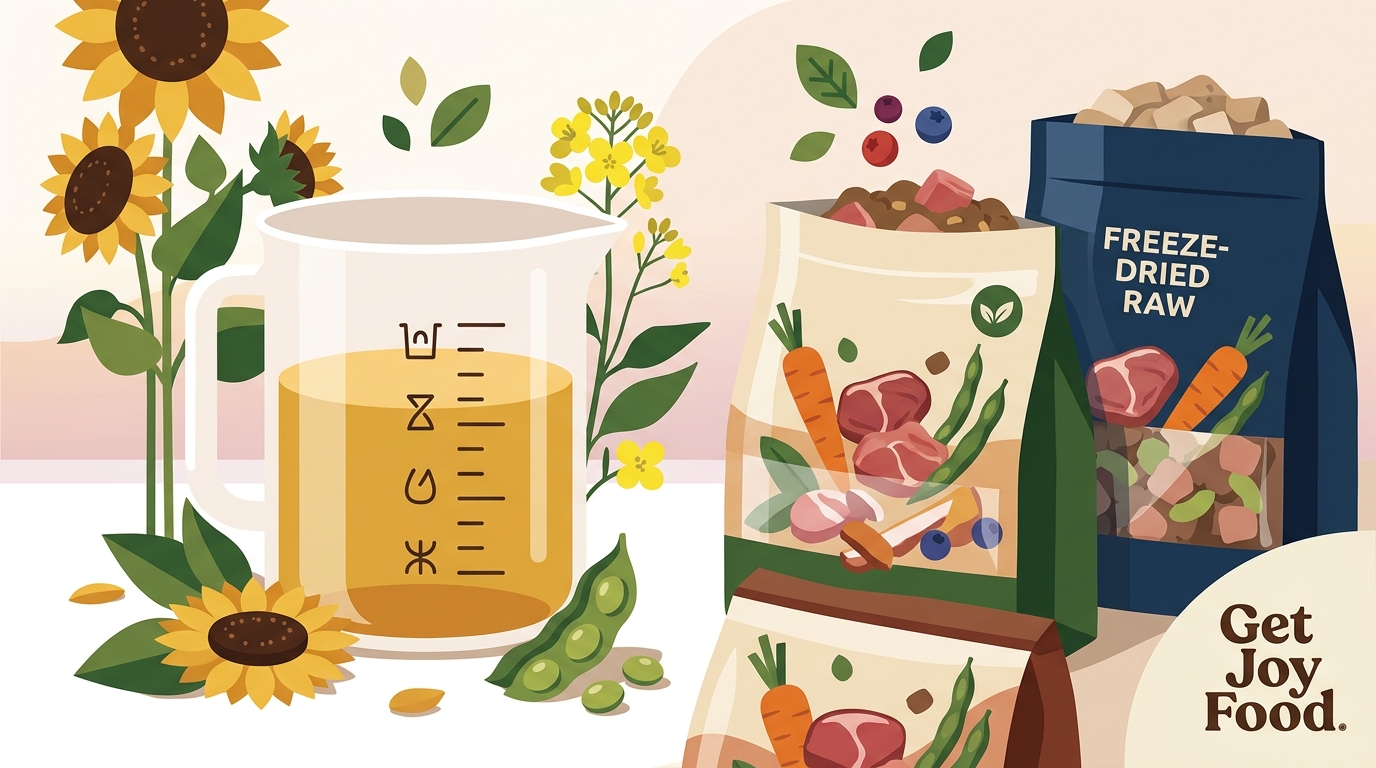
EPA and DHA: The Omega-3s That Truly Count
Dogs are extremely inefficient at converting plant-based ALA (found in flaxseed or canola) into the bioactive omega-3s EPA and DHA. That is why premium dog foods include direct sources like salmon oil, which delivers preformed EPA and DHA with the highest bioavailability for dogs.
| Fat Source | Primary Fatty Acid | Pro-Inflammatory Risk | Notes |
|---|---|---|---|
| Corn oil | Omega-6 (LA) | High | Very high omega-6; common in kibble |
| Soybean oil | Omega-6 (LA) | High | Heavily refined; allergen concern |
| Sunflower oil | Omega-6 (LA) | Moderate | Useful in measured amounts for LA |
| Canola oil | Omega-6 + some ALA | Moderate | Chemically refined; stripped of nutrients |
| Salmon oil | Omega-3 (EPA/DHA) | Low | Anti-inflammatory; high bioavailability |
| Flaxseed | Omega-3 (ALA) + fiber | Low | Good plant omega-3 source; limited conversion to EPA/DHA |
| Coconut oil | MCTs (saturated) | Low | Quick energy; not a linoleic acid source |
Processing Concerns: Oxidation and Refinement
Beyond fatty acid balance, the way seed oils are manufactured raises additional red flags. Most commercial seed oils undergo solvent extraction using hexane, followed by bleaching and deodorizing at high temperatures. This aggressive refining process strips beneficial compounds like vitamin E and phenols, leaving behind a nutritionally hollow fat.
Seed oils are also prone to oxidation. Oxidized fats generate free radicals that contribute to oxidative stress, cellular damage, and the formation of Advanced Glycation End products (AGEs). Dr. David Turner of Virginia Commonwealth University has estimated that dog food can be roughly 100 times higher in AGEs than human food, a factor that may reduce canine quality of life and lifespan.
Which Seed Oils Should Dogs Avoid?
Not every seed oil poses the same level of risk. Here is a quick breakdown:
- Corn oil, soybean oil, cottonseed oil: Very high in omega-6, heavily processed, and commonly used as cheap fillers in budget kibble. Best avoided as primary fat sources.
- Canola (rapeseed) oil: Moderately high in omega-6 and refined with solvents. Nutritional value is significantly diminished after processing.
- Grapeseed oil: May carry tartaric acid, the same compound that makes grapes toxic to dogs. Avoid entirely.
- High-oleic sunflower oil (in measured amounts): Lower risk when used intentionally by a veterinary nutritionist to meet linoleic acid requirements.
Healthier Fat Sources for Dogs
The best dog foods rely on whole-food fat sources rather than refined industrial oils. Look for named animal fats, fish oils, and minimally processed plant ingredients.
Salmon Oil
Salmon oil is naturally rich in EPA and DHA, the two omega-3 fatty acids with the highest anti-inflammatory impact. Get Joy uses salmon oil across its freeze-dried raw recipes to deliver these critical nutrients directly.
Flaxseed
Flaxseed is a good source of plant-based ALA omega-3s, fiber, and lignans with antioxidant properties. While ALA conversion to EPA and DHA is limited, flaxseed still supports digestion and heart health as part of a balanced formula.
Animal Fats from Quality Protein
Fats naturally present in USDA-sourced beef, chicken, and organ meats provide a balanced mix of essential fatty acids alongside protein, B vitamins, and minerals. This is one reason whole-food dog nutrition outperforms heavily processed kibble that depends on added seed oils.
What to Look for on a Dog Food Label
Reading a pet food label with fatty acids in mind can help you make smarter choices. Here are three practical tips:
1. Check the Fat Sources
Named fats like "salmon oil" or "chicken fat" are preferable to vague terms like "vegetable oil" or "animal fat." Specific sourcing signals transparency and quality.
2. Confirm the Omega Balance
Premium brands formulated by board-certified veterinary nutritionists will balance omega-6 and omega-3 fatty acids intentionally, often listing guaranteed analysis values for both.
3. Prioritize Whole-Food Ingredients
Foods built on real meat, organ meats, and superfoods naturally contain healthier fats than formulas padded with refined seed oils and synthetic vitamin packs.
The Gut Health Connection
Chronic inflammation from excess omega-6 seed oils does not just affect joints and skin. It can also disrupt the gut microbiome, the community of beneficial bacteria that drives digestion, nutrient absorption, and immune response. An inflamed gut lining allows harmful compounds to pass into the bloodstream, a condition sometimes called "leaky gut."
Supporting your dog's gut with prebiotics, probiotics, and postbiotics can help counteract dietary stressors. Get Joy's proprietary Belly Biotics™ blend is built directly into every recipe, combining all three biotic types to fuel a thriving microbiome from the inside out. Gut health is the root of whole-body health, and getting the fat balance right is one piece of that puzzle.
Key Takeaways
- Seed oils are not toxic, but excessive amounts in dog food create a harmful omega-6 to omega-3 imbalance that promotes chronic inflammation.
- The NRC recommends an omega-6 to omega-3 ratio between 2.6:1 and 26:1 for adult dogs; many kibbles exceed this range.
- Refined seed oils lose beneficial nutrients during chemical processing and are prone to oxidation, producing free radicals and AGEs.
- Dogs cannot efficiently convert plant-based ALA into the anti-inflammatory omega-3s EPA and DHA, making direct marine sources like salmon oil essential.
- Grapeseed oil should be avoided entirely due to potential tartaric acid content.
- Whole-food recipes using named animal fats, salmon oil, and flaxseed provide a far healthier fat profile than seed-oil-heavy kibble.
- Supporting gut health with a balanced biotic blend helps your dog manage dietary inflammation and absorb nutrients more effectively.
Frequently Asked Questions
Are all seed oils bad for dogs?
No. Linoleic acid from seed oils is an essential nutrient dogs need for healthy skin and coat. The problem is excessive use of highly refined seed oils that tip the omega-6 to omega-3 ratio too far toward inflammation. Small, measured amounts of high-quality seed oils can be part of a balanced diet.
What is the ideal omega-6 to omega-3 ratio for dogs?
The National Research Council recommends a ratio between 2.6:1 and 26:1 for adult dogs. AAFCO allows a maximum of 30:1, but many veterinary nutritionists suggest aiming for the lower end of the NRC range for optimal anti-inflammatory benefits.
Is sunflower oil safe for dogs?
In controlled amounts, sunflower oil is a concentrated source of linoleic acid and is safe for dogs. It becomes problematic only when overused without adequate omega-3 fatty acids to maintain balance.
Why is salmon oil better than seed oils for dogs?
Salmon oil delivers preformed EPA and DHA, the two omega-3 fatty acids dogs can actually use. Unlike plant-based ALA, these marine omega-3s do not require enzymatic conversion, making them far more bioavailable and effective at reducing inflammation.
Can seed oils cause allergies in dogs?
Seed oils themselves are not common allergens, but the chronic inflammation they promote when consumed in excess can worsen allergy symptoms like itching, redness, and skin irritation. Soy-based oils may also trigger sensitivities in some dogs.
Does Get Joy use seed oils in its recipes?
Get Joy's recipes are formulated by ACVN board-certified veterinary nutritionists and rely on whole-food fat sources like salmon oil and flaxseed rather than cheap refined seed oils. Every recipe also includes the proprietary Belly Biotics™ blend to support gut health.
How do I know if my dog's food has too many seed oils?
Check the ingredient list for multiple seed oils (corn oil, soybean oil, canola oil) listed in the first ten ingredients. If the label does not disclose omega-6 and omega-3 levels in the guaranteed analysis, contact the manufacturer and ask for the ratio.
What is the connection between seed oils and gut health in dogs?
Excess omega-6 from seed oils promotes gut inflammation, which can damage the intestinal lining and disrupt the microbiome. A compromised gut affects digestion, immunity, and even mood, since a large portion of a dog's serotonin is produced in the gut.
Give Your Dog a Cleaner Bowl
Your dog deserves nutrition built on whole foods, not refined industrial oils. Explore Get Joy's vet-formulated fresh meal plans and freeze-dried raw recipes, each made with salmon oil, flaxseed, and our proprietary Belly Biotics™ blend to support gut health from the inside out. Joy starts from within.