

Your dog cannot tell you when their stomach hurts, but their body sends plenty of signals. The gut microbiome is the community of trillions of bacteria, fungi, and other microbes living in your dog's digestive tract, and when it falls out of balance the effects ripple across every system. Because roughly 70 to 80 percent of immune cells reside in the gut, an unhealthy digestive system can mean far more than an upset stomach. Below you will find the most common warning signs, what causes them, and practical ways to restore balance so your dog can thrive.
What Is Gut Health in Dogs?
The gut microbiome is an ecosystem of microbes that live in a dog's intestines. It contains billions of bacteria, viruses, fungi, and protozoa working together to keep your dog healthy. These bacteria aid digestion, prevent infections, synthesize vitamins, and strengthen the immune system.
Dysbiosis is an imbalance where harmful bacteria outnumber beneficial microbes in the digestive tract. When dysbiosis occurs, food is not digested properly, nutrients get wasted, and inflammation can spread to other organs. A flourishing gut microbiome filled with healthy bacteria helps ensure the rest of the body functions properly, supporting everything from nutrient absorption to improved mood and behavior.
Digestive Warning Signs
The most obvious symptoms of gut problems appear in your dog's stool and eating patterns. Pay close attention to changes in frequency, consistency, and smell.
Chronic Diarrhea or Constipation
A single bout of loose stool is common, but frequent diarrhea or constipation signals that the gut is not balanced. Alternating between the two is an especially strong indicator of gut dysbiosis in dogs.
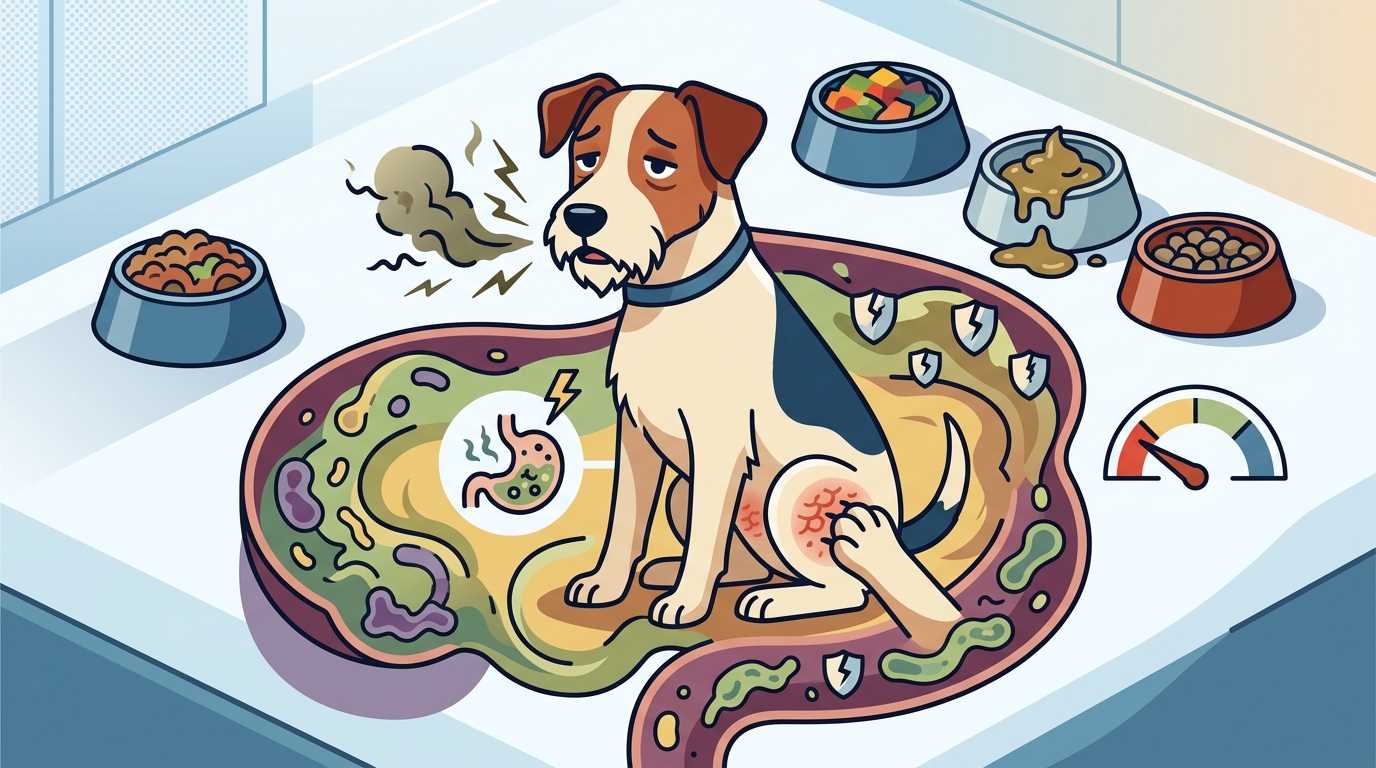
Excessive Gas and Bloating
Daily, foul-smelling gas signals poor digestion, food intolerance, or bacterial imbalance. If your dog's gas has become noticeably worse, it may be time to evaluate their diet.
Vomiting
Occasional vomiting happens, but recurring episodes alongside other digestive symptoms point toward a compromised gut environment. Persistent vomiting always warrants a veterinary visit.
Skin and Coat Red Flags
Many pet parents do not connect itchy skin to the gut, yet the link is well established. Dysbiosis and food reactions drive systemic inflammation that shows up in the skin and ears even while stool quality remains acceptable.
| Sign | What It May Indicate | Gut Connection |
|---|---|---|
| Persistent itching or scratching | Food sensitivity or allergy | Gut inflammation triggers immune overreaction |
| Dull, dry coat | Nutrient deficiency | Poor nutrient absorption from dysbiosis |
| Excessive shedding | Systemic stress | Imbalanced microbiome affects skin turnover |
| Recurring ear infections | Yeast overgrowth | Gut yeast imbalance can spread to ears |
| Hot spots or rashes | Chronic inflammation | Cytokines from gut travel to skin |
A rash or irritation in your dog's ears may actually be a sign of an imbalance of yeast in the gut. If your dog's coat looks lackluster despite regular grooming, their gut health deserves a closer look. Feeding nutrient-dense whole foods can help maintain healthy skin and a shiny coat.
Behavioral and Mood Changes
The gut-brain axis is a powerful communication channel between the digestive tract and the brain. Gut bacteria regulate neurotransmitters such as serotonin, dopamine, and GABA, which are important to mood and impulse control. Poor gut health can lower levels of these neurotransmitters, resulting in anxiety, irritability, and other behavioral changes.
If your dog seems unusually lethargic, withdrawn, or anxious, digestive discomfort could be the hidden driver. A healthy gut produces feel-good neurotransmitters like serotonin to boost mood and prevent stress. Keep a log of behavioral and digestive changes and share it with your vet.
Hidden Signs You Might Overlook
Not every dog presents with obvious diarrhea. Some symptoms are subtle and easy to miss:
- Chronic bad breath that does not improve with dental care
- Unusual body odor originating from the skin
- Frequent grass-eating beyond the occasional nibble
- Excessive drooling, which may indicate nausea
- Unexplained weight changes, either gain or loss
- Low energy or chronic lethargy mistaken for aging
Chronic mild lethargy can be mistaken for normal aging, but it might indicate ongoing discomfort or nutrient deficiencies related to poor gut health. If something seems off, it is worth investigating with your veterinarian.
Common Causes of Poor Gut Health
Understanding what disrupts the microbiome helps you prevent problems before they start:
Diet Quality
Highly processed foods with unnecessary fillers and preservatives can aggravate the gut. Switching food abruptly instead of gradually over 7 to 10 days overwhelms digestive enzymes and can trigger diarrhea. A whole-food diet rich in fiber and quality protein supports microbial diversity.
Antibiotics and Medications
Antibiotics are sometimes necessary, but they destroy good bacteria along with the bad. After any antibiotic course, it is critical to re-establish bacterial balance by incorporating prebiotics, probiotics, and postbiotics into your dog's diet.
Stress and Environment
Stress triggers hormones that tell the body digestion is not a priority. This can lead to reduced gastric function, diarrhea, and other symptoms. A stable routine and a calm environment benefit digestive health significantly.
How to Support Your Dog's Gut Health
The good news is that you can take proactive steps every day to nurture your dog's microbiome.
Feed a Gut-First Diet
Choose meals formulated with prebiotics, probiotics, and postbiotics built directly into the food. Prebiotics are compounds naturally found in food that foster the growth of healthy bacteria. Probiotics are live beneficial bacteria that add microbial diversity. Postbiotics are the beneficial metabolites produced by those bacteria. Get Joy's Fresh Meals and Freeze-Dried Raw recipes include the proprietary Belly Biotics™ blend, a combination of all three, in every serving.
Add Targeted Supplements
A daily gut health supplement can provide extra digestive support, especially during stressful transitions or after illness. Look for clinically backed ingredients like omega-3 rich algae and ginger extract.
Transition Food Gradually
Always introduce new food over 7 to 10 days, starting with 25 percent new food mixed with 75 percent of the current diet and increasing slowly. This gives the microbiome time to adjust.
Key Takeaways
- An unhealthy gut shows up as digestive issues, skin problems, behavioral changes, and low energy.
- Roughly 70 to 80 percent of your dog's immune cells live in the gut, making gut health critical to whole-body wellness.
- Subtle signs like bad breath, excessive grass-eating, and chronic lethargy often trace back to gut imbalance.
- Diet quality is the single biggest factor you can control to support a healthy microbiome.
- Prebiotics, probiotics, and postbiotics work together to maintain microbial balance.
- Always transition to a new food gradually over 7 to 10 days.
- Consult your veterinarian if symptoms persist for more than 48 hours or worsen suddenly.
Frequently Asked Questions
What are the most common signs of an unhealthy gut in dogs?
The most common signs include chronic diarrhea or constipation, excessive gas, vomiting, skin irritation, dull coat, weight changes, and low energy. Behavioral shifts like increased anxiety can also be linked to poor gut health.
Can poor gut health make my dog itchy even if their stool looks normal?
Yes. Dysbiosis and food reactions drive systemic inflammation that shows up in the skin and ears while stool quality remains acceptable. Recurrent ear infections and persistent paw licking are common indicators.
How much of my dog's immune system is in the gut?
Research published in the journal Frontiers in Immunology indicates that approximately 70 to 80 percent of immune cells reside in the gut. This is why an imbalanced microbiome can lead to frequent illness and slow recovery.
What causes gut health problems in dogs?
Common causes include poor-quality or highly processed food, abrupt diet changes, antibiotic use, stress, parasites, infections, and chronic conditions like inflammatory bowel disease. Even environmental changes can disrupt the gut-brain axis and trigger digestive upset.
How can I improve my dog's gut health through diet?
Feed a balanced, whole-food diet that includes prebiotics, probiotics, and postbiotics. Avoid ultra-processed kibble loaded with fillers. Get Joy's meals are formulated with Belly Biotics™, a proprietary blend designed to nourish the microbiome in every bowl.
When should I take my dog to the vet for gut issues?
See your veterinarian if diarrhea or vomiting lasts more than 24 to 48 hours, if symptoms recur weekly, or if you notice blood in stool, sudden weight loss, or severe lethargy. Puppies, seniors, and immunocompromised dogs should receive faster attention.
Do probiotics really help dogs with digestive problems?
Probiotics can help ease symptoms and modify microbiome composition, though they typically do not colonize the gut permanently. The metabolites they produce during transit through the digestive tract can improve clinical signs. Pairing probiotics with prebiotics and postbiotics, as found in Get Joy's supplement line, offers more comprehensive support.
How long does it take to see improvement after changing my dog's diet?
Most pet owners notice a positive change in their dog's coat, energy levels, and overall health within a few weeks of switching to a gut-healthy diet. For supplements, results typically take 4 to 6 weeks to show.
Give Your Dog the Gut Health They Deserve
If you have spotted any of these warning signs, the best time to act is now. Build a personalized meal plan at Get Joy and give your dog functional, gut-healthy nutrition backed by science. Your dog's joy truly starts from within.