

Daily Probiotics for Dogs: Prebiotics, Probiotics & Postbiotics Explained
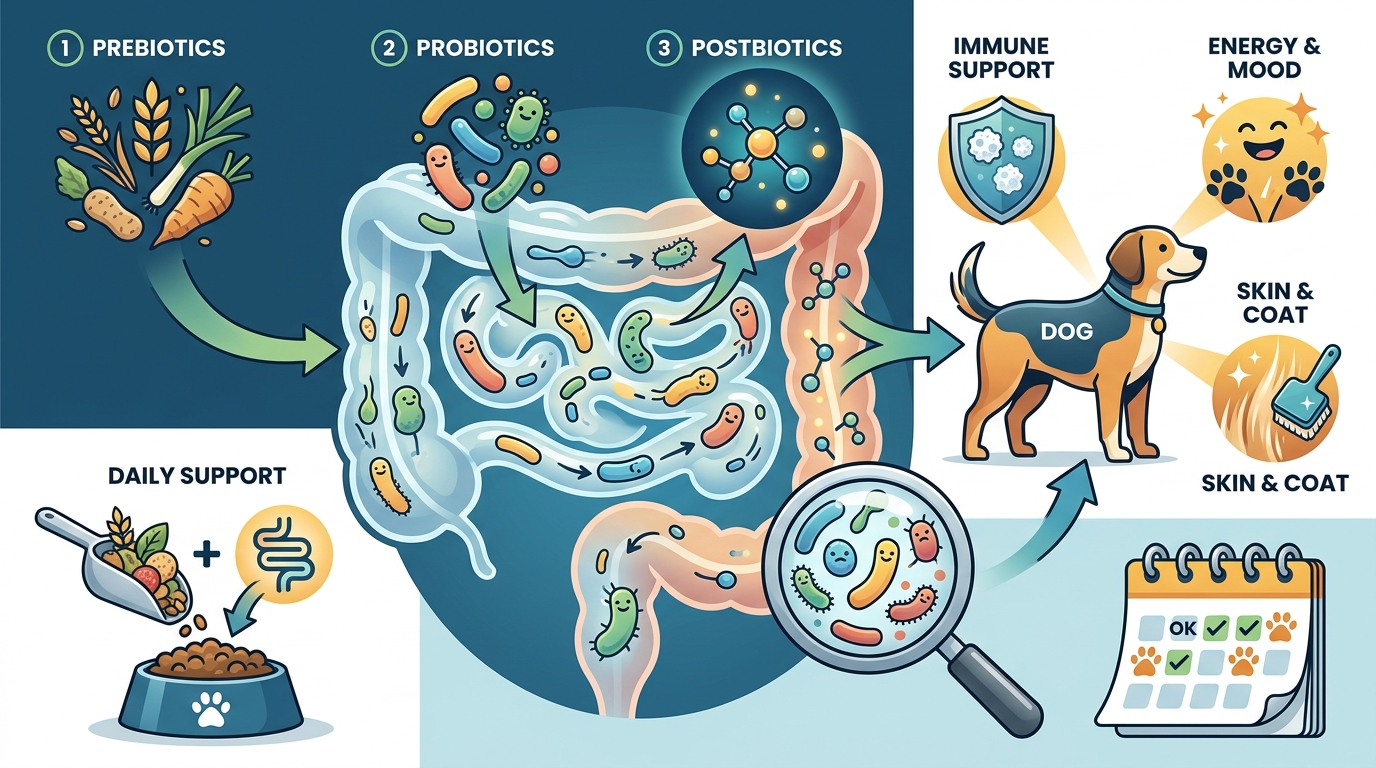
If you have ever wondered whether your dog should take probiotics every single day, you are not alone. Gut health has become one of the most talked-about topics in canine nutrition, and for good reason. Over 70% of a dog's immune cells reside in the gut, which means what happens inside the digestive tract influences everything from energy and mood to skin and coat quality. This guide breaks down the differences between prebiotics, probiotics, and postbiotics, explains when daily supplementation makes sense, and shows you how to support your dog's microbiome through smarter nutrition.
What Is the Gut Microbiome and Why Does It Matter?
The gut microbiome is an ecosystem of tiny organisms, including bacteria, fungi, and viruses, that live in the gastrointestinal tract and carry out essential bodily processes. In dogs, a flourishing microbiome filled with healthy bacteria helps ensure the rest of the body functions properly, supporting both the immune and digestive systems.
When that balance is disrupted by stress, antibiotics, or a poor diet, you may notice loose stools, bloating, itchy skin, or a dull coat. According to Cornell University's College of Veterinary Medicine, probiotics can be given proactively before stressful events or daily as part of a long-term wellness plan.
Prebiotics: The Fuel for Good Bacteria
Prebiotics are compounds naturally found in food that foster the growth of healthy bacteria in the gut and support a healthy digestive system. Think of them as fertilizer for the microbiome. They are not bacteria themselves; they are the fiber-rich food source that allows beneficial bacteria to thrive.
Common Prebiotic Sources
The most common prebiotics include plant-based fibers like inulin, fructo-oligosaccharides (FOS), and mannan-oligosaccharides (MOS). Whole-food ingredients such as pumpkin, peas, and brown rice also serve as natural prebiotic sources in a dog's diet.
Why Prebiotics Are Essential
Without sufficient prebiotics, probiotics cannot sustain themselves effectively. Having enough prebiotics in a diet helps ensure proper microbiome balance, which in dogs has significant physical, mental, and emotional impacts. Remarkably, 90% of a dog's serotonin production occurs in the gut, which means a healthy microbiome supports a happier dog.
Probiotics: The Living Good Bacteria
Probiotics are live microorganisms that have health benefits when consumed in the right quantity. They are the beneficial bacteria that make up a balanced microbiome and contribute to important biological processes like regulating digestion, mood, and immune function.
Recommended Strains and Dosing
According to the American Kennel Club, probiotics are most often recommended for supporting a desirable intestinal microbial balance. The current veterinary recommendation for dogs is 1 to 10 billion CFUs (colony forming units) per day. Common beneficial strains include Lactobacillus acidophilus, Bifidobacterium animalis, and Enterococcus faecium.
When Probiotics Help Most
A 2019 study found that dogs given a probiotic blend alongside antibiotics had fewer digestive issues, including diarrhea, vomiting, and loss of appetite. Dogs experiencing stress from boarding, travel, or dietary changes may also benefit from proactive probiotic support.
Postbiotics: The Powerful Byproducts
Postbiotics are the bioactive compounds produced when beneficial bacteria ferment prebiotic fibers in the gut. Unlike probiotics, postbiotics are not alive. They include short-chain fatty acids (SCFAs), amino acids, peptides, vitamins like B12 and vitamin K, and digestive enzymes.
As PetMD notes, certain probiotic strains have been shown to modulate the immune system and regulate inflammatory molecules. Postbiotics take this further by providing stable, consistent gut health and immune support without the limitations of live bacteria, which can be affected by stomach acid and stress.
Prebiotics vs. Probiotics vs. Postbiotics at a Glance
| Feature | Prebiotics | Probiotics | Postbiotics |
|---|---|---|---|
| What they are | Non-digestible fibers | Live beneficial bacteria | Metabolic byproducts of fermentation |
| Primary role | Feed beneficial gut bacteria | Introduce and maintain healthy bacteria | Deliver ready-made health benefits |
| Stability | Highly stable | Sensitive to heat, acid, and stress | Very stable; non-living |
| Key benefits | Support microbiome diversity, mineral absorption | Digestion, immunity, mood regulation | Anti-inflammatory, immune modulation, gut barrier strength |
| Common sources | Inulin, FOS, pumpkin, peas | L. acidophilus, B. animalis | SCFAs (butyrate, acetate), enzymes |
| Works alone? | Partially; best with probiotics | Partially; needs prebiotic fuel | Yes, but best as part of a trio |
Should You Give Your Dog Probiotics Every Day?
For most healthy dogs, daily probiotic support is safe and can be beneficial. Cornell veterinary experts confirm that you can give probiotics daily as part of your dog's long-term wellness routine. PetMD reports that manufacturers have documented significant improvement in digestive and immune health within four weeks and a reduction of anxious behaviors within six weeks of consistent use.
Dogs That May Benefit Most
- Dogs prone to digestive upset during stress or diet changes
- Puppies with developing immune and digestive systems
- Senior dogs needing extra immune and gut support
- Dogs recovering from antibiotic treatment
A Word of Caution
Probiotics are generally safe, but severely immunocompromised dogs should only use them under veterinary supervision. Always consult your vet before starting any new supplement, especially if your dog has an underlying health condition.
Why a Combined Approach Works Best
Using prebiotics, probiotics, and postbiotics together creates a synergistic effect that surpasses the benefits of any single component. Prebiotics fuel the probiotics. Probiotics produce postbiotics. And postbiotics deliver stable, system-wide benefits including reduced inflammation, stronger gut lining, and improved nutrient absorption.
This is exactly the philosophy behind Get Joy's Freeze Dried Raw meals, which feature Belly Biotics™, a proprietary blend of prebiotics, probiotics, and postbiotics built directly into every recipe. Rather than requiring a separate supplement, the biotic trio is part of the food itself, supporting digestion, immunity, energy, and long-term health in every bowl.
For dogs who need extra targeted support, the Gut+ daily supplement provides an additional clinically backed dose of gut-healthy ingredients. And Get Joy's Fresh Meals are gently cooked with whole food ingredients and zero fillers, designed to complement a gut-first nutrition plan.
Key Takeaways
- Prebiotics are fiber-based compounds that feed beneficial gut bacteria; they are not bacteria themselves.
- Probiotics are live microorganisms that support digestion, immunity, and mood when consumed in adequate amounts.
- Postbiotics are stable, non-living byproducts of bacterial fermentation that deliver anti-inflammatory and immune-boosting benefits.
- Over 70% of a dog's immune system is located in the gut, making daily microbiome support a smart investment.
- Veterinary experts say daily probiotics are safe for most dogs and can show results within four to six weeks.
- Combining all three biotics creates a synergistic effect stronger than any one alone.
- Get Joy's Belly Biotics™ delivers prebiotics, probiotics, and postbiotics in every meal, eliminating the need for separate supplements.
Frequently Asked Questions
Can I give my dog probiotics every day?
Yes. Most veterinary experts agree that daily probiotics are safe for healthy dogs. Cornell University recommends 1 to 10 billion CFUs per day. However, always consult your vet, especially for immunocompromised dogs.
What is the difference between prebiotics and probiotics?
Prebiotics are non-digestible fibers that serve as food for beneficial bacteria. Probiotics are the live beneficial bacteria themselves. Prebiotics fuel probiotics so they can thrive and multiply in the gut.
What are postbiotics and why do they matter?
Postbiotics are the bioactive compounds produced when probiotics digest prebiotics. They include short-chain fatty acids, enzymes, and peptides. Because they are non-living, they are more stable than probiotics and deliver consistent health benefits.
How long does it take for probiotics to work in dogs?
Many dog owners and manufacturers report noticeable improvements in digestive health within four weeks and behavioral changes within six weeks of daily use. Individual results vary based on the dog's health and the product used.
Are there side effects of probiotics for dogs?
Some dogs may experience temporary gas or soft stools when first starting probiotics. These symptoms typically resolve within a few days. Start with a smaller dose and increase gradually.
Should I choose a dog-specific probiotic?
Yes. Dogs have a different gut microbiome than humans, so dog-specific probiotics contain appropriate strains and dosing. Human probiotics are not harmful but may not provide the same targeted benefits.
What is Belly Biotics™?
Belly Biotics™ is Get Joy's clinically proven, proprietary blend of prebiotics, probiotics, and postbiotics designed to support your dog's gut health from every angle. It is built into every Get Joy meal and supplement, not added as an afterthought.
Can puppies take probiotics?
Yes. Puppies can benefit from dog-specific probiotics. Healthy digestion is especially important during puppyhood because the gut and immune system are still developing. Get Joy recipes are formulated to support dogs at all life stages, including puppies.
Start Supporting Your Dog's Gut Health Today
Your dog's wellness truly starts from within. Whether you choose Freeze Dried Raw meals with Belly Biotics™ or add the Gut+ supplement to your current routine, building a gut-first nutrition plan is one of the most impactful steps you can take for your dog's long-term health. Learn more about the Get Joy mission and take the meal plan quiz to get a personalized recommendation for your pup.