

If your dog struggles with recurring skin issues, digestive problems, or mysterious allergies, the root cause may surprise you. Leaky gut syndrome is a condition that compromises the intestinal lining, allowing harmful substances to pass into the bloodstream and trigger widespread inflammation. Understanding what leaky gut is, recognizing the early warning signs, and taking preventive steps through nutrition can help your dog live a longer, healthier life. In this guide, we break down the science, symptoms, and solutions so you can protect your pup from the inside out.
What Is Leaky Gut in Dogs?
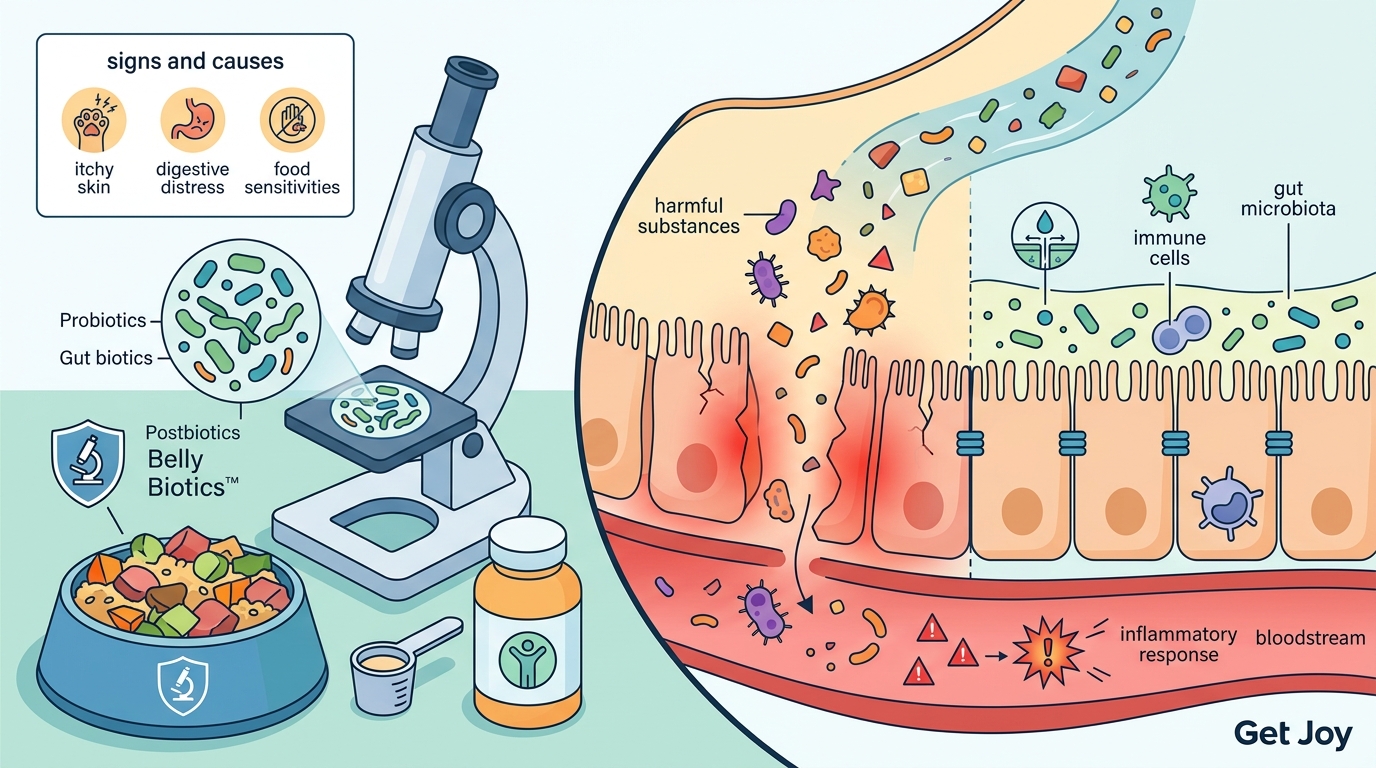
Leaky gut syndrome, also called increased intestinal permeability, is a condition in which the lining of a dog's intestines becomes damaged and overly porous. Normally, the intestinal wall is tightly sealed with cells that regulate what passes through, absorbing nutrients while blocking toxins and pathogens. When that barrier is compromised, undigested food particles, bacteria, and toxins escape into the bloodstream and trigger an immune response.
This immune reaction leads to chronic inflammation that can affect virtually every organ system. Because the symptoms overlap with so many other conditions, leaky gut is notoriously difficult to diagnose, making awareness and prevention all the more important for dog owners who prioritize gut health.
Common Causes of Leaky Gut
Leaky gut rarely appears overnight. It typically results from gradual, ongoing damage to the intestinal lining. Understanding the triggers helps you eliminate them before they become a problem.
Poor Diet and Processed Foods
A diet high in processed foods, artificial additives, and low-quality fillers is one of the leading contributors to intestinal damage. Many commercial kibbles contain ingredients that irritate the gut lining over time. Switching to whole-food, vet-formulated meals can reduce that chronic irritation significantly.
Medications
Long-term use of nonsteroidal anti-inflammatory drugs (NSAIDs), antibiotics, and corticosteroids can disrupt the balance of beneficial bacteria in the gut. Dysbiosis is the term for this bacterial imbalance, and it is a primary pathway to increased intestinal permeability. Always consult your vet before stopping any medication, but be aware of the gut health trade-offs involved.
Chronic Stress and Environmental Toxins
Ongoing stress raises cortisol levels, which negatively affects gut motility and barrier function. Environmental toxins, including pesticides and household chemicals, can also damage intestinal cells over time.
Symptoms to Watch For
Because leaky gut triggers a body-wide inflammatory response, the signs can be surprisingly varied. Here are the most common symptoms organized by category:
| Category | Symptoms |
|---|---|
| Digestive | Chronic diarrhea, constipation, vomiting, gas, bloating |
| Skin & Coat | Itching, hot spots, rashes, dull or flaky coat |
| Immune | Recurring ear infections, new food sensitivities, seasonal allergies |
| Musculoskeletal | Joint pain, stiffness, difficulty rising |
| Behavioral | Anxiety, irritability, lethargy, reduced interest in play |
Many dog owners mistake these signs for environmental allergies or aging, but they may actually be rooted in gut dysfunction. If your dog shows multiple symptoms across categories, a conversation with your veterinarian about intestinal permeability is worthwhile.
The Role of the Gut Microbiome
The gut microbiome is the ecosystem of trillions of microorganisms, including bacteria, fungi, and viruses, that live in a dog's digestive tract. These microbes perform critical functions: they aid digestion, synthesize vitamins, and regulate the immune system. In fact, nearly 70% of a dog's immune system resides in the gut, where immune cells work alongside beneficial bacteria to defend against harmful invaders.
When the microbiome falls out of balance, harmful bacteria can overtake beneficial ones, weakening the intestinal lining and setting the stage for leaky gut. This is why a diet rich in prebiotics, probiotics, and postbiotics is so valuable. Prebiotics are compounds that serve as food for beneficial gut bacteria. Probiotics are live beneficial bacteria that replenish the microbiome. Postbiotics are bioactive compounds produced when probiotics do their work, and they help reduce inflammation and support immune function.
Learn more about how these three work together on the Get Joy ingredients page.
How to Prevent Leaky Gut in Dogs
Prevention centers on protecting the intestinal barrier before damage occurs. Here are the most effective strategies:
Feed a Whole-Food, Gut-Supportive Diet
Minimally processed meals made with real, human-grade ingredients reduce the chronic irritation that processed kibble can cause. Look for foods that include built-in digestive support rather than relying on add-on supplements alone. Get Joy's Freeze-Dried Raw Meals feature Belly Biotics, a proprietary blend of prebiotics, probiotics, and postbiotics in every recipe.
Minimize Unnecessary Medications
Work with your vet to use antibiotics and NSAIDs only when truly needed, at the lowest effective dose and for the shortest duration. If your dog does require a course of antibiotics, replenishing beneficial bacteria afterward with a targeted gut supplement can help restore microbiome balance.
Reduce Stress and Maintain Routine
Regular exercise, consistent daily routines, and enrichment activities lower cortisol and support healthy gut motility. A calm feeding environment also contributes to better digestion.
Why Functional Nutrition Matters
Functional nutrition is an approach to feeding that goes beyond basic caloric needs to actively support specific health outcomes. For dogs prone to gut issues, this means choosing foods formulated to strengthen the intestinal barrier, reduce inflammation, and nourish the microbiome daily.
Get Joy was built around this philosophy. Every recipe includes Belly Biotics, a clinically backed trio of pre-, pro-, and postbiotics designed into the food itself. Combined with USDA-sourced meats, superfoods, and 99% starch gelatinization for maximum digestibility, it is a proactive approach to preventing conditions like leaky gut rather than just reacting to them.
If your dog already shows signs of poor gut health, pairing functional meals with Get Joy's Gut+ supplement can provide additional support while the intestinal lining heals.
Key Takeaways
- Leaky gut syndrome occurs when the intestinal lining becomes too porous, allowing toxins and undigested food into the bloodstream.
- Common causes include processed diets, long-term NSAID or antibiotic use, chronic stress, and environmental toxins.
- Symptoms range from digestive upset and skin problems to joint pain, ear infections, and behavioral changes.
- Nearly 70% of a dog's immune system lives in the gut, making microbiome health essential to whole-body wellness.
- Prevention starts with whole-food nutrition that includes prebiotics, probiotics, and postbiotics in every meal.
- Minimizing unnecessary medications and reducing chronic stress are key complementary strategies.
- Functional foods like Get Joy meals with Belly Biotics provide daily, built-in gut protection.
Frequently Asked Questions
What exactly is leaky gut syndrome in dogs?
Leaky gut syndrome is a condition where the intestinal lining becomes damaged and overly permeable, allowing bacteria, toxins, and undigested food particles to pass into the bloodstream and trigger inflammation throughout the body.
What are the most common symptoms of leaky gut in dogs?
The most common signs include chronic diarrhea or constipation, recurring skin irritation, food sensitivities, ear infections, joint stiffness, and behavioral changes like anxiety or lethargy.
What causes leaky gut in dogs?
Leading causes include poor-quality processed diets, prolonged use of NSAIDs or antibiotics, food allergies, chronic stress, and exposure to environmental toxins. These factors damage beneficial gut bacteria and weaken the intestinal barrier over time.
Can diet alone prevent leaky gut?
Diet is the single most impactful factor. Feeding whole-food meals rich in prebiotics, probiotics, and postbiotics strengthens the gut lining and maintains a balanced microbiome. However, combining good nutrition with reduced stress, regular exercise, and careful medication use offers the strongest protection.
Do probiotics help dogs with leaky gut?
Yes. Probiotics help restore beneficial bacterial populations in the gut, which supports the repair of the intestinal lining. For best results, look for foods or supplements that also include prebiotics and postbiotics for comprehensive microbiome support.
How long does it take for a dog's gut to heal?
With consistent dietary and supplement support, many dogs show initial improvement within 7 to 10 days. Significant healing of the intestinal barrier typically occurs over 4 to 12 weeks, depending on the severity of the damage.
Is leaky gut in dogs the same as food allergies?
Not exactly, but they are closely related. Leaky gut can cause food sensitivities because undigested proteins leak through the damaged intestinal wall and trigger immune reactions. Addressing gut health often reduces or resolves allergy-like symptoms.
What makes Get Joy different for gut health?
Get Joy builds its proprietary Belly Biotics blend of prebiotics, probiotics, and postbiotics directly into every recipe rather than relying on separate supplements. Combined with USDA-sourced meats and whole-food superfoods, it delivers functional, gut-first nutrition in every bowl.
Give Your Dog's Gut the Support It Deserves
Leaky gut is preventable, and the solution starts in the bowl. Explore Get Joy's vet-formulated meal plans with built-in Belly Biotics to support your dog's gut health, immunity, and vitality from the very first bite.