
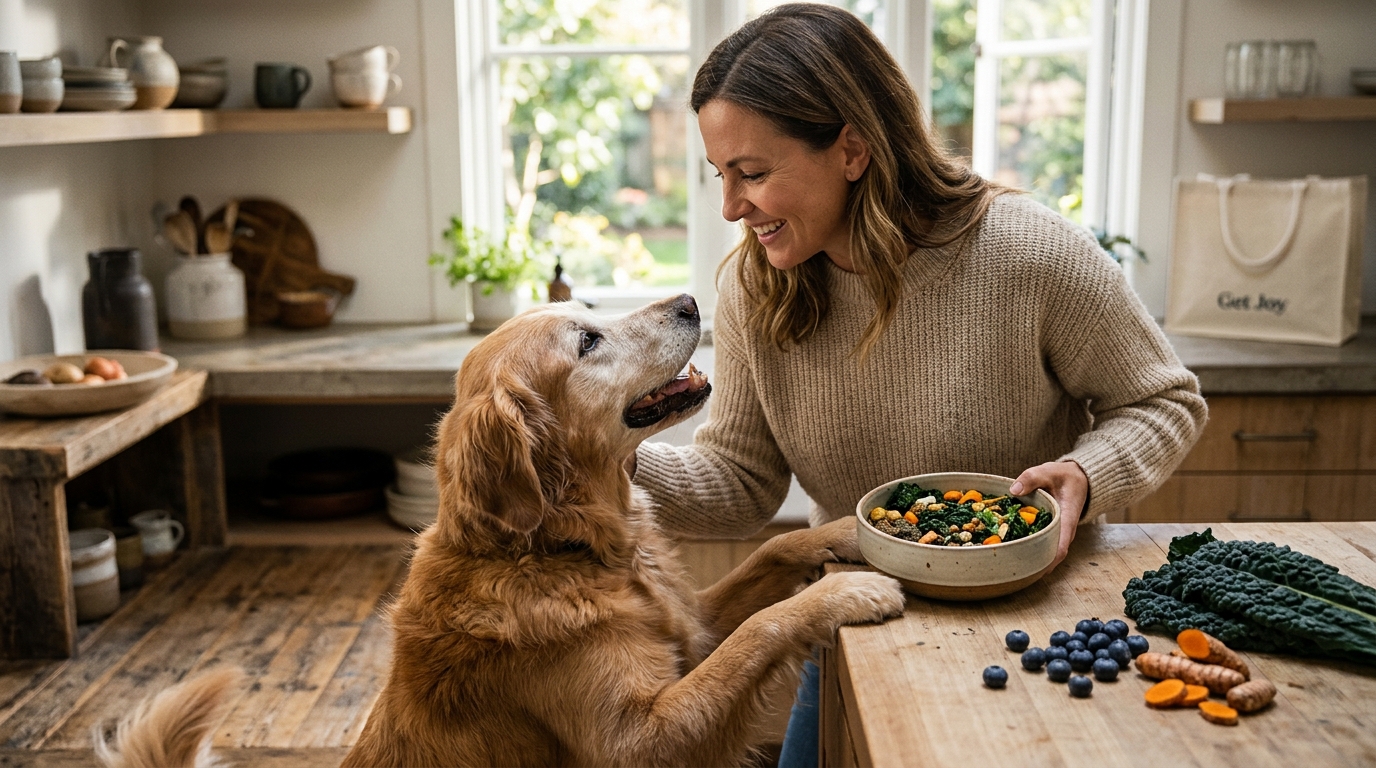
As your dog enters their senior years, you may notice slower mornings, stiffer joints, or a general loss of spark. These changes are more than cosmetic—they are often driven by chronic, low-grade inflammation that accumulates quietly over a lifetime. The good news? Diet is one of the most powerful levers you have to slow that process and keep your dog vibrant for years to come.
In this guide, we break down the science of canine inflammation and aging, identify the most impactful anti-inflammatory foods, explain why gut health is the hidden key, and show how a functional nutrition approach—like the one built into every Get Joy recipe—can make a measurable difference.
Understanding Inflammaging: Why Aging Dogs Are Especially Vulnerable
Veterinary researchers use the term inflammaging to describe the intersection of chronic inflammation and the aging process. Unlike the acute inflammation from a cut or infection, inflammaging is systemic, persistent, and often invisible until it manifests as a diagnosable condition like arthritis, cognitive dysfunction, or metabolic disease.
Diet is one of the biggest contributing factors. Highly processed kibbles cooked at extreme temperatures generate advanced glycation end products (AGEs)—compounds that damage tissues, delay healing, and have been linked in dogs to diabetes, obesity, kidney and cardiovascular disease, cataracts, osteoarthritis, and cognitive dysfunction syndrome.
A whole-food diet prepared at lower temperatures contains significantly fewer AGEs, which is one reason clinical research shows measurable anti-inflammatory benefits when dogs switch from extruded kibble to real food.
The Gut-Inflammation-Aging Connection
Your dog's gut microbiome is far more than a digestive organ—it is the command center for immune regulation. Research published in Frontiers in Veterinary Science confirms that the microbiota community and short-chain fatty acid (SCFA) production show age-dependent differences in dogs, with senior dogs producing relatively lower levels of beneficial butyrate.
Separately, a study on the canine gut microbiome and metabolome found that gastrointestinal microbial diversity decreases with age in multiple species and that this decline is associated with increased frailty and reduced cognitive function. The researchers noted that immunosenescence—the gradual weakening of the immune system—is closely tied to inflammaging and microbiome imbalance.
This is exactly why supporting gut health is not optional for aging dogs—it is foundational. Prebiotics feed beneficial bacteria. Probiotics introduce them. And postbiotics—the metabolic byproducts of probiotic activity—directly modulate immune responses and strengthen the intestinal barrier.
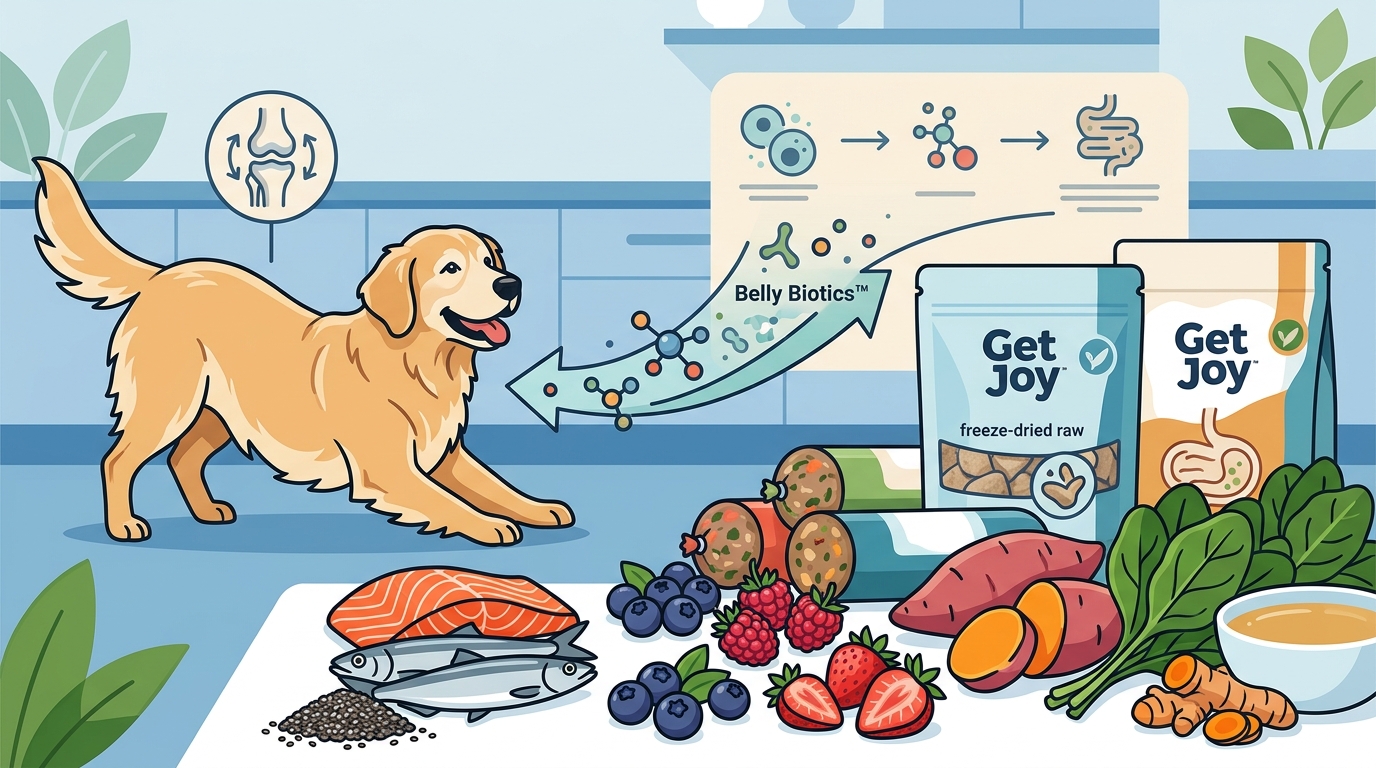
Get Joy's proprietary Belly Biotics™ blend delivers all three—prebiotics, probiotics, and postbiotics—built directly into every recipe, not sprinkled on as an afterthought. This tri-biotic approach is designed to support the microbiome continuously, meal after meal, to help maintain balanced immunity and reduce the chronic inflammation that accelerates aging.
10 Anti-Inflammatory Foods That Support Healthy Aging in Dogs
Below are ten whole-food ingredients with documented anti-inflammatory properties. Many of these appear in Get Joy's vet-formulated recipes.
1. Salmon and Oily Fish
Fatty fish like salmon, sardines, and mackerel are rich in the omega-3 fatty acids EPA and DHA, which have potent anti-inflammatory effects throughout the body. These healthy fats help maintain cognitive function, reduce joint pain, and support skin and coat health in aging dogs. Fish is also an excellent source of immune-supporting selenium, zinc, and vitamin E.
2. Blueberries
Blueberries are packed with antioxidants—particularly anthocyanins—that help reduce oxidative stress and inflammation. They support cognitive function and cardiovascular health, making them an ideal functional ingredient for senior dogs. Research shows that feeding senior dogs a diet rich in antioxidants from fruits and vegetables leads to decreased rates of cognitive decline.
3. Sweet Potatoes
Sweet potatoes provide beta-carotene, vitamin C, and dietary fiber. They support gut health through slow-releasing carbohydrates that keep senior dogs' energy stable, while their anti-inflammatory nutrients benefit joint health and immune response.
4. Turmeric
Turmeric contains curcumin, one of the most studied natural anti-inflammatory compounds. It helps reduce joint pain, supports brain function, and aids digestion. A small amount added to food—or included in a formulated recipe—can enhance mobility and comfort.
5. Bone Broth
Bone broth is rich in collagen, glycine, and chondroitin—nutrients that soothe inflammation, promote joint health, and support digestion. It is especially beneficial for senior dogs with arthritis or declining appetite, as it is highly palatable and easy to absorb.
6. Spinach and Leafy Greens
Spinach contains antioxidants like lutein, beta-carotene, vitamin K, and magnesium. Lightly cooked spinach supports joint health and muscle function. Other greens like kale and broccoli offer similar anti-inflammatory phytonutrients.
7. Broccoli
Broccoli is rich in vitamins C and K and contains sulforaphane, a compound with notable anti-inflammatory effects. Lightly steamed, it supports immune function and provides fiber without adding excessive calories—ideal for weight-conscious senior dogs.
8. Ginger
Ginger has natural anti-inflammatory and pain-relieving properties. It also aids digestion and reduces nausea, which can be helpful for older dogs with sensitive stomachs. A small pinch of fresh grated ginger mixed into food can provide measurable benefits.
9. Chia Seeds
Chia seeds are rich in omega-3 fatty acids, fiber, and protein. When soaked, they become gel-like and easy to digest. For aging dogs, chia seeds support joint health, reduce inflammation, and improve skin and coat condition.
10. Pumpkin
Pumpkin is a gentle, fiber-rich food that supports healthy digestion and feeds beneficial gut bacteria. Its antioxidant content—including beta-carotene and vitamin C—contributes to reduced oxidative stress, while its soluble fiber helps maintain regular bowel function in older dogs.
Why Whole-Food Diets Outperform Kibble for Inflammation
A randomized, open-labeled, cross-over clinical trial published in PMC directly compared the effects of a whole food diet versus a commercially available extruded dry diet in healthy dogs. The results were striking: dogs fed the whole food diet showed a significant reduction in the TNF-α-to-IL-10 ratio—a key marker of inflammatory status—under simulated conditions of inflammation.
The researchers identified several reasons for this effect. First, whole food diets prepared at lower temperatures contain fewer AGEs. Second, the inclusion of fish oil as a source of EPA and DHA provides anti-inflammatory omega-3 fatty acids. Third, the overall nutrient density and bioavailability of minimally processed ingredients supports healthier immune function.
This is the philosophy behind every Get Joy meal. Our recipes use USDA meats and superfoods, gently prepared to preserve nutrient integrity. Combined with Belly Biotics™, this creates a functional food system that addresses inflammation from two angles: reducing pro-inflammatory triggers and actively supporting the gut ecosystem that regulates immune balance.
How to Transition Your Dog to an Anti-Inflammatory Diet
Switching your dog's food is one of the most impactful steps you can take—but it should be done gradually to avoid digestive upset as the microbiome adjusts.
- Days 1–3: Mix 25% new food with 75% current food.
- Days 4–6: Move to a 50/50 blend.
- Days 7–9: Increase to 75% new food and 25% old food.
- Day 10+: Complete the transition to 100% new food.
Mild digestive shifts in the first few days are normal. Most dogs who transition to a whole-food diet not only tolerate the change well—they thrive. Many pet parents notice improvements in energy, coat shine, digestion, and mobility within just a few weeks.
Key Takeaways
- Chronic inflammation (inflammaging) is a primary driver of age-related disease in dogs—from arthritis to cognitive decline.
- Highly processed kibble contributes to inflammation through AGEs, excess omega-6 fatty acids, and synthetic additives.
- Whole-food diets have been clinically shown to reduce inflammatory markers compared to extruded dry food.
- Gut health is the linchpin. The microbiome regulates immune function, and its diversity declines with age. Prebiotics, probiotics, and postbiotics can help maintain balance.
- Specific anti-inflammatory foods—including salmon, blueberries, sweet potatoes, turmeric, and leafy greens—provide targeted support.
- Get Joy's Belly Biotics™ tri-biotic system is built into every recipe to support the gut-immune axis and combat chronic inflammation from the inside out.
Frequently Asked Questions
What is inflammaging in dogs?
Inflammaging describes chronic, low-grade inflammation that builds slowly over time—often without visible symptoms—until it triggers conditions like arthritis, cognitive dysfunction, or metabolic disease. It is driven by factors including diet, environmental toxins, oxidative stress, and gut dysbiosis.
Can whole food diets actually reduce inflammation in dogs?
Yes. A peer-reviewed clinical trial found that dogs fed a whole food diet showed a significant reduction in the TNF-α-to-IL-10 ratio under simulated inflammatory conditions, indicating genuine anti-inflammatory effects compared to standard extruded kibble.
How does gut health connect to inflammation and aging in dogs?
The gut microbiome directly regulates immune responses. As dogs age, microbial diversity tends to decline—a shift associated with increased frailty and weaker immunity. Supporting the microbiome with functional ingredients like prebiotics, probiotics, and postbiotics helps maintain balanced immune function and reduces systemic inflammation.
What role do omega-3 fatty acids play in canine inflammation?
Omega-3s from fatty fish are among the most well-studied natural anti-inflammatories. EPA and DHA help reduce joint pain, support brain function, promote healthy skin, and counterbalance the pro-inflammatory effects of excess omega-6 fatty acids found in many commercial kibbles.
Is Get Joy dog food formulated to fight inflammation?
Every Get Joy recipe is designed with functional, anti-inflammatory nutrition in mind. Our meals feature USDA meats, antioxidant-rich superfoods, and our proprietary Belly Biotics™ blend of prebiotics, probiotics, and postbiotics—supporting your dog's gut health, immunity, and long-term wellness with every bowl.
How quickly can I expect to see results after switching to an anti-inflammatory diet?
Many pet parents report visible improvements in energy, coat quality, digestion, and mobility within two to four weeks of transitioning to a whole-food diet. Deeper changes in gut microbiome composition and inflammatory markers may take eight to twelve weeks to fully develop.